
Chemistry on motorcycles: The 11 biggest workshop mistakes that almost everyone makes!

Many motorcyclists ruin their bikes with well-intentioned chemicals. These 11 mistakes will cost you money, performance and safety in the long run!
When you enter your garage, you immediately smell it: a mix of used oil, gasoline, and the pungent aroma of cleaning sprays. For the layperson, chemistry on motorcycles is often just a means to an end. You spray something on the chain or loosen a rusted screw. But for the Budget Mechanic, chemistry is the most powerful tool of all. It determines whether a seal lasts ten years or becomes brittle after an afternoon. It decides whether a screw can be loosened smoothly or breaks off with the first act of force.
In this comprehensive guide, we dispel myths that have persisted in biker forums for decades. We'll not only explain what you should buy, but also why certain molecules will save your machine while others will slowly destroy it. Welcome to the deep dive of motorized tribology and cleaning chemistry.
1. The WD-40 paradox: The savior who isn't one
There is hardly a product that is as glorified and at the same time as misunderstood as WD-40. The name stands for “Water Displacement, 40th Attempt” – the 40th attempt to develop a water displacement agent. And that's exactly what it is: corrosion protection through moisture displacement. The problem starts where WD-40 is used as a lubricant.
WD-40 consists largely of cleaning kerosene and volatile solvents. If you spray it on a squeaky chain, the noise will temporarily disappear as the thin substance creeps into the smallest cracks. But here's where the danger lurks: WD-40 is an excellent solvent. It infiltrates the existing grease in the O-rings or bearings and literally washes out the vital permanent lubrication. As soon as the volatile components have evaporated, there is hardly any lubricating film left, but the original grease is gone. The result is metal-to-metal contact and massive wear. The following applies to the clever screwdriver: WD-40 is a cleaning agent and a short-term rust remover, but never a permanent lubricant for moving parts.
2. Brake cleaner: The aggressive miracle weapon under the microscope
Brake cleaner is the cocaine of the workshop. It's addictive because it makes everything instantly clean and grease-free. But this aggressiveness comes at a price. Chemically speaking, most brake cleaners are based on hydrocarbons, which evaporate extremely quickly. The goal is a residue-free surface for brake discs and pads to guarantee maximum friction values.
What many people underestimate is the effect on plastics and elastomers. A careless splash on the brake caliper can attack the sensitive dust protection sleeves of the brake pistons. The chemicals remove the plasticizers from the rubber, which makes it brittle and cracked over time. As soon as moisture enters through these cracks, the brake pistons corrode, seize and lead to an overheated brake system. If you're smart, you'll only use brake cleaner where metal meets metal and consistently protect surrounding rubber or painted parts by covering them or rinsing them immediately with water.

3. Chain care: Between sticky grease and dry PTFE
The chain is the most mistreated component of the motorcycle. This is where dirt, heat and enormous centrifugal forces collide. The classic white chain spray is the standard, but it has one major disadvantage: the adhesive effect. While it holds the grease on the chain, it also attracts road dirt and sand like a magnet. This mixture acts like an abrasive paste on the sprockets.
A modern alternative is the “Dry Lube” based on PTFE (Teflon). A dry lubricating film is applied to which no dirt adheres. The bike stays clean and the chain always looks like new. But be careful: Dry Lube offers little protection against rain. If you commute in any weather, you risk rapid rust on the chain plates if you use dry lubricants.
Here the user has to decide: appearance and cleanliness (dry lube) or maximum wear protection when wet (adhesive grease). An insider tip for the budget mechanic is to regularly clean the chain with a soft brush and special chain cleaner before applying new grease - because fresh grease on old dirt is the surest way to ruin the kit prematurely.
4. Corrosion protection: The invisible protective shield against salt and moisture
Corrosion protection is life insurance for resale value, especially for streetlight parkers and all-season drivers. In this area there is a product that is considered the holy grail in the scene: ACF-50. Originally developed for aviation to protect aircraft on aircraft carriers from salt water, it has a fascinating property. It is a chemically active liquid that creeps into crevices and actively infiltrates moisture.
In contrast to waxes, which form a hard layer (under which rust often continues unnoticed), ACF-50 remains “active”. It forms a thin, non-greasy film that heals itself from small scratches. If you spray your motorcycle with it before winter (except for the brakes and tires!), you can simply rinse the salt off in the spring and find it in brand new condition. This form of chemistry is an investment that pays off many times over when the motorcycle is sold with a significantly higher price.
5. Screw locking and pastes: The end of the seized bolts
Nothing is more frustrating than a broken screw. To prevent this, the professional uses release pastes. The classic copper paste is a long-running favorite, but in times of modern lightweight construction materials it should be used with caution. Copper and aluminum together with splash water form a galvanic element. The result is contact corrosion. The screw literally “bakes” into the aluminum block.
The solution for the modern biker is ceramic paste. It is metal-free, extremely heat-resistant and neutral to aluminum. It belongs on every spark plug thread and every axle shaft. At the other end of the spectrum is screw locking (e.g. Loctite). Many people make the mistake of using “high strength” (green/red) where “medium strength” (blue) would be appropriate. High-strength fuses can often only be removed by heating them to over 200°C - a temperature that melts plastic parts and seals in the surrounding area. Know your chemistry: Blue for anything that vibrates; Ceramics for everything that gets hot.
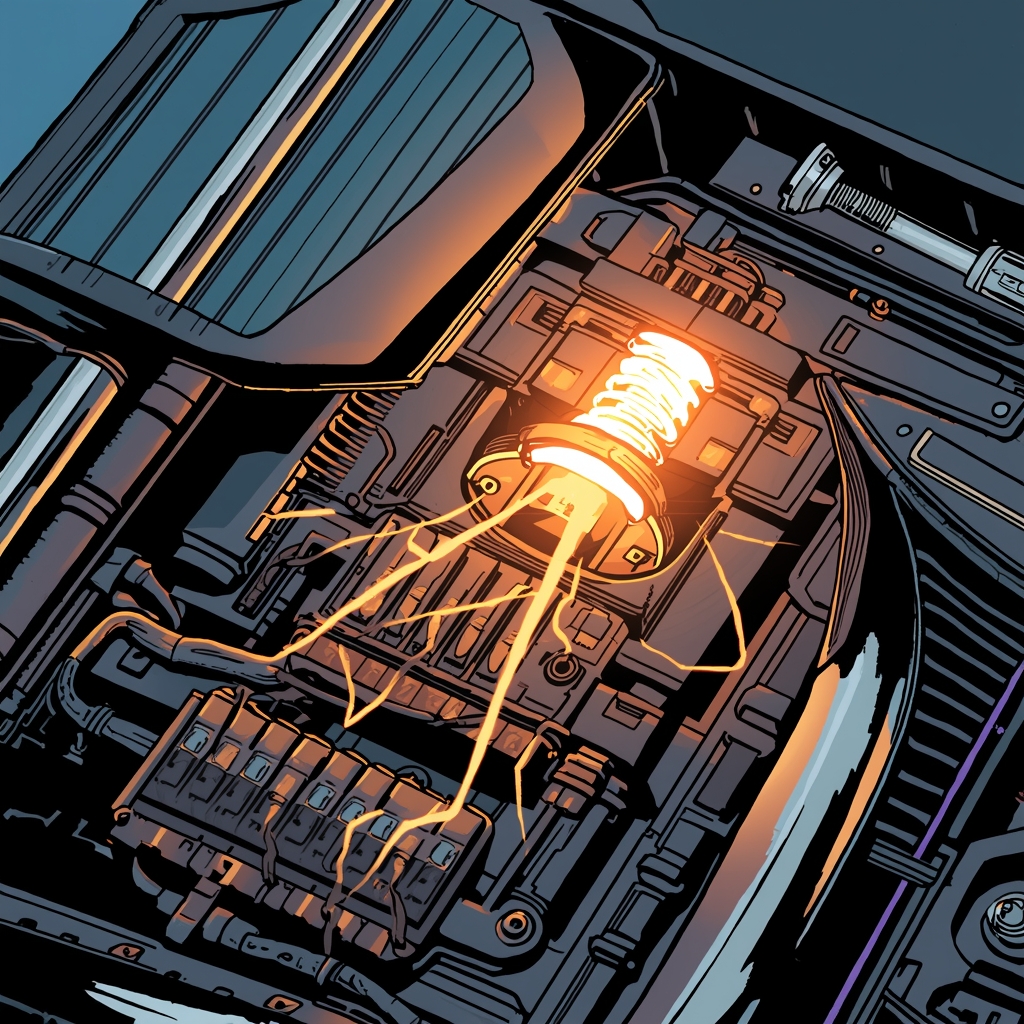
6. Contact cleaner: precision tool for sensitive electrical systems
Modern motorcycles have long been rolling computers. ABS, traction control, quickshifter and ride-by-wire only work as well as their plug connections. When the first error messages appear or the engine sputters in the rain, your eyes quickly land on the contacts and reaching for the contact cleaner is almost a reflex.
It's worth taking a closer look at the chemistry. Many inexpensive contact cleaners consist almost exclusively of aggressive solvents. They reliably remove oxide and grease, but at the same time remove the extremely thin protective layer that is intended to protect the contacts from further corrosion. In the short term everything works perfectly again. In the long term, however, the pins rust faster than before.
If you want long-term peace of mind in the electrical system, you work in two stages:
-
clean first to remove oxide and dirt
-
then apply a touch of contact protection grease or pole grease
This creates an invisible barrier against moisture and salt. The same rule applies to electrical systems as to engines: cleaning is only the first step. The aftertreatment determines the lifespan.
7. Engine washing: cleanliness with side effects
A sparkling clean engine has a calming effect. And therein lies the danger. The typical process is quickly described: cold engine, high-pressure cleaner, plenty of cleaner, lots of water. What remains invisible are the processes that begin inside.
-
Water is forced into connectors
-
Moisture migrates into bearings and Bowden cables
-
Grease is washed out
-
Corrosion processes start unnoticed
Many engine cleaners themselves are even more critical. They contain surfactants and solvents that attack aluminum and remove protective layers. Weeks later, dull spots, white oxide spots and the first pockets of rust appear; long after the laundry has been forgotten.
If you want to clean your engine, you should proceed carefully:
-
Engine lukewarm, not cold
-
do not use high pressure
-
Use mild motorcycle cleaners
-
then drive dry
-
Treat sensitive areas with corrosion protection
The experienced mechanic knows: A slightly dirty engine often ages more slowly than a sterile one.
8. Fuel additives: Between sensible care and burning money
Hardly any market is as crowded as that of gasoline additives. Cleaners, boosters, stabilizers, system care. Each bottle promises more power and a longer engine life. The reality is much more sober. Most modern fuels already contain complex additive packages.
Many additives simply double what is already in the gasoline.
Additives only really make sense in a few clear cases:
-
to stabilize the fuel during long downtimes
-
in old carburettor engines to prevent resin build-up
-
if the injectors are demonstrably dirty
What additives can never do:
-
repair mechanical wear
-
heal worn-in bearings
-
Compensate for compression losses
Chemistry can protect and clean. She can't repair it. If you understand this, you will save money and avoid false hopes.
9. Liquid seals: When too much chemistry kills the oil circuit
As soon as oil is sweating somewhere, the silicone tube is ready. A little sealant, a little more security and the problem seems solved. In reality, a chain reaction often begins here, which ends in engine failure months later.
The problem is simple:
-
Silicone swells inwards
-
Surpluses are removed
-
Particles migrate in the oil stream
-
Oil channels and sieves become clogged
Modern engines are built for precisely defined sealants. Anaerobic surface seals only harden where there is no oxygen. So exactly in the joint. Excess remains soft and harmless.
What is particularly clear here is that it is not the quantity that counts, but rather the right chemistry in the right place.
10. Hydraulic fluid: The underestimated high-performance chemistry
Brake and clutch fluid is one of the most aggressive media on a motorcycle and at the same time one of the most ignored. It draws water out of the air, attacks paint and loses part of its safety reserve with every percent of moisture.
The consequences develop gradually:
-
the pressure point becomes soft
-
the boiling point drops
-
Steam bubbles appear
-
the braking performance drops
It becomes even more dangerous if you choose the wrong variety. Silicone-based DOT 5 cannot be mixed with DOT 3, 4 or 5.1. A single incorrect refill can ruin an entire braking system.
Therefore a simple rule applies:
-
Change brake fluid every 2 years
-
Only use the DOT grade approved by the manufacturer
-
Consistently protect paint and plastic
Brake fluid does not age with mileage. She ages over time.
11. “A lot helps a lot”: The most dangerous myth in the workshop
One of the biggest misconceptions when it comes to screwdriving is the idea that more chemistry automatically means more protection. In reality, the opposite is often true.
Too much lubricant:
-
binds dirt
-
insulates heat
-
crawls into brakes
-
is distributed among tires
-
worsens the function
Most products work best in:
-
thinnest films
-
exactly dosed
-
only where they are needed
The experienced screwdriver does not work with a watering can, but with a scalpel. Because chemistry is not a stopgap measure. It is a precision tool.
FAQ: Chemistry for mechanics
Can I use engine oil for chain care?
In theory yes, because oil lubricates excellently. In practice, however, centrifugal force immediately throws the oil from the chain onto your rim and - dangerously - onto your rear tire. Chain greases contain adhesive additives that prevent exactly that.
Why does brake cleaner destroy my O-ring chain?
The O-rings keep the grease inside the chain bolts. Brake cleaner is so thin and aggressive that it gets under the sealing rings and dissolves the grease. The chain then runs dry internally, which can lead to overheating and breakage.
What is the difference between rust remover and penetrating oil?
A rust remover (like Caramba) often contains acids or chemical agents that break down iron oxide (rust). A penetrating oil (such as Ballistol or WD-40) has the primary task of flowing into the smallest cracks through extremely low surface tension. A good rust remover is usually a penetrating oil, but not every penetrating oil is effective at removing rust.
Is silicone spray good for tire care?
Absolutely not! Silicone spray makes surfaces extremely slippery. If even a mist of it gets on the tread of your tires, you'll lose a lot of grip. However, silicone spray is ideal for making brittle rubber hoses and plastic panels supple and shiny again.

For many years I have been intensively involved with motorcycles, their technology and all topics relating to safety, maintenance and equipment. My goal is to present practical information in an understandable way, to realistically assess risks and to objectively classify common myths.
All content on moto-guide.com are based on in-depth research, technical classification and my experience in dealing with motorcycles. I want to help riders make informed decisions and use their motorcycle safely and consciously.




Leave a comment
Participate in the discussion?Leave us your comment!