Motorcycling in the Czech Republic: preparation and rules
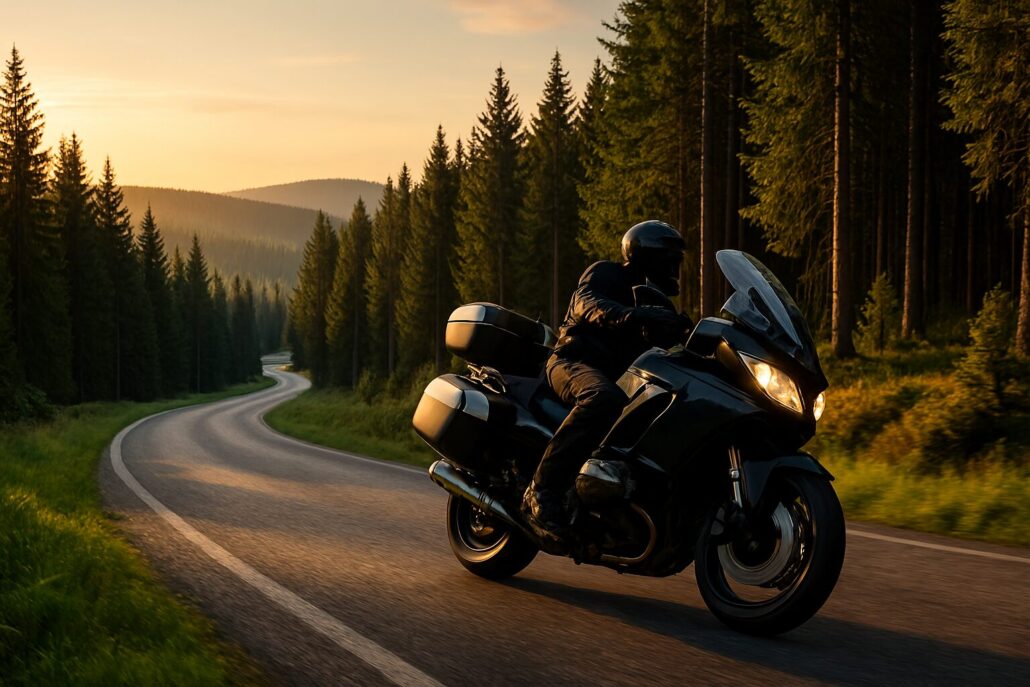
The Czech Republic is no longer an insider tip for motorcyclists, but rather a mecca for corner hunters and nature lovers. But if you want to enjoy freedom on two wheels in the neighboring country, you have to know the rules of the game. In this guide you will find out everything about the stricter laws, hidden fee traps and real insider knowledge.
Why the Czech Republic makes every biker’s heart beat faster
Gentle hill chains in the Bohemian Forest, rugged peaks in the Giant Mountains and the deep valleys of the Vltava – the Czech Republic offers a topographical diversity that is perfect for motorcycle tours. But while the landscape looks inviting, the Czech legislature shows its strict side when it comes to traffic violations. Since the major reform of traffic law at the beginning of 2024, many fines have been doubled and monitoring has been massively expanded. So that your tour doesn't turn into an expensive misunderstanding, we have put together this ultimate guide.
1. Documents and equipment: What must be in the tank bag?
In the Czech Republic, ignorance does not protect against punishment. During a police check, the “paperwork” is checked first. Anyone who messes up here often pays the first fee before the stand is folded in for the first time.
The necessary documents
- The driver's license: The common EU model in credit card format is recognized without any problems. Owners of old “rags” (gray or pink) should think about exchanging them, even if they are theoretically still valid – it saves discussions with younger officials.
- Registration certificate part I: Always carry the original with you. A copy will not be accepted under strict control.
- The green insurance card: Although it is often no longer mandatory within the EU, Czech police officers still often require them as proof of existing insurance coverage. It also makes it much easier to settle claims in the event of an accident.
The technical equipment
The Czech Republic is stricter than Germany when it comes to carrying requirements. Every single-track motor vehicle must have the following items on board:
- Motorcycle first aid kit: This must correspond to the Czech standard or at least meet DIN 13167. Important: Pay close attention to the expiry date! An expired set is considered not available.
- High visibility vest: In the Czech Republic, every person on the motorcycle must have a high-visibility vest. In the event of a breakdown or accident on the country road or motorway, wearing the vest when leaving the vehicle is absolutely mandatory.
- Replacement bulbs: For a long time they were mandatory. Since 2024, the regulation has been somewhat relaxed, especially for LED headlights. However, it is recommended to have a set with you for conventional halogen systems.
2. The hard facts: speeds and the 0.0 alcohol limit
If there's one thing that the Czech police (Policie ČR) absolutely don't like, it's drunk driving.
Zero tolerance: 0.0 per mille
In the Czech Republic there is a strict 0.0 alcohol limit. There is no “safety range” up to 0.3 or 0.5 per mille. Anyone who is caught with 0.1 per mille is already committing a criminal offense. The fines start at around 300 euros and can run into the thousands for higher values or danger, including immediate confiscation of the driver's license.
Insider tip: Residual alcohol the next morning is also a huge issue. The police often carry out targeted checks on arterial roads leading to tourist centers.
Speed limits: Where the speed traps lurk
The Czech Republic has invested heavily in stationary and mobile speed monitoring in recent years. Especially in villages, measurements are often taken at the entrance and exit of the town.
| Road type | limit | Special feature |
|---|---|---|
| Inner town | 50 km/h | Often 100 m before the first house |
| Out of town | 90 km/h | Strict controls in forest areas |
| Highways | 130 km/h | Toll-free for motorcycles! |
Law tip: Since 2024, anyone who drives more than 20 km/h too fast in urban areas or 30 km/h outside of urban areas risks being banned from driving for up to six months.
3. Toll exemption: A privilege for bikers
While drivers in the Czech Republic have to purchase an electronic vignette, motorcyclists enjoy a special regulation: motorcycles are exempt from the vignette requirement. This means that you can use all motorways (D-roads) and expressways for free. This is particularly practical for quickly bridging long journeys to the east of the country (e.g. the Beskydy Mountains).
Traffic management in the Czech Republic has some peculiarities that are not found in Western Europe. The utmost attention is required here.
The secret of the white flashing light
At Czech railway crossings you will often find a traffic light with a white light at the bottom. If this white light flashes, it means: The signaling system is active and there is currently no train approaching. In this case you are allowed to come 50 km/h drive over the tracks. If no light is flashing, the crossing is considered potentially unsecured - you are only allowed to take part here 30 km/h cross and have to be extremely careful.
The tram is king
In cities like Prague, Brno and Pilsen, trams shape the cityscape. An iron rule applies here: the tram almost always has the right of way. The rails are particularly dangerous for bikers when they are wet. If you cross the rails at an angle that is too shallow, the rail acts like a slide.
Law tip: When a tram stops at a stop without an island, cars and motorcycles have to wait behind it to allow passengers to get on and off.
5. Parking and theft protection: Safe through the night
Although the Czech Republic is a safe travel destination, high-quality touring machines and sport bikes are particularly popular. You should exercise caution in tourist areas.
- Zones marked blue: In Prague and other cities, blue zones are actually reserved for residents. However, motorcycles are often tolerated here or are officially allowed to park for free as long as they do not obstruct pedestrian traffic.
- Backup: A simple steering wheel lock is not enough. Use at least a high-quality brake disc lock with an alarm function.
- Accommodation: Look specifically for “biker-friendly” hotels with enclosed courtyards or garages. The term for this is often “Garáž pro motocykly”.
6. Large FAQ section for motorcyclists in the Czech Republic
1. Is weaving through traffic jams allowed?
Officially no. In the Czech Republic, “filtering” between columns is viewed as impermissible overtaking on the right or lack of lateral clearance. In practice it is often tolerated when traffic is stationary, but there is no legal right to it.
2. Do I need a special headset?
No, but the law states that acoustic perception must not be impaired. Single-sided in-ear headphones or intercom systems in the helmet are permitted.
3. Does the requirement to wear a high-visibility vest also apply to the passenger?
Yes. Each person in the vehicle needs a vest. In the event of a breakdown, both people must wear a vest as soon as they enter the road.
4. What is the minimum tread depth?
For motorcycles over 50 cm³, a minimum tread depth of 1.6 mm applies. For mopeds under 50 cm³ it is 1.0 mm.
5. Can I use a dashcam?
Yes, it is permitted for private preservation of evidence. However, publishing videos in which people or license plates can be recognized without pixelation violates the data protection law.
6. What happens in the event of an accident involving wildlife?
Must in the Czech Republic everyone Wildlife accidents must be reported to the police. Since the Czech Republic is very forested (especially in the Ore Mountains and Bohemian Forest), the risk is extremely high at dusk.
7. Are yellow lines on the side of the road important?
Yes! A solid yellow line means there is an absolute ban on parking and stopping. A broken yellow line means parking is prohibited (stopping is permitted for up to 3 minutes).
8. Do I have to carry spare fuses?
It's no longer mandatory, but in the event of a breakdown at night on a forest road in the Jeseníky Mountains, you'll be glad you did.
9. How strict are the controls for exhaust systems?
Increasingly stricter. Especially in national parks, the police pay attention to illegal conversions without an E-mark or removed DB eaters. The penalty can mean shutdown on site.
10. Is it compulsory to wear a helmet for trikes?
Yes, in the Czech Republic it is compulsory to wear a helmet on all open vehicles unless there are seat belts.
11. How do I pay fines?
Most patrol cars have mobile card terminals. Cash payments in kroner or euros are often possible, but card payments are safer and offer a better exchange rate.
12. Do I need a warning triangle?
Not for solo motorcycles. A warning triangle is only mandatory for motorcycles with sidecars (trailers).
13. Can I drive off-road?
In national parks (KRNAP, Šumava), leaving paved paths is extremely expensive. However, there are some legal gravel roads in the border regions, provided there are no prohibition signs prohibiting them.
14. How do I recognize civilian police vehicles?
Look out for Škoda Superb or Octavia with dark windows and inconspicuous antennas. The Czech motorway police also use high-performance BMW models to pursue speeding drivers.
15. What is the most important emergency number?
112 works everywhere. You can also dial 158 especially for the police.
7. Legal update: The points trap for foreigners
Many bikers believe that points don't matter in the Czech Republic as long as they don't have a Czech residence. This is a mistake. The Czech Republic maintains a central register for all drivers. Anyone who collects 12 points (e.g. by driving too fast several times or using a cell phone on the handlebars) will receive a one-year driving ban for the entire Czech Republic. If you are caught anyway, you could face prison sentences for driving without a license.
8. Insider tips for the perfect tour
Best time to travel
The season in the Czech Republic usually starts at the end of April. However, in the mountains (Krkonoše), road salt can remain on the roads until May. The best time is September - the “Indian summer” offers stable high pressure and clear visibility in the mountains.
Fill up and pay
The Czech Republic is no longer a cheap country, but gasoline is often still 10-20 cents cheaper than in Germany.
Insider tip: Fill up at chains like Benzina (Orlen) or MOL. These offer high quality fuel. Avoid small “no-name” gas stations in the hinterland if your machine is sensitive to fuel quality.
Culinary for bikers
A “Smažený sýr” (breaded cheese) with fries is the standard dish in almost every Czech tavern. It's nutritious, cheap and quick to prepare - ideal for your lunch break. But remember: there is only non-alcoholic beer (Birell), which, by the way, tastes excellent in the Czech Republic!
Conclusion: It's better to enjoy yourself if you're prepared
The Czech Republic offers freedom, curves and unparalleled hospitality. If you respect the 0.0 alcohol limit, have your safety vest with you and take the speed limits in the villages seriously, you have nothing to fear. The Czech police are usually very polite and friendly.
For many years I have been intensively involved with motorcycles, their technology and all topics relating to safety, maintenance and equipment. My goal is to present practical information in an understandable way, to realistically assess risks and to objectively classify common myths.
All content on moto-guide.com are based on in-depth research, technical classification and my experience in dealing with motorcycles. I want to help riders make informed decisions and use their motorcycle safely and consciously.




Leave a comment
Participate in the discussion?Leave us your comment!