
Motorcycle battery comparison: lead, AGM, gel, lithium & sodium
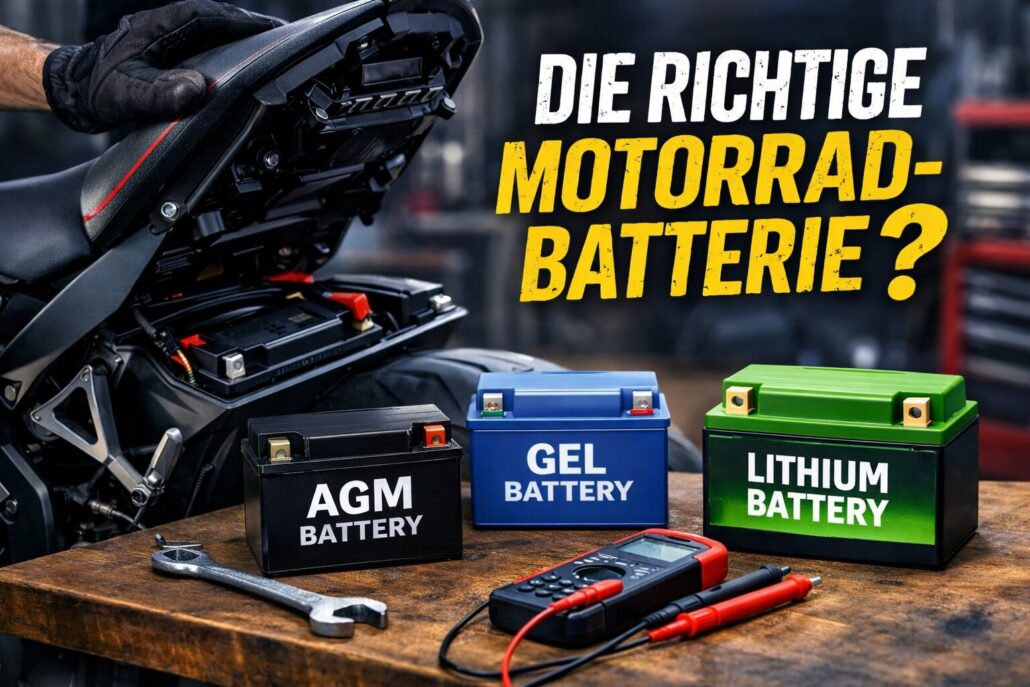
The moment you press the starter - and nothing happens.
No roar of the engine, no vibration beneath you, just a quiet clack. For many motorcyclists, this is exactly how the trouble surrounding the motorcycle battery begins. Especially after the winter break or longer periods of downtime, it decides whether your bike is ready for use straight away - or whether the tour ends in the garage.
The selection of motorcycle batteries is now larger than ever: classic lead-acid batteries, modern AGM batteries, deep cycle gel batteries, ultra-light lithium-ion batteries and even the new sodium-ion technologies fight for space under the seat. But which battery really suits your riding style, your motorcycle and your budget?
In this comprehensive comparison you will find out which motorcycle battery starts most reliablyWhich technology is suitable for touring, sports or everyday life - and which mistakes you should definitely avoid when buying. So that the next time you press the starter, it triggers exactly what we all want to hear: the sound of your engine.
1. The classic lead-acid battery (wet battery)
The standard lead-acid battery is the “dinosaur” among accumulators, but is still widely used - especially in older machines or inexpensive entry-level models.
How it works
The battery consists of lead plates that are immersed in a liquid electrolyte (sulfuric acid + distilled water). During the discharging process, lead sulfate is deposited on the plates; this process is reversed during charging. This principle has been proven for over 100 years.
Advantages and disadvantages
- Advantages: Very cheap, simple technology, reliable when used correctly.
- Disadvantages: Maintenance-intensive, regular refilling of distilled water required, not leak-proof, risk of oxyhydrogen when charging.
Important NOTE: These batteries often come “dry pre-charged.” Before using it for the first time, you must fill in the acid yourself – observe safety regulations! More on the topic Change motorcycle battery.
2. AGM (Absorbent Glass Mat) batteries
AGM batteries are now standard in many mid- and upper-range bikes. The electrolyte is bound in a glass fiber fleece, making the battery leak-proof and significantly more robust against shocks.
Advantages
- Vibration resistance: Ideal for large-volume engines, e.g. B. V2 or V-twin engines.
- Low self-discharge: Withstands longer downtimes without any problems.
- Maintenance-free: No refilling of water necessary.
- High cold starting current: Provides sufficient energy for modern injection engines.
3. Gel batteries: power pack for touring riders
Gel technology is often incorrectly used as a synonym for all maintenance-free batteries. In reality, it is a separate chemical category in which sulfuric acid and silica react to form a jelly-like mass.
Technology in detail
The electrolyte solidifies and the housing is completely sealed (VRLA), often with a pressure relief valve. The battery is leak-proof and can be installed at almost any angle.
Gel battery strengths
- Cycle stable: Withstands deep discharges and many charging cycles, ideal for long distances and accessories such as navigation systems, heated grips, additional headlights.
- Installation: Flexible use, leak-proof.
- Limitation: Cold starting current is usually slightly lower than with AGM.

4. Lithium-ion batteries (LiFePO4)
High-end solution for sportbikes and performance enthusiasts. Lithium iron phosphate (LiFePO4) ensures low mass, high energy density and fast charging times.
Advantages
- Weight saving: Often only a third of the weight of a lead-acid battery.
- Fast charging: Up to 90% possible in under 30 minutes.
- Constant starting current: Delivers reliable energy even when partially discharged.
Disadvantages / Sensitivity to cold
Below 0 °C chemical processes slow down; Starting problems may occur. Pro tip: Before starting, turn on the light for 1-2 minutes to warm the battery from the inside.
5. Comparison of battery types
| feature | Lead acid | AGM | gel | lithium |
|---|---|---|---|---|
| maintenance | High | Maintenance free | Maintenance free | Maintenance free |
| Leakproof | No | Yes | Yes | Yes |
| Weight | Difficult | Difficult | Difficult | Very light |
| life | Medium | Good | Very good | Excellent |
6. What should you pay attention to when buying?
Be sure to check these points before purchasing:
- Capacity (Ah): Storage capacity of the battery.
- Cold start current (CCA): Starting power when the engine is cold.
- Dimensions & Pole Arrangement: Must physically fit into the battery compartment.
7. Care & Maintenance
Average lifespan: 3-6 years. Significantly longer if handled correctly.
Problems such as sulfation
Lead sulfate crystals can permanently reduce capacity during prolonged discharge.
Winter break
- Solution 1: Remove battery and store in a cool and dry place.
- Solution 2: Use an intelligent trickle charger.
A notice: Lithium batteries require special charging programs without desulphation.
8. Sodium-Ion Batteries (SIB)
Sodium-ion batteries work chemically similar to lithium, but use sodium (common salt) instead of rare lithium. They are particularly cold-resistant, safe and environmentally friendly.
Advantages
- Extreme cold resistance: Over 90% capacity even at -20°C.
- High security: thermally stable, non-flammable, deep discharge possible up to 0 volts.
- Price & Sustainability: Sodium is available everywhere, no rare raw materials necessary.
Disadvantages
Energy density slightly lower than lithium - battery slightly heavier and larger, but still significantly lighter than lead-acid.
Comparison of sodium vs. lithium
| feature | lithium (LiFePO4) | Sodium ions |
|---|---|---|
| Cold start | Problematic below 0 °C | Excellent, down to -20°C |
| Weight | Very light | Lightweight, slightly heavier than lithium |
| Security | High | Very high, non-flammable |
| Environmental balance | Critical (lithium mining) | Good (salt base, no rare raw materials) |
| Availability | Worldwide | Market entry 2025, limited availability |
9. Conclusion
The right battery depends on your driving profile and budget:
- Classic cars / occasional drivers: Lead acid or cheap AGM.
- Modern all-rounders: AGM battery.
- Tours & Long Distance: Gel battery.
- Sports & Performance: Lithium or sodium (if available).
If you would like to know more about how a battery works, you can read numerous technical articles on the website batteryuniversity.com. Among other things, how acid or sodium batteries work.
A good battery is an investment in the reliability of your motorcycle. Good luck on your next trip!

For many years I have been intensively involved with motorcycles, their technology and all topics relating to safety, maintenance and equipment. My goal is to present practical information in an understandable way, to realistically assess risks and to objectively classify common myths.
All content on moto-guide.com are based on in-depth research, technical classification and my experience in dealing with motorcycles. I want to help riders make informed decisions and use their motorcycle safely and consciously.




Leave a comment
Participate in the discussion?Leave us your comment!