You're standing in front of the shelf at the parts dealer or scrolling through an online shop and you have a choice: the proven standard spark plug for five euros or the iridium version for three times the price. And you wonder: "Does it really make a difference, or is it just marketing?"
Here we look at what iridium spark plugs actually do for a motorcycle, and why a tiny piece of precious metal can make the difference between frustration when starting in the morning and an engine that runs smoothly. It gets a little technical, but stays understandable.
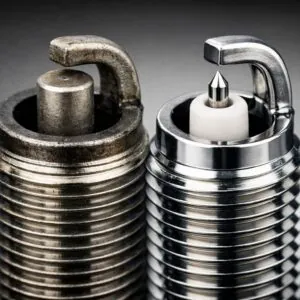 How a spark plug works
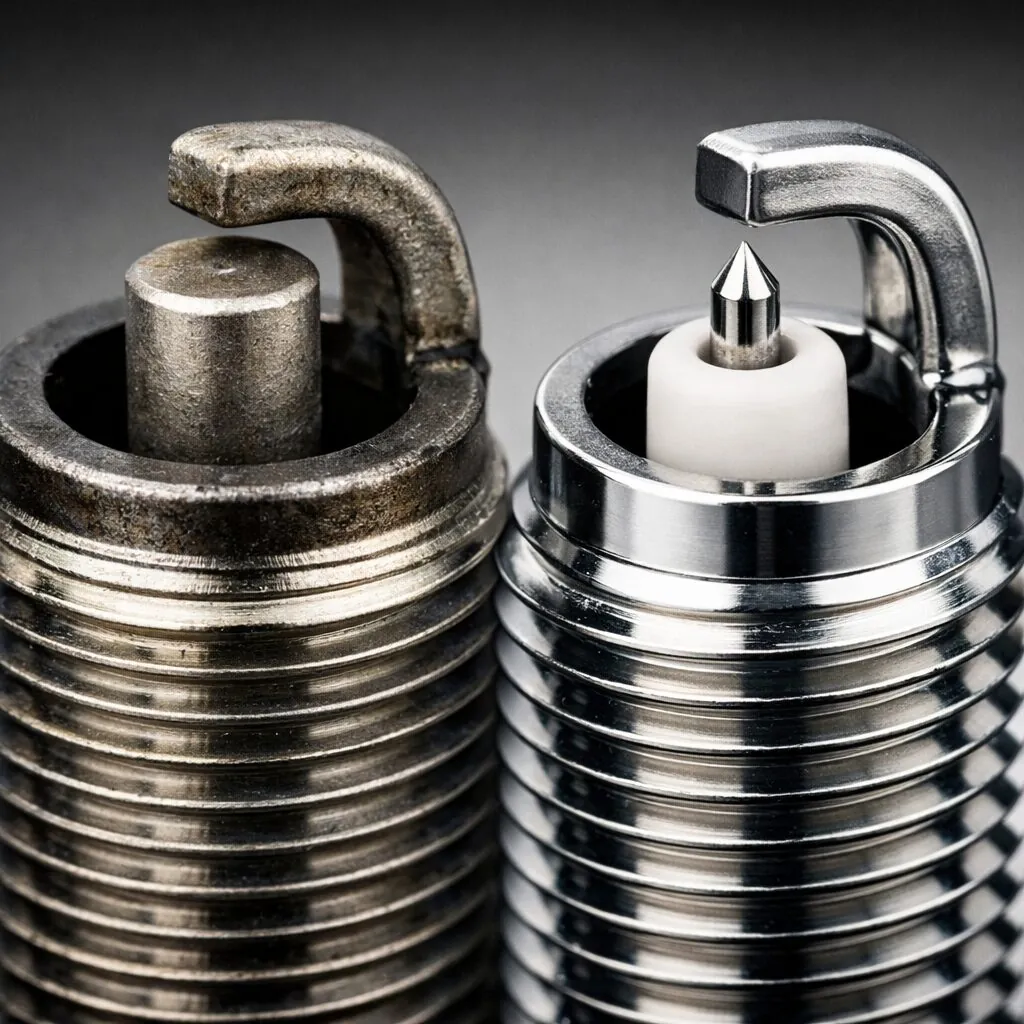
Before we get to iridium, it's worth looking inside the cylinder. The spark plug is the last link in a long chain. The ignition coil supplies a high voltage of typically several tens of thousands of volts. This voltage has to bridge the gap between the centre electrode and the ground electrode.
That creates an arc, the ignition spark. It has to ignite the compressed fuel-air mixture. In a modern motorcycle engine at 10,000 rpm this happens 83 times a second, under high pressure and at temperatures above 2,000 °C.
Why the thin electrode of an iridium plug helps
The quenching effect
Why does a 0.6 mm electrode work more efficiently than a 2.5 mm nickel electrode? Thermodynamics has the answer. A thick electrode acts like a heat sink. As soon as the small spark forms, the cool metal immediately draws heat away from it. This is called the quenching effect.
The iridium tip is so fine that it hardly draws any heat from the spark. The spark stays hotter and stronger, and the flame front spreads faster. That's why you notice a more immediate throttle response: combustion simply starts more efficiently.
The heat range has to match
A common mistake is thinking "I'll just take the most expensive plug." What matters is that the heat range matches the engine exactly. It describes how well the plug transfers heat from the combustion chamber to the cylinder head.
- Cold plugs: they have a short insulator nose and dissipate heat very quickly. They're found in high-performance engines so the plug doesn't itself become a glow plug.
- Hot plugs: they have a long insulator nose and keep the heat at the tip longer. More relaxed engines need this so the plug gets hot enough to clean itself.
- Danger: with the wrong heat range, the plug fouls with soot (too cold) or in the worst case burns a hole in the piston (too hot).
The self-cleaning temperature
For a spark plug to last thousands of kilometres, it has to keep itself clean. From about 450 °C soot deposits on the insulator nose burn off by themselves. That depends mainly on the right heat range. The advantage of iridium lies elsewhere: the fine spark ignites reliably even when the plug isn't at its ideal temperature, for example in town traffic.
Benefits in practice: what you really notice
- Better cold starts: the plug needs less ignition voltage. Your bike is therefore more likely to start straight away, even with a weak battery.
- Smoother running: the typical popping and unsteady idle often disappear completely.
- Long lifespan: iridium is very wear-resistant, the electrode hardly erodes. How often to change it is in your motorcycle's service schedule. According to NGK, manufacturers' intervals range from 20,000 to 120,000 km depending on the vehicle.
Tips for switching to iridium
1. Read the plug correctly: a greyish-white to fawn-brown insulator nose is normal, for iridium just as for standard plugs. If the insulator is chalk-white or you see melted beads on the electrodes, that points to overheating, for example from a lean mixture, wrong ignition timing or too hot a heat range. That's then down to the engine, not the plug.
2. Check the plug caps: iridium plugs work more efficiently but don't forgive leaky ignition leads. If your bike is older, put a dab of silicone grease on the caps so the spark doesn't escape along the lead.
3. Careful when gapping: with iridium plugs you must not bend the gap with a crude metal gauge or lever against the centre electrode. The fine tip is delicate and can break. Normally the plugs come correctly gapped out of the box.
Beware of fake iridium spark plugs
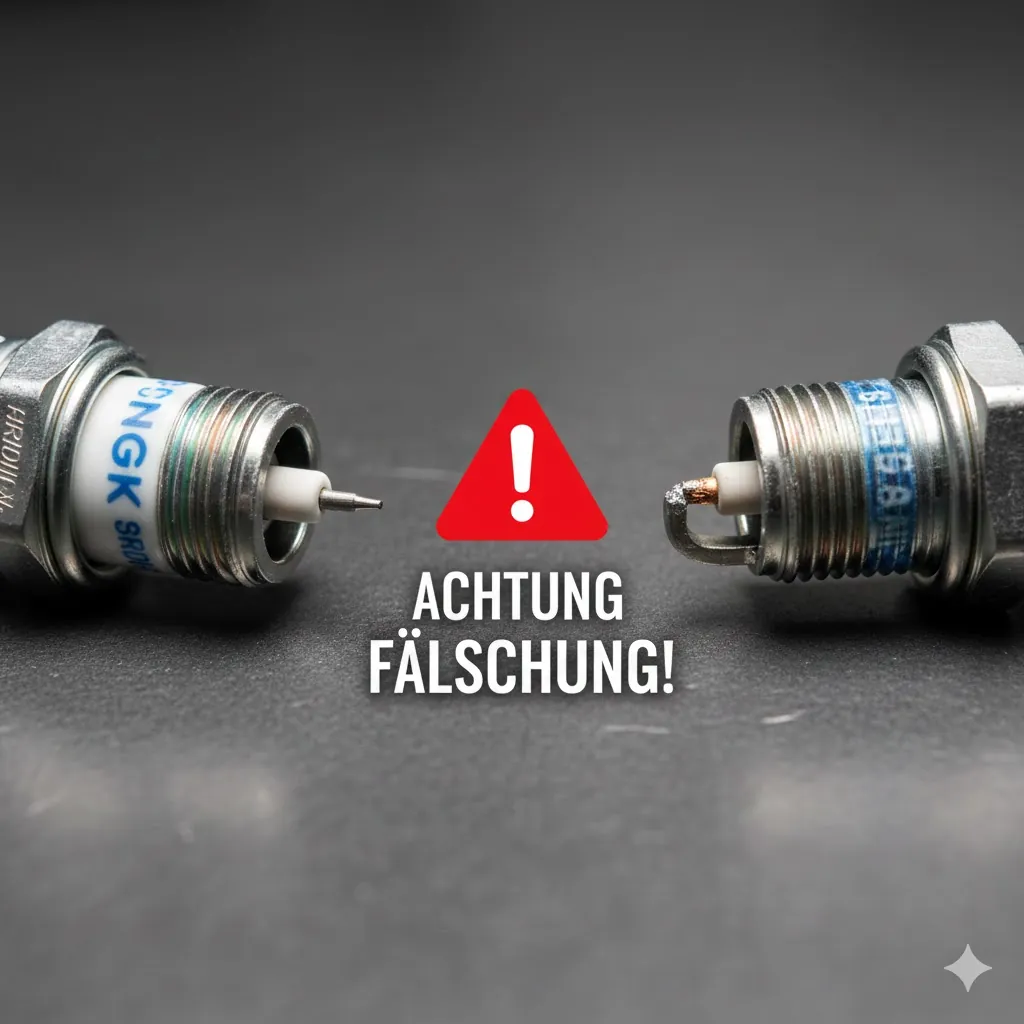
Because iridium plugs are expensive, the market is full of cheap fakes. They look almost exactly like the original but, according to NGK, contain no iridium at all, just a tapered nickel electrode. The problem: the thin nickel tip can't take the heat, melts and in the worst case can cause engine damage.
How to recognise originals
- The price: four branded plugs for 15 euros? Hands off, that's very suspicious.
- The lettering: originals have cleanly printed text. Different fonts or smudged printing are a warning sign. A serial number should be stamped on the hexagon.
- The shell: machining marks or scratches on the metal shell point to a fake, according to NGK.
Checklist for changing spark plugs
| Step | What to do | Tip |
|---|---|---|
| Preparation | Let the engine cool, blow out the plug well. | Dirt in the combustion chamber ruins the cylinders. |
| Removal | Pull the cap off straight, loosen the plug. | Never pull on the lead, only on the cap. |
| Fitting | Screw in the new plug by hand only. | If it catches: take it straight out again. The thread is sacred. |
| Tightening | Tighten with a torque wrench. | Tightening by feel is too risky with aluminium heads. |
Frequently asked questions
Can I use iridium plugs in any motorcycle?
Almost always yes. As long as the thread and heat range match, it's a real upgrade.
Do I need to readjust the carburettor?
No. The plug only improves ignition, not mixture preparation.
Why is the tip so fine?
Pure physics: a spark jumps much more easily from a point, similar to a lightning conductor.
How long do iridium spark plugs last?
Much longer than simple nickel plugs because the electrode hardly erodes. The change interval in your motorcycle's service schedule applies.
Summary
Iridium spark plugs aren't a marketing gimmick, they're applied physics. If reliable starting matters to you and you don't fancy frequent maintenance, the extra cost is worth it. You'll hardly find a cheaper way to "tune" your motorcycle.
Your next step
Look up the right plug number for your bike and buy spark plugs from a specialist dealer. That's the surest way to avoid fakes.
Sources
- Insider information on the importance of the spark plug (NGK / Niterra, German)
- Fake or not? (NGK / Niterra, German)
- Reading spark plugs correctly (Bosch Car Service, German)
- Spark plug (Wikipedia)
Last checked: September 2026.