Motorcycle trip Denmark: laws and regulations for motorcyclists
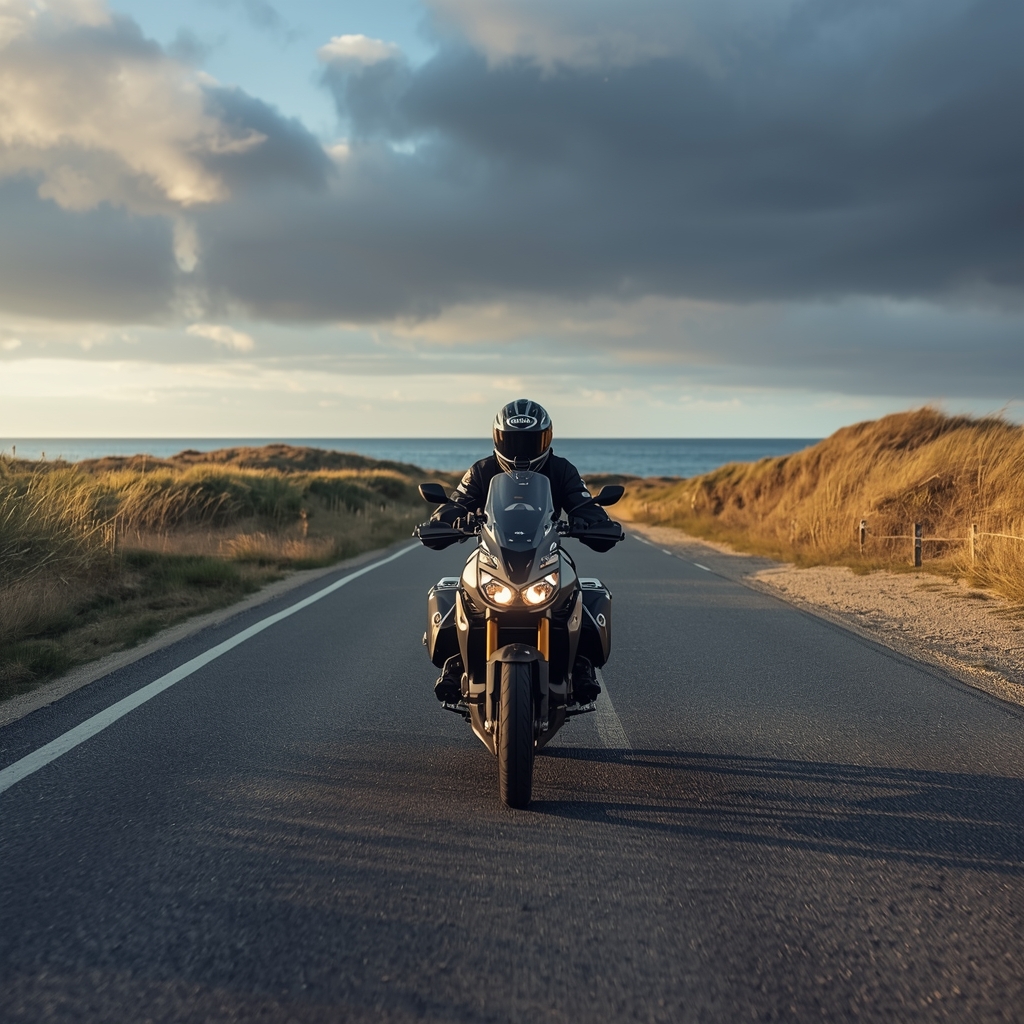
Grab a coffee, sit back and get ready for the ultimate briefing. If you look north on your bike, you've done everything right. Denmark is not a country for knee-draggers looking for alpine serpentines - it is the country for connoisseurs, coastal hunters and asphalt surfers.
Pure freedom awaits you up here, the smell of salt in your nose and streets that wind like gray ribbons through rolling hills and directly along the sea. But so that your road trip doesn't end up in the Danish bureaucratic jungle or your wallet empties faster than your tank, I've put together the ultimate guide for you here. We go deep: from the hard facts of the StVO to the “Hygge” secrets for bikers.
1. The basics: Before you ignite the engine
Before you lash down your panniers, let’s talk paperwork. Denmark may be relaxed, but they don't take fun when it comes to paperwork.
Your documents
Of course, you need your driver's license and vehicle registration certificate (registration certificate part I). Since Denmark is part of the EU, your EU driving license is completely sufficient. What you should definitely have with you is the green insurance card. Although it is no longer mandatory in all EU countries, in Denmark it serves as an easy proof of your insurance coverage in case something goes wrong.
Technology check: Is your bike ready for Denmark?
The Danish police pay attention to the condition of the machines. Your tires should still have a decent amount of tread (1.6 mm is required by law, but given the often changeable weather in the north, I strongly recommend at least 3 mm).
-
Exhaust: Leave the DB killer in. The Danes love their peace and quiet. Machines that are too loud magically attract the attention of politicians.
-
Light: Daytime running lights are mandatory in Denmark. Before you leave, check whether your low beam headlights are working. If you have a modern machine with automatic daytime running lights, this is usually okay, but if in doubt: turn on the low beam!
2. Get on the train: traffic rules you need to know
Driving in Denmark is actually deeply relaxing. The Danes drive defensively, leave gaps and almost never honk. But there are a few rules that can get really expensive if you ignore them.
The speed limit – your biggest danger
There is no discussion here. Fines in Denmark are among the highest in Europe.
-
Inner town: 50 km/h
-
Out of town: 80 km/h (also on expressways, unless otherwise signposted)
-
Highway: usually 130 km/h, but often limited to 110 km/h.
Caution: The law against “Vanvidskørsel” (mad driving) As of 2021, Denmark has one of the toughest laws in the world. If you are caught going more than 100% over the limit (e.g. 100 km/h in the 50 zone) or more than 200 km/h on the highway, your motorcycle will be immediately confiscated and auctioned off by the state. The money flows into the state treasury. It doesn't matter whether the bike belongs to you or is borrowed. So: keep your right hand under control!
Overtaking and “filtering”
Traffic jam on the highway outside Copenhagen? It's tempting to meander through on your bike. Leave it. The so-called “lane splitting” or “filtering” is prohibited in Denmark. Drivers aren't used to it and don't necessarily pull to the side. Wait patiently in line; that's part of Danish calm.
Roundabout etiquette
Denmark loves roundabouts. The rule is simple: whoever is inside has the right of way. When you drive out, you have to signal. Since you are often overlooked as a motorcyclist, drive particularly defensively.
3. The “Margueri rods”: your ticket to biker paradise
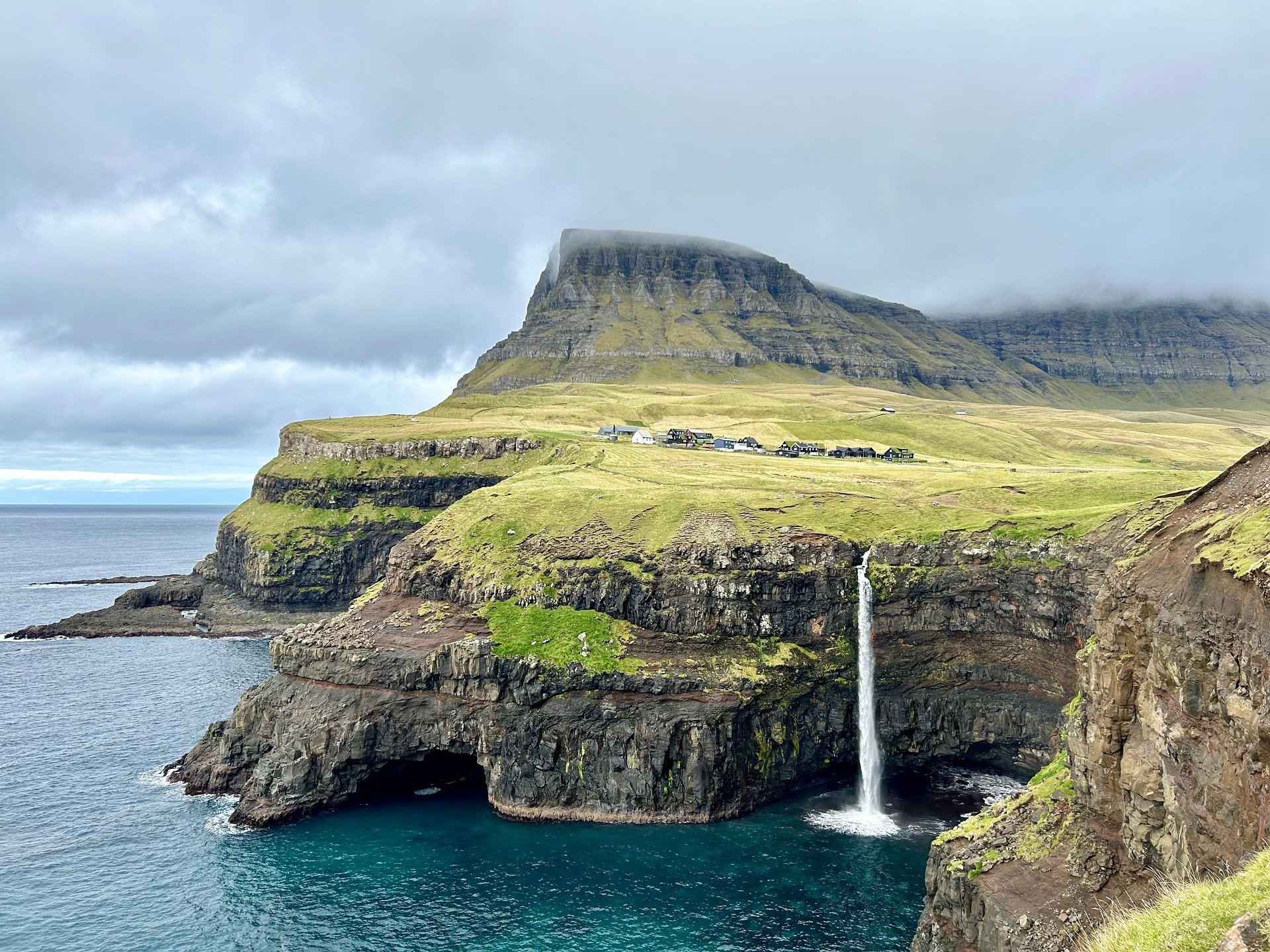
Forget the highways. If you really want to experience Denmark, follow the daisy route. This is a network of side streets over 3,500 kilometers long, marked by small brown signs with a white daisy flower. This route takes you past the most beautiful castles, coastal areas and national parks. It is perfect for motorcycles because it avoids major traffic arteries. Here you will find the curves that you otherwise have to look for in flat Denmark.
4. Bridges and Ferries: How to hop from island to island
Denmark consists of over 400 islands. Sooner or later you will have to cross water.
The big bridges
-
Storebæltsbroen (Great Belt): Connects Funen with Zealand. As a motorcyclist, you drive through the yellow “manual” lanes or use the automatic payment service. Watch out for the wind! The bridge is high and the crosswind can really shake your bike.
-
Øresundsbroen: Connects Copenhagen with Malmö (Sweden). An experience, first thundering through the tunnel and then over the huge bridge.
Ferry pro tip
Motorcycles often have special status on the many small island ferries. Often drive to the front of the queue (look at the markings or ask the staff). Securing the bike: Most ferries have straps on board. Put your bike on the side stand, put it in first gear and pull a strap over the seat (place a cloth underneath!) to tighten it. The Baltic Sea can be treacherous at times.
5. Pit stop: refuel, park and pay
Refuel without stress
In Denmark you will almost only find self-service gas stations. You insert your card (Visa, Mastercard or Debit) into the machine, enter your PIN and select the gas pump.
Important: Often an amount (approx. 100-150 €) is reserved on your card and only billed correctly after a few days. Don't panic, this is normal.
-
Types of fuel: “Blyfri 95” is the standard Super (equivalent to E10). If your bike is older, look for “Blyfri 98” or Super Plus (E5).
Parking: The trap with the window
Motorcycles are often allowed to park on the sidewalk as long as they do not obstruct pedestrian traffic. But don't rely on it blindly. In cities like Aarhus or Copenhagen there are special MC parking spaces. If you are in a regular parking space, use the parking disc! Yes, even on a motorcycle. Clamp it somewhere where it won't blow away (e.g. with a rubber band on the handlebars). The Danish park rangers are merciless and extremely fast.
Cash? You don't need it.
Denmark is virtually cashless. You can pay for even the smallest ice cream at the harbor with a card or Apple/Google Pay. A few Danish kroner (DKK) for emergencies is fine, but you can actually bury your wallet deep in your backpack.
6. Where to stay: From luxury to wilderness
Camping and biker cabins
Denmark has fantastic campsites. Many offer small wooden cabins (huts). This is perfect for us bikers: you have a roof over your head, you don't have to pack a wet tent and you can dry your clothes.
Our tip: Get the “Camping Denmark” app or look for places with the “Biker Welcome” seal.
Shelters: The hardcore version
If you like rustic look Shelters. These are open wooden shelters in nature that can often be used for free or for a few euros. There is usually a fire pit and an outhouse nearby. The “Shelter” app shows you all locations. But be careful: wild camping with a tent or bike in the forest is strictly forbidden in Denmark!
7. Beach driving: The highlight in North Jutland
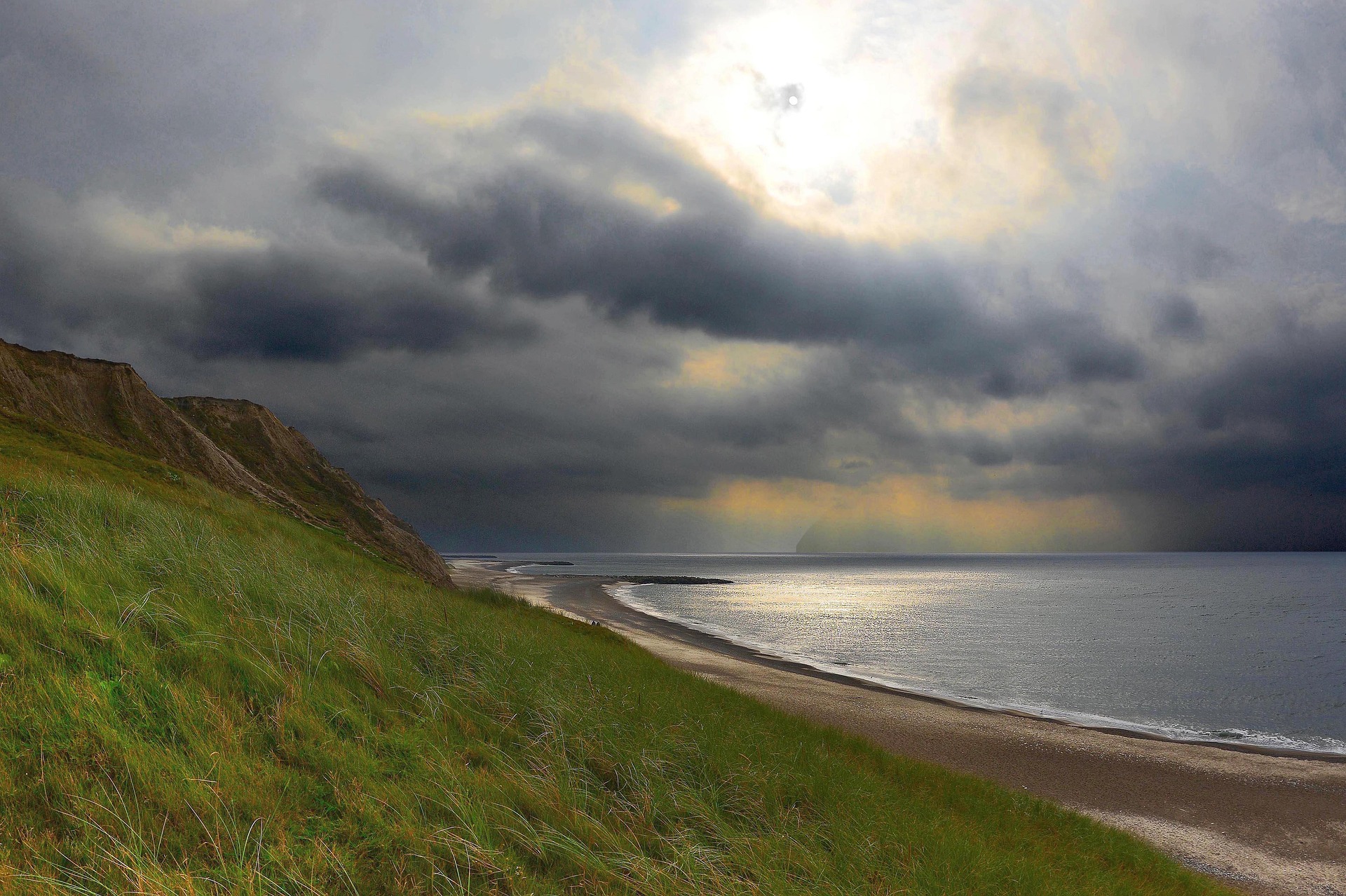
There is something on the North Sea coast that you are not allowed to do almost anywhere else in Europe: riding a motorcycle directly on the beach. Between Rømø and Løkken/Blokhus car beach, the sand is so firm that it is officially considered a road. The normal traffic rules apply here (usually 30 km/h).
Bonus tip: Stay on the firm, damp sand. The soft quicksand on the edge eats up your front wheel faster than you can say “Hygge”. And remember: salt is the enemy of your machine. After visiting the beach, drive straight to the nearest car wash and rinse off the siff thoroughly.
8. Dog, drone and nature: What else is important
Vacation with your four-legged co-pilot?
If you have a dog in the sidecar: Denmark has extremely strict dog laws. A valid pet passport and a rabies vaccination are mandatory. Certain breeds (listed dogs such as pit bulls, etc.) are not even allowed to cross the border.
The drone in your luggage
Denmark is beautiful from the air, but the rules are strict. Flying is taboo near cities, airports and military installations. In the great outdoors it's often okay as long as you don't disturb anyone. Check the “Droneluftrum” app before you take off.
Environmental protection
The Danes are proud of their nature. Leaving rubbish lying around is an absolute no-go. If you rest on the beach or in the forest, take everything with you. “Leave nothing but footprints (or tire tracks)”.
9. Emergency: When nothing works anymore
Denmark is safe, but technology can fail.
-
Emergency call: 112 (for everything: police, ambulance, fire department).
-
Roadside assistance: If you are in the ADAC or a similar club, the local partners (often “Falck”) will help you. Even if you are not a member of one of these associations, you can contact the boys and girls. Here, however, you have to dig a little deeper into your pockets.
-
Health insurance: Your European Health Insurance Card (EHIC) guarantees you treatment in Danish hospitals. The healthcare system is great, but be prepared for the fact that you sometimes have to pay the doctor directly by card and then get the money back from your health insurance later.
10. Culinary delights for bikers: Pølser and Smørrebrød
You can't drive through Denmark without stopping at one Pølsevogn (hot dog cart). It is the social institution of the country. A “Rød Pølse” with fried onions and tartar sauce is the perfect snack between meals. For a longer break, look for a café Smørrebrød offers – richly filled brown breads that are almost works of art. But be careful: the prices for food and especially alcohol are high. A beer in the evening can cost €8-10.
FAQ: Motorcycle tour through Denmark
1. Do I have to drive with lights on during the day?
Yes. Just like for cars, motorcycles in Denmark are also required to have their lights on all year round. The low beam must always be switched on (daytime running lights are often sufficient on modern machines, but when in doubt, low beam is safer).
2. Is there a toll for motorcycles?
Denmark does not have a general motorway toll. However, the two major bridges are subject to tolls: the Storebælt Bridge (between Funen and Zealand) and the Øresund Bridge (between Copenhagen and Malmö). Motorcycles pay significantly less than cars here. Further information about tolls in Denmark You can read about it on the official operator website.
3. Can I weave past cars in a traffic jam?
Officially no. Lane splitting or filtering is not allowed in Denmark. While it is tolerated in some countries, the Danish authorities here often don't take much fun. It is advisable to wait in line.
4. What helmet standard is required?
There is a strict obligation to wear a helmet. The helmet must be approved according to ECE standard 22-05 or 22-06. A violation not only leads to fines, but often also to a ban on further travel.
5. Where can I park my motorcycle in cities?
In Copenhagen and other large cities there are often specially marked motorcycle parking spaces, which are often free. If you park in normal car parking spaces, you must take a ticket unless expressly regulated otherwise. Attention: The parking disc requirement also applies to motorcycles!
6. How strict are the speed controls?
Extremely strict. Denmark uses mobile speed cameras and laser guns. Even small excesses cost high three-digit amounts. Particularly important: If you speed excessively (over 100% too fast or over 200 km/h), the motorcycle can be confiscated and auctioned off - the proceeds go to the state.
7. Are there any special features of the road conditions?
The main streets are excellent. However, on smaller side roads and near the coast you must always expect sand drifts or gravel when cornering. Agricultural pollution is also common in rural areas.
8. Do I need a high-visibility vest or a first-aid kit?
In contrast to Germany or Austria, carrying a high-visibility vest, a first-aid kit or a warning triangle is not a legal requirement for motorcyclists in Denmark. However, it is strongly recommended for security reasons.
9. How does refueling work?
Most gas stations in Denmark are ATM stations („Selvbetjening“). You pay directly at the pump with a credit card or debit card (PIN required!). Make sure your tank is well filled before long journeys through rural areas or in the evening.
10. What do I have to consider for group trips?
Denmark is ideal for groups. Make sure to drive in a staggered manner to maintain a safe distance. The Danish police are very careful about “aggressive” driving behavior – so stay relaxed and enjoy the scenery.
11. Can I park my motorcycle on the beach?
On a few beaches in North Jutland (e.g. Rømø or Børsmose) vehicles are allowed on the sand. However, be careful here: the sand can be treacherous and salt air can quickly affect the machine.
12. What alcohol limit applies to bikers?
The same 0.5 per mille limit applies as for drivers. However, since riding a motorcycle requires full concentration and the penalties in Denmark for alcohol violations are draconian (often a month's salary), we recommend: Zero alcohol.
13. What are the rules for taking children?
Children are allowed to ride on the motorcycle as long as they are tall enough to safely reach the footrests. There is no specific age limit, but appropriate protective clothing and a suitable helmet are mandatory.
14. Do I need to carry spare light bulbs?
It's not compulsory, but since riding without lights results in a hefty fine, a small set of spare lamps (if the motorcycle doesn't have LEDs) makes a lot of sense.
15. What happens if I have a breakdown?
The Danish breakdown service is often called Falck. If you are a member of an automobile club (such as ADAC, ÖAMTC or TCS), roadside assistance is usually covered by partner contracts. The emergency number 112 also works for technical emergencies on the motorway if there is danger.
Conclusion: Your roadmap for the north
Denmark is not a country for hectic people. Anyone who comes here wants to feel the wind, enjoy the space and sit in front of the tent or hut in the evening with a grin.
Here is your quick checklist again:
-
Light on? (Always!)
-
Right hand quiet? (Because of the confiscation!)
-
Card included? (Cash is a thing of the past!)
-
Rain suit ready? (The weather in the north is moody!)
-
Hygge mode activated? (Leave stress at home!)
Further biker links:
Denmark will enchant you if you get involved in its rhythm. The roads are good, the people are friendly and the horizon is endless. So what are you waiting for? Put on your helmet, go in and head over the border.
For many years I have been intensively involved with motorcycles, their technology and all topics relating to safety, maintenance and equipment. My goal is to present practical information in an understandable way, to realistically assess risks and to objectively classify common myths.
All content on moto-guide.com are based on in-depth research, technical classification and my experience in dealing with motorcycles. I want to help riders make informed decisions and use their motorcycle safely and consciously.




Leave a comment
Participate in the discussion?Leave us your comment!