
Motorcycling in Hungary - The guide to traffic rules, laws and numerous insider tips
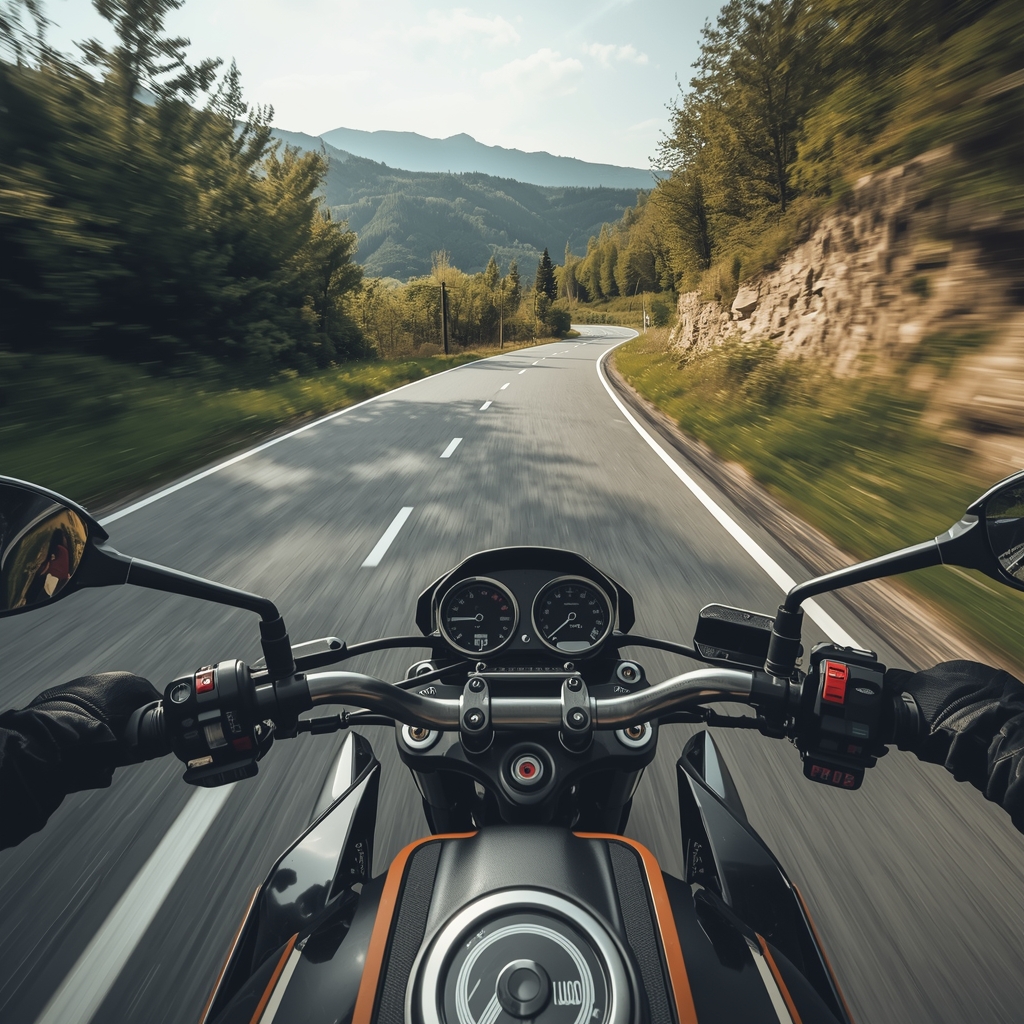
Are you planning your next road trip and so far only have Hungary on your radar as a flat, dusty transit route? Big mistake! Anyone who only crosses Hungary on the motorway is missing out on one of the most varied and, in terms of price and performance, most attractive biker paradises in Central Europe.
While the passes in the Alps are subject to noise bans, route closures and dense streams of tourists, Hungary offers you a fascinating mix of pure freedom and technical demands: from the sharp serpentines of the Mátra Mountains to the endless expanse of the Puszta slopes for adventure bikers to the Mediterranean lifestyle on Lake Balaton.
So that your trip is a complete success and you don't fall into the notorious (and expensive) traps of Hungarian traffic control, I have created this guide for you. We don't just look at the raw numbers on tolls and fines, we also delve deep into the Hungarian biker scene, discover secret motorcycle tours and clarify why driving at the wrong speed at a railway crossing drains your travel budget faster than a tank of Super Plus. Pack your bags, check your tires – Hungary is calling!
1. Entry & documents: The bureaucratic check
Hungary is a member of the EU and the Schengen area. For you, this means: no long queues at the border (except to non-Schengen neighbors such as Serbia or Ukraine). Nevertheless, the Hungarian authorities don't take fun when it comes to identity checks. The police are instructed to check documents meticulously.
What must be in the tank bag:
- ID card or passport: Must be valid. Temporary ID is accepted but should be current.
- Driving license & vehicle registration: Both in the original. Digital copies on smartphones are often not recognized during an inspection.
- The green insurance card: Although the license plate agreement is theoretically sufficient within the EU, the Hungarian police (Rendőrség) often explicitly ask for proof in the event of accidents or checks. It saves time and unnecessary discussions.
- European accident report: In Hungary, due to the language barrier, it is worth its weight in gold to record the events on site without an interpreter.
2. Traffic rules: The Hungarian peculiarities
There is strict adherence to traffic rules in Hungary. The police have state-of-the-art equipment, including drone surveillance at confusing intersections and the comprehensive “Veda” camera system that automatically scans license plates.
Speeds (unless otherwise marked):
- In town: 50 km/h
- Out of town: 90 km/h
- Expressways (Autóút): 110 km/h
- Motorways (Autópálya): 130 km/h
Insider tip: Pay particular attention to town signs. The speed measurement often begins exactly at the sign. Since the fines in Hungary are very high in relation to income, lawns are definitely not worth it here.
3. The 5 km/h trap on the track
This is where most foreign motorcyclists fail. According to the Hungarian Road Traffic Act (KRESZ), extremely specific rules apply to level crossings, which are specifically monitored.
The rules in detail:
- Approach: You must approach the level crossing at a maximum of 30 km/h in urban areas and at a maximum of 40 km/h outside of urban areas.
- The crossing: The tracks themselves must be crossed at “walking speed”. In practice that means maximum 5 km/h.
This is technically demanding for motorcyclists, as rolling slowly impairs stability.
Nevertheless, anyone who drives over this quickly risks a fine in the three-digit euro range. The police are often on the lookout, particularly at unrestricted crossings in rural areas.
4. Zero tolerance: 0.0 per mille
Hungary shows no mercy when it comes to alcohol. This applies strict 0.0 alcohol limit.
The law is applied without discretion. Anyone caught with residual alcohol must expect drastic consequences:
- Up to 0.5 per mille: high fine and immediate driving ban.
- Over 0.5 per mille: It is a criminal offense. The driver's license will be confiscated immediately and there will be a risk of legal proceedings and a ban from Hungarian territory.
5. Toll & Digital Vignette (E-Matrica)
Hungary uses a fully automatic camera system. There are no adhesive vignettes.
Registration is done digitally using your license plate. There is a discounted category for motorcycles D1M.
Prices for motorcycles (category D1M) 2025/2026:
| Period | Price 2025 (approx.) | Price 2026 (predicted) |
|---|---|---|
| 1 day | 2,660 HUF | 2,850 HUF |
| 10 days | 3,310 HUF | 3,550 HUF |
| 1 month | 5,360 HUF | 5,750 HUF |
Important: The 1-day vignette is new and ideal for transit journeys. However, if you stay for a week, you can use the 10-day vignette. Buy the vignette online nemzetiutdij. Um Avoid fees at gas stations. There is a 60-minute grace period: If you realize that you have driven onto the motorway without paying a toll, you have one hour to buy the vignette again. Otherwise you may have to pay a fine.
6. Mandatory equipment & technology
The Hungarian KÖHÉM regulation is strict. You must have the following with you:
- First aid kit: Type “A” for motorcycles. A German first aid kit according to DIN is usually tolerated as long as it has not expired.
- High visibility vest: Mandatory for anyone who leaves the vehicle outside built-up areas in the event of a breakdown or accident. Keep them handy!
- Lighting: Daytime running lights or low beams are for motorcycles 24/7 duty.
7. Curve Guide: The Top Regions
If you're looking for curves, you have to go north or west.
Here are the absolute highlights:
A. The Mátra Mountains: serpentine spectacle
The Mátra Mountains are the center of Hungarian motorcycle culture. The Street 24 leads from Gyöngyös up to Kékestető. Here you will find first-class asphalt and corner combinations that require technical skills. Hundreds of local bikers meet here on weekends - the atmosphere is fantastic.
B. Bükk National Park: The “Green Hell” of Hungary
The route from Eger to Lillafüred is pure romance. Narrow forest passages, mossy rocks and very little traffic during the week. In Lillafüred you should park at the castle by the lake and enjoy a Hungarian coffee. Caution: In the forest areas the road can often be damp or covered with gravel.
C. Balaton-Oberland: Mediterranean flair
Avoid the crowded riverside street. Instead, drive into the hinterland of the north bank. The Káli basin offers winding roads through volcanic hilly landscapes. It is very reminiscent of Tuscany, only with a view of the “Hungarian Sea”.
8. Off-Road Freedom: Legal in the dirt
Hungary is one of the last countries in Central Europe where enduro hiking is still possible on a large scale. Driving on unpaved roads is often legal outside of national parks. The Puszta offers sandy slopes that will challenge you and your suspension. However, always pay attention to nature conservation signs - violations in national parks (like Hortobágy) are punished extremely expensively.
9. Culinary & Csárda culture
A motorcycle tour without good food? Not in Hungary! Look for signs that say “Csárda.”
- Gulyasleves: The real goulash soup is cooked in a cauldron over an open fire.
- Pörkölt: A thick meat stew that is perfectly filling.
- Tip: In many restaurants, the service fee (10-15%) is already included in the bill. Check the end of the bill (“Szervizdíj”) before typing extra.
10. Security & Accommodation
Hungary is safe, but theft does occur. Prefer accommodation with “Tender parkoló” (closed parking lot). In Budapest you should never leave your motorcycle unsecured on the street overnight. Specialized biker hotels like this Magyar route 66 not only offer safety, but also drying rooms for your station wagon.
11. FAQ – Frequently asked questions about motorcycle trips to Hungary
Do I need an international driving license for Hungary?
No. A normal EU driving license in card format is completely sufficient and is recognized by the Hungarian authorities.
Does the 0.0 alcohol limit also apply to tourists?
Yes, absolutely. There are no exceptions in Hungary. Anyone who drives doesn't drink a drop of alcohol. The checks are frequent and strict.
Where is the best place to buy the motorcycle vignette?
The safest and quickest way is to buy the e-vignette (E-Matrica) online on the official website of the National Toll Collection (NÚSZ). Pay attention to the category D1M as this is specially discounted for motorcycles.
Do I have to stop at almost every railroad crossing?
Yes. The rule says that you have to cross the tracks at walking speed (approx. 5 km/h). Even if there is no train coming and the barrier is open, you have to slow down significantly. The police often measure speed here.
Is driving off-road allowed?
It is permitted on public, unpaved dirt roads as long as there is no prohibition sign. However, cross-country riding through forests or across fields and driving into national parks is strictly prohibited and will result in the motorcycle being confiscated.
What do I do if I forget the vignette?
Don't panic: you have exactly the right moment from the moment you enter the motorway 60 minutes time, purchase a vignette online or at a gas station. There will be no punishment during this hour.
Can I pay by card or do I need cash?
In cities and at gas stations you can pay with card almost everywhere. However, in small villages or remote csárdas, cash (forint) is often still the only option. It's worth always having around HUF 10,000 - 20,000 in reserve.
Conclusion: Hungary is waiting for you
Hungary is a country of contrasts. Anyone who knows the strict traffic rules and uses the toll correctly will experience a freedom that has become rare in Western Europe. Curves, gravel, hospitality; Hungary offers everything a biker's heart desires at fair prices.
For many years I have been intensively involved with motorcycles, their technology and all topics relating to safety, maintenance and equipment. My goal is to present practical information in an understandable way, to realistically assess risks and to objectively classify common myths.
All content on moto-guide.com are based on in-depth research, technical classification and my experience in dealing with motorcycles. I want to help riders make informed decisions and use their motorcycle safely and consciously.




Leave a comment
Participate in the discussion?Leave us your comment!