
What CE levels, abrasion resistance and materials really mean
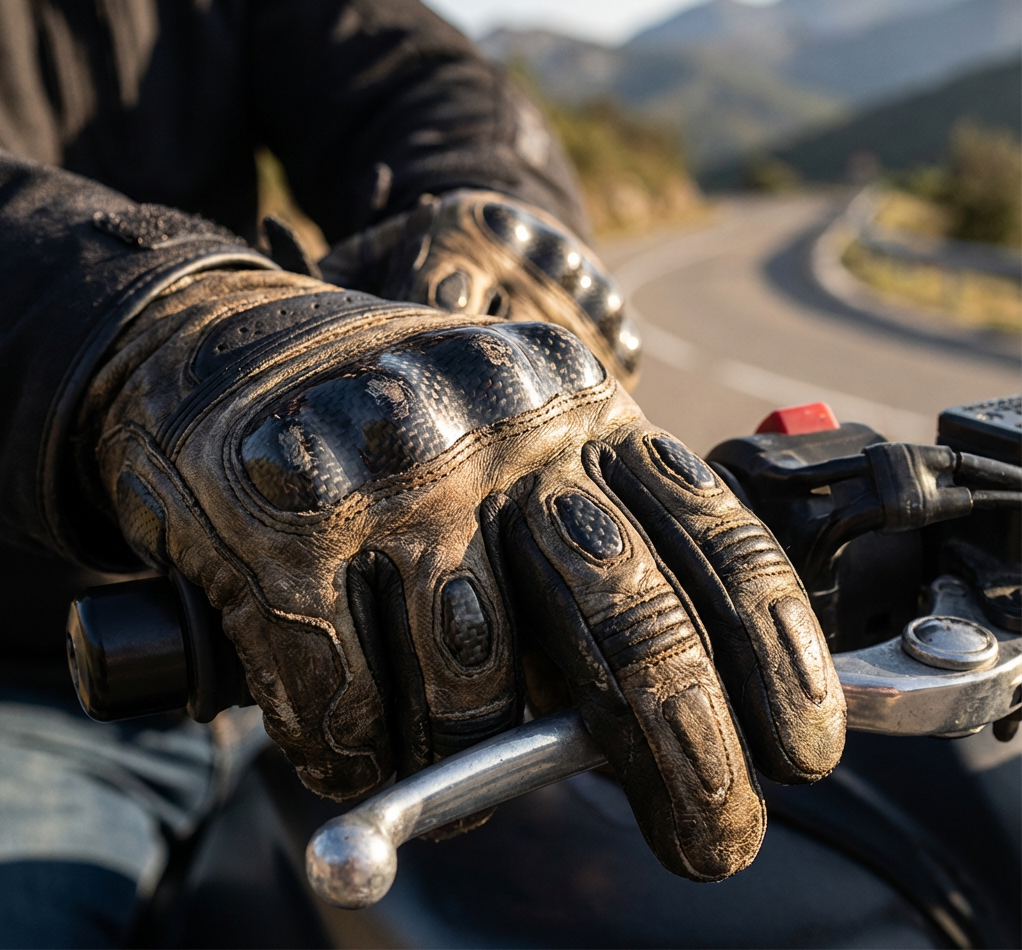
Motorcycle protective clothing is personal protective equipment. It has a clear task: to protect the body as much as possible from injuries in the event of a fall. It's not just protectors that play a role, but above all the interaction between material, workmanship, construction and standards. Many misunderstandings arise because these connections are rarely explained in a comprehensible manner.
This article explains how protective clothing works technically, what CE levels mean and why abrasion resistance and choice of material are crucial.
Why protectors alone do not provide sufficient protection
In practice, most injuries in motorcycle accidents occur not from the initial impact, but from the subsequent sliding on the asphalt. During this sliding, high frictional forces and heat act on the clothing. If the outer material fails early, the skin lies directly on the road. The result: severe abrasions and burns to the skin.
Protectors can absorb impact energy, but they do not protect against abrasion. Therefore, it does not make technical sense to evaluate protective clothing solely based on the quality of the protectors. What is always crucial is the combination of abrasion-resistant outer material, sturdy seams and correctly positioned protectors.
Importance of the CE standard EN 17092
Motorcycle clothing is tested in Europe according to the EN 17092 standard. This standard evaluates the entire garment as a unit. It takes into account not only the material, but also the workmanship, the seam strength and the position of the protectors.
The protection classes range from A to AAA. A higher class means that the product can withstand higher loads. CE-A represents the minimum protection, while CE-AA and CE-AAA stand for significantly higher abrasion and tear resistance. CE-AA represents a technically sensible standard for everyday road use, as protection and wearing comfort are balanced.
However, CE certification does not replace a risk assessment. It shows that a product meets defined minimum requirements under laboratory conditions. Real accidents can vary, which is why CE values should always be understood as guidance and not as absolute security. In the event of a fall, many factors play a role in how well the protective clothing fulfills its purpose. However, we will explain this in detail elsewhere.
What is tested during the CE exam
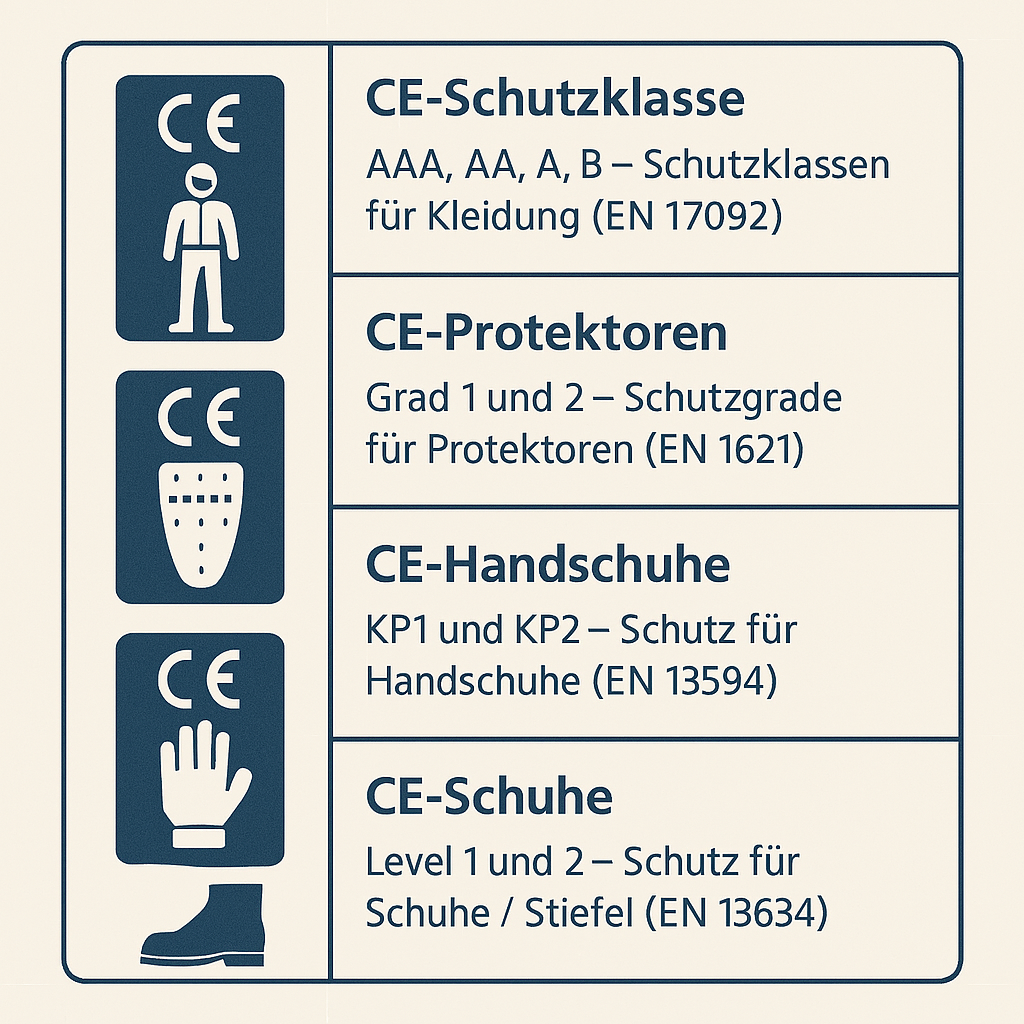 When testing according to EN 17092, several properties are checked. This includes the material's abrasion resistance, which measures how long a material can withstand contact with a simulated asphalt surface. In addition, seams are tested for tensile strength, as they are subject to heavy loads in the event of a fall.
Another important point is the stability of the protector position. Protectors must remain where they are intended, even if clothing shifts during a fall. A good fit is therefore not just a question of comfort, but also a safety-relevant factor. In another article we explain, What is worthwhile when buying motorcycle equipment and what should be taken into account.
CE protectors and the difference between Level 1 and Level 2
Protectors are tested according to the EN 1621 standard. This measures how much energy is passed on to the body upon impact. Level 1 protectors allow a higher residual force than Level 2 protectors.
Technically, this means that Level 2 protectors reduce the stress on bones and joints significantly more. Modern materials enable this greater protective effect without noticeably restricting mobility. From a technical point of view, level 2 protectors therefore offer a clear safety advantage, especially on heavily stressed areas of the body such as shoulders, elbows, knees and back. Level 2 protectors are also often more expensive than Level 1 protectors.
Abrasion resistance as a crucial protection factor
Abrasion resistance describes the ability of a material to withstand contact with the road surface. When slipping, high temperatures and mechanical stress occur. If the material fails, serious skin injuries can quickly occur.
Even small differences in the duration of abrasion can have a major impact on the risk of injury. That's why when developing protective clothing, special attention is paid to heavily exposed areas. These areas must have significantly higher abrasion values than less exposed areas.
Materials and their protective effect
Leather has been considered a reference material for decades due to its uniform structure and high abrasion resistance. It offers very good protection, but is heavier, less ventilated and requires more care than textile.
Textile clothing can achieve a comparable level of protection if high-quality materials are used. High-strength polyamides such as Cordura have significantly better abrasion and tear values than simple textiles. Used alone, they are sufficient for medium protection classes, and in combination with reinforcements they are also sufficient for higher requirements.
Aramid fibers such as Kevlar or Twaron are characterized by very high heat and abrasion resistance. They are usually used as an additional layer in fall areas. There they significantly increase the protective effect without having a major impact on wearing comfort.
Modern fibers such as UHMWPE, known under the trade name Dyneema, offer very high strength at low weight. They can be particularly useful with motorcycle jeans. However, the actual protective effect depends heavily on the processing and the material content.
 Why the material mix is crucial
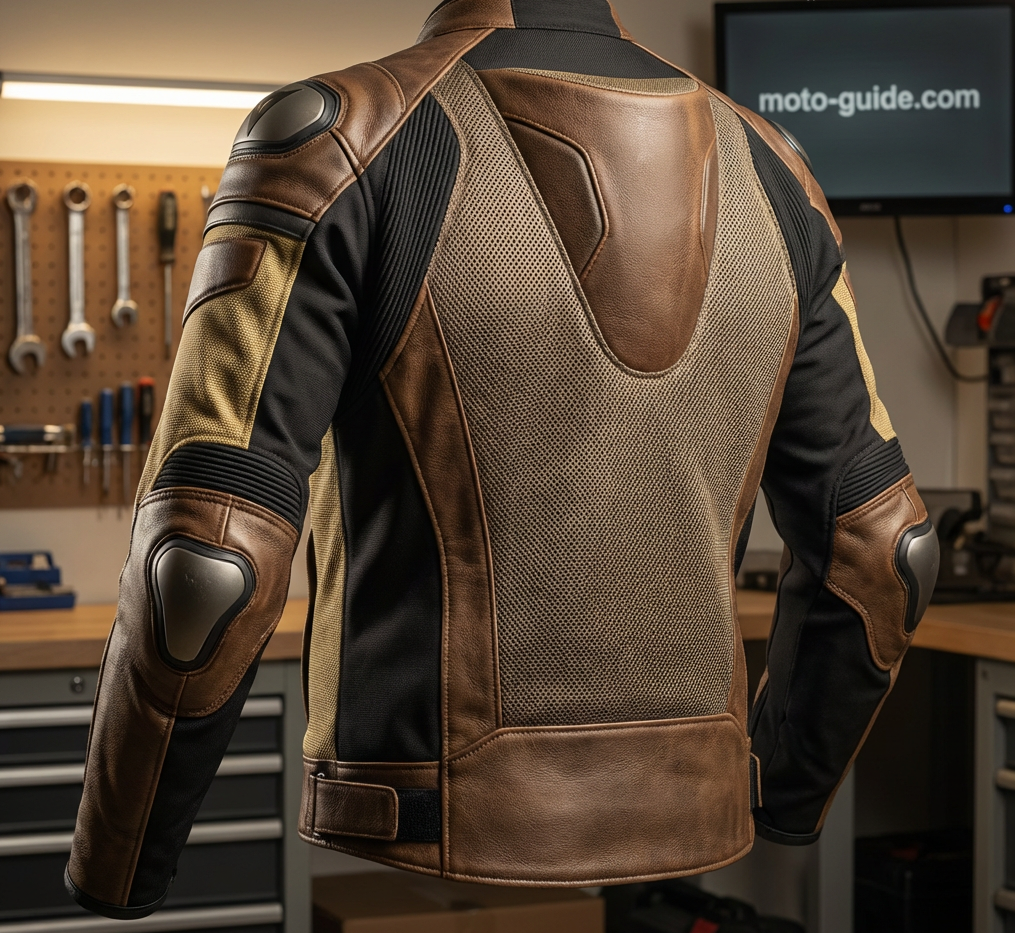
Motorcycle clothing must meet different requirements. Fall areas require maximum abrasion resistance, movement zones must be flexible and climatic requirements require ventilation. These requirements cannot be met with a single material.
High-quality protective clothing is therefore always structured zonally. Different materials are used specifically where their properties make sense. Products with a very simple material structure usually do not achieve this balance and therefore offer less protection.
The importance of seams
Seams are often the weak point of a garment. Even very abrasion-resistant materials lose their protective effect if the seam tears. That's why special types of seams and high-strength yarns are used in safety-relevant areas.
Double or overlapping safety seams significantly increase stability. These construction details are difficult to recognize for the end customer, but they have a major influence on the protective effect.
Ventilation and safety in the technical field of tension
Ventilation increases comfort but often reduces abrasion resistance. Large mesh inserts offer little protection against asphalt contact. From a technical perspective, such materials should never be used in primary fall areas.
Sensible ventilation is achieved through controlled openings, air channels and breathable membranes. The protective basic structure is retained.
Conclusion: Technical understanding increases security
Motorcycle protective clothing only fulfills its task reliably if the material, construction and standards are coordinated. CE levels provide guidance, but do not replace an understanding of abrasion resistance, material quality and workmanship.
Anyone who knows these technical basics can better assess and choose protective clothing more consciously. This won't prevent every accident, but it will significantly reduce the risk of serious injuries.
If you would like to find out more about the topic, we can offer you the following reference works and sources.
Sources:
- Maids – In-Depth investigation of motorcycle accidents
- CE marking – Internal Market, Industry, Entrepreneurship and SMEs
For many years I have been intensively involved with motorcycles, their technology and all topics relating to safety, maintenance and equipment. My goal is to present practical information in an understandable way, to realistically assess risks and to objectively classify common myths.
All content on moto-guide.com are based on in-depth research, technical classification and my experience in dealing with motorcycles. I want to help riders make informed decisions and use their motorcycle safely and consciously.




Leave a comment
Participate in the discussion?Leave us your comment!