What you should know about motorcycle jackets
FAQ Motorcycle Jackets – Everything you need to know
Motorcycling is more than just a hobby - it is freedom, adventure and a way of life. But whether you're on the country road or the highway, the right motorcycle jacket is crucial for safety, comfort and style. In this FAQ we answer the most important questions about motorcycle jackets and give you in-depth technical insights.
1. What types of motorcycle jackets are there?
Motorcycle jackets differ primarily in material, area of application and protective technology. The most common types are:
Textile jackets:
Made from high quality synthetic materials such as Cordura or polyester, often with waterproof membranes. They are light, flexible and often modular. Perfect for touring riders who value comfort, ventilation and weather resistance.
Leather jackets:
The classic material for motorcyclists. Leather is extremely abrasion-resistant, durable and offers excellent protection in the event of a fall. Modern leather jackets combine protection and freedom of movement through stretch zones and protector pockets.
Hybrid jackets:
Combination of leather and textile materials to combine the advantages of both worlds: maximum safety in critical areas and comfort in flexible areas.
Special jackets:
For race track riders or off-road enthusiasts, there are extremely lightweight, aerodynamic or highly ventilated versions designed for maximum performance and protection at high speeds.
2. Why is the material mix crucial for motorcycle jackets?
A motorcycle jacket must meet different requirements at the same time:
-
Fall areas: Arms, shoulders and back must provide maximum abrasion resistance. Accordingly, there are often material reinforcements that protect precisely these areas.
-
Movement zones: Elbows, armpits and waist need flexible materials for full freedom of movement. Stretch inserts are often used here.
-
Climatic adaptation: Ventilation and membranes regulate the temperature so you don't sweat or freeze. In addition to the membrane, there are additional ventilation and venting inserts.
High-quality jackets therefore have a zonal structure: where abrasion resistance is important, robust leather or appropriate fiber is used, while movement zones have elastic inserts or mesh materials. This combines safety with comfort.
3. Which protectors are important?
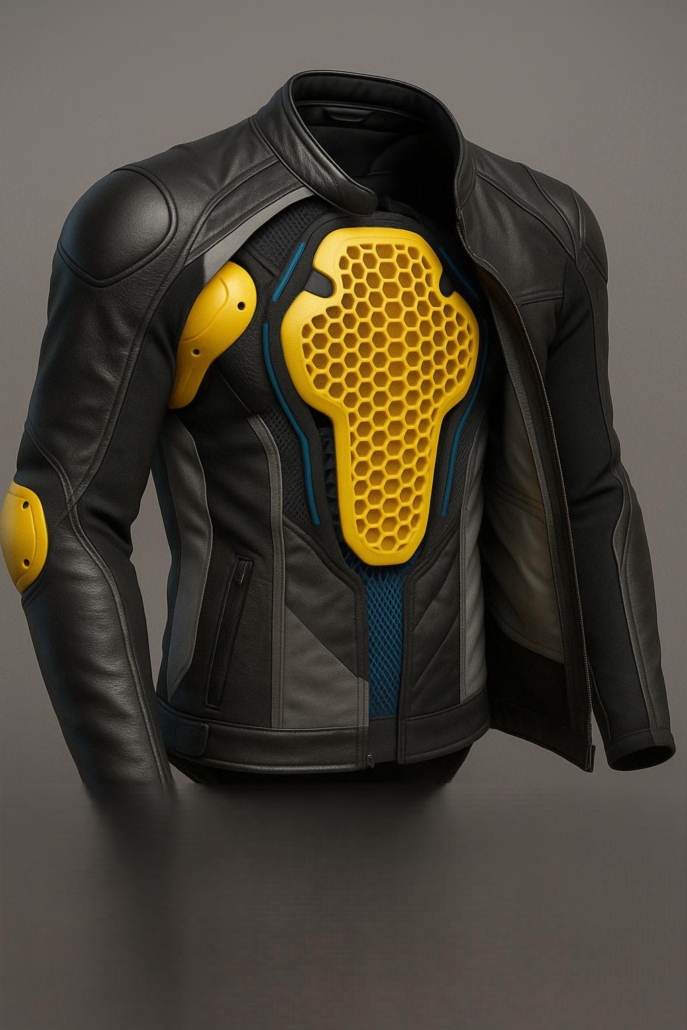
Protectors are the heart of security. High-quality jackets have protectors on:
-
Shoulder: CE certified as standard, often made of viscoelastic foam or hard plastic.
-
Elbow: Extra padding or protectors protect against bruises and abrasion.
-
Back: A back protector can make the difference between minor injury and serious damage.
Tip: Protectors alone do not provide complete protection. The combination of sturdy outer material and certified protectors is crucial. Cheap jackets without tested CE protectors often only offer visual safety. What the different terms such as CE certification and abrasion protection mean, you can read about it in this post.
4. How do I find the right size?
Fit is crucial for safety and comfort. Motorcycle jackets should:
-
Fit snugly without restricting freedom of movement.
-
Sleeves and back must be long enough for protectors to fit properly.
-
Be as adjustable as possible using Velcro fasteners, zippers or elastic inserts.
A tip: Many manufacturers offer size charts based on body measurements. Measure before purchasing and check the table carefully - the wrong size can be dangerous in an emergency. But be careful! Every jacket should be tested in the store before purchase. Ideally with the clothing that you would wear while riding a motorcycle.
5. Which ventilation systems make sense?
Riding a motorcycle in summer can be extremely hot. Modern jackets therefore have:
-
Zippers and ventilation flaps: Allow air to flow through in a targeted manner.
-
Mesh inserts: promote air circulation in the armpits, back and chest.
-
Removable inner lining: Also for cooler days to compensate for temperature differences.
Proper ventilation prevents heat build-up, increases comfort and reduces fatigue on long tours.
6. Are waterproof jackets really waterproof?
Not every motorcycle jacket labeled “waterproof” is completely waterproof.
Waterproof jackets usually have:
-
Membrane: Keeps water out but allows sweat to escape to the outside.
-
Prevent covered zippersthat water gets in.
-
Seam sealing: Protects seams from moisture.
For long tours in the rain, a jacket with an appropriate membrane is worth it. You should also use a rain jacket, as water has the property of flowing in the wind and is sure to find its way onto your body. By the way, this is not a reason for a complaint and will be treated accordingly from manufacturer to manufacturer.
7. How do you properly care for motorcycle jackets?
Good care extends the lifespan and the protective effect:
-
Leather jackets: Treat with leather grease or care cream to keep the material supple.
-
Textile jackets: Wash gently, treat membrane separately, do not tumble dry.
-
Protectors: Remove before washing.
Regular care ensures that the jacket and protectors continue to provide reliable protection even after years.
8. What safety standards should a motorcycle jacket meet?
Look for the CE marking, which meets European safety standards:
-
EN 1621-1: Protectors for shoulders and elbows.
-
EN 1621-2: Back protectors.
-
EN 13595: Abrasion and tear resistance of jackets.
Only tested materials and protectors guarantee real protection. Everything else looks more like a lifestyle feature than safety.
9. How do you combine style and safety?
Motorcycle jackets don't have to be bulky or boring. Modern manufacturers offer:
-
Slim fits that fit snugly.
-
Combination of leather, textile and stretch for dynamism and comfort.
-
Color and design variations: From classic black to bright colors to reflective elements for visibility.
This means the jacket remains stylish without compromising safety. Some manufacturers also offer thermal jackets to go with their jackets. For example, these can be worn independently of the outer jacket and also serve as a fashion accessory.
10. How much should you spend on a quality motorcycle jacket?
The investment is worth it: a good jacket usually costs between 300 and 800 euros, depending on the material, protectors and equipment. Cheap alternatives under 150 euros rarely offer CE-certified protectors or durable materials. No matter how much you spend, the legal guarantee always applies.
Remember: your jacket can save lives in an emergency - a reason not to save money at the wrong end.
11. Tips for purchasing
-
Trying on is mandatory: Check mobility, feel protectors, test airflow. If in doubt, seek professional advice.
-
Investing for the future: Upgradeable protectors and modular linings are a plus.
-
Check security standards: CE mark, abrasion resistance and stitching.
-
Consider weather conditions: Membrane, ventilation, removable lining.
-
Compare brands: Well-known and established manufacturers offer motorcycle jackets in a wide variety of quality shapes.
12. Conclusion
Choosing the right motorcycle jacket is much more than a question of looks. It is a crucial factor for your safety, comfort and driving pleasure. High-quality materials, tested protectors, a perfect fit and smart ventilation systems are the basis for a worry-free driving experience.
Invest in quality - your back, your shoulders and your freedom on the road will thank you.
Sources:
For many years I have been intensively involved with motorcycles, their technology and all topics relating to safety, maintenance and equipment. My goal is to present practical information in an understandable way, to realistically assess risks and to objectively classify common myths.
All content on moto-guide.com are based on in-depth research, technical classification and my experience in dealing with motorcycles. I want to help riders make informed decisions and use their motorcycle safely and consciously.




Leave a comment
Participate in the discussion?Leave us your comment!