On a motorcycle you rarely just want to get from A to B. You ride for the road: for the bends, the landscape and the moment when asphalt and line simply fit. This is exactly where many normal navigation systems fail, because they think like car drivers. Fast, short, efficient. We want it twistier, sportier or simply more beautiful. That's why it's worth looking at the best route planners for motorcyclists.
A good motorcycle route planner decides whether your tour becomes a highlight or a test of patience. Whether you end up on gravel, lorry routes and dull main roads. Or on bends, climbs and roads you'd love to ride again straight away.
Here you will find out:
- what really matters in a route planner,
- which tools are suitable for motorcyclists,
- which recommendations you can confidently adopt in your planning,
- and how to get more out of every tour, from the after-work loop to the Alpine trip.
Why normal route planners often aren't suitable for motorcycles
Google Maps, Apple Maps or the car's sat nav have one goal: efficiency. On a motorcycle you have a different goal: riding fun.
The problem:
- shortest route ≠ most beautiful route
- fastest route ≠ best route to ride
- motorway ≠ experience
Many riders know this: you plan a tour, follow the sat nav blindly and end up on endless straights, through villages at 30 km/h or in front of a closed mountain pass.
A good motorcycle route planner takes into account:
- bends
- elevation profiles
- road quality
- traffic density
- closures specifically for motorcycles
- beautiful landscape
It doesn't calculate in minutes but in how much the road has to offer.
What makes a good motorcycle route planner
Before we get to specific tools, you should know how to recognise quality.
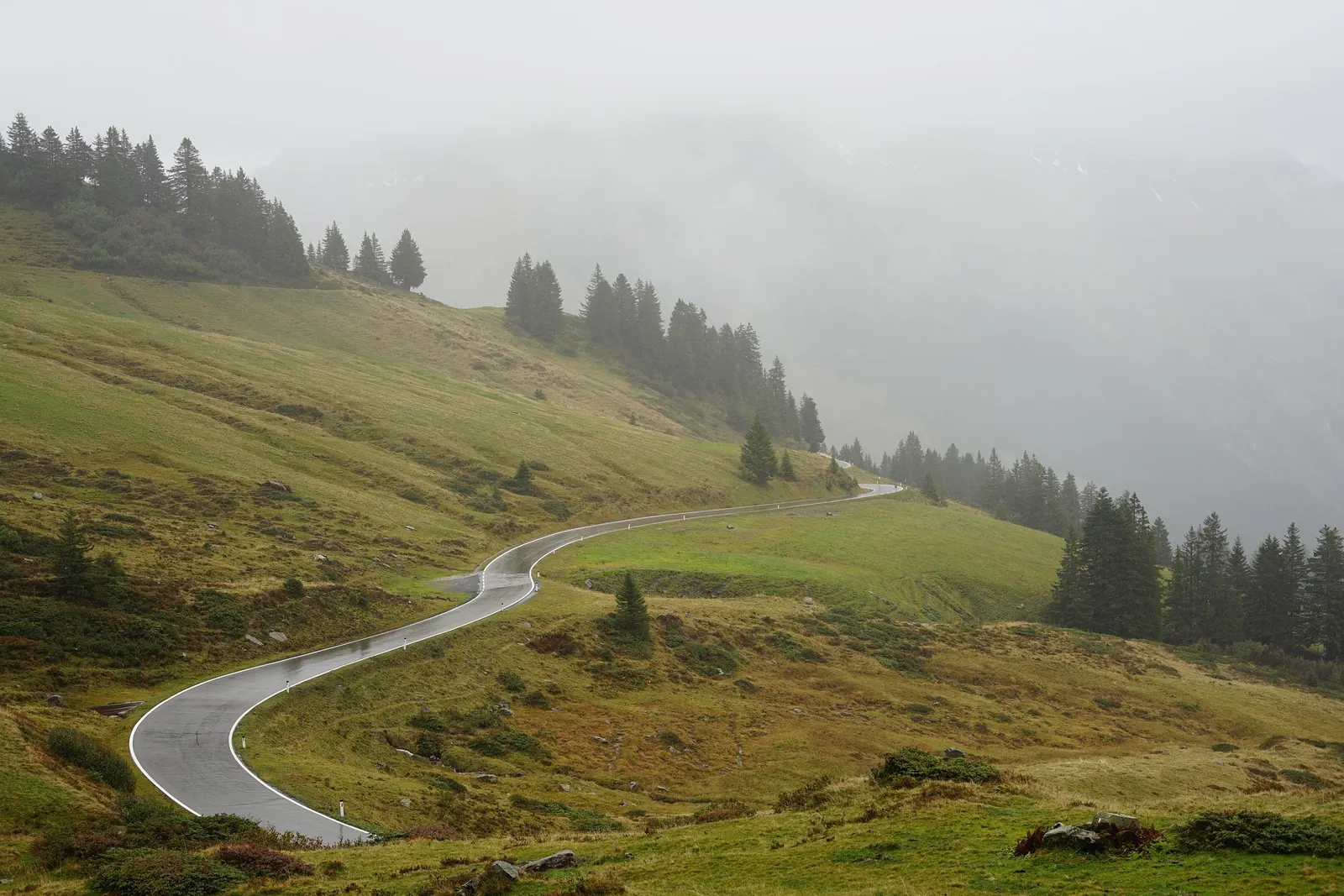
1. Bends before travel time
We want bends. Full stop. A useful route planner offers you:
- twisty alternatives
- the option to avoid motorways
- deliberate detours over beautiful roads
If this function is missing, a tool is hardly any use for motorcycling.
2. Matching your riding style and motorcycle
Someone on a supersport bike wants something different from someone on an adventure bike or cruiser. Good planners let you choose:
- sporty or relaxed routes
- avoid gravel or deliberately include it
- planning that suits your range and fuel stops
3. Plan at home, navigate on the road
This is what it looks like in practice:
- Planning is done at home.
- Navigation happens on the road.
A good route planner:
- is easy to use on a PC or tablet
- syncs with the app or sat nav
- exports routes cleanly (GPX etc.)
4. Knowledge from the community
The best roads are often known not by the algorithm but by other riders. Look for tools with:
- community ratings
- shared routes
- comments on closures or road conditions
The best route planners for motorcyclists compared
Kurviger: the classic for bend hunters
Many motorcyclists start route planning with Kurviger – and rightly so.
Strengths:
- focus on twisty roads
- very easy to use
- clearly designed for motorcycles
Weaknesses:
- limited offline functions
- less detail for long trips
Calimoto: riding fun at the centre
Calimoto clearly sees itself as a motorcycle app and delivers what it promises.
Strengths:
- focus on bends and elevation
- routes from the community
- recording of your tours
- information on closures
Weaknesses:
- subscription model
- sometimes very sporty route choice, not always beginner-friendly
Recommendation: very good for anyone who wants to discover new roads and is willing to pay for quality.
MyRoute-app: planning for the demanding
If you plan multi-day trips, you can hardly get around MyRoute-app.
Strengths:
- very precise planning
- various map providers
- ideal for Garmin and co.
- clean GPX exports
Weaknesses:
- more complex than other tools
- more of a planning tool than a fun button
Recommendation: first choice for touring riders, Alpine passes, European trips and structured planning.
Garmin BaseCamp: unloved but powerful
BaseCamp isn't fun, but it's a real workhorse. However, Garmin hardly develops the software any more and now focuses on its apps. So check whether it still works with your sat nav.
Strengths:
- full control over every route
- best integration with Garmin sat navs
- usable offline
Weaknesses:
- long learning curve
- old-fashioned interface
Recommendation: for tech-savvy riders with a Garmin sat nav who want to know exactly what they are riding.
Smartphone or sat nav?
This question divides the motorcycle world – unnecessarily, really.
Smartphone: flexible and modern
Advantages:
- large choice of apps
- quick planning
- live traffic and closures
Disadvantages:
- heat
- battery life
- hard to read in the sun
Motorcycle sat nav: robust and reliable
Advantages:
- weatherproof
- resistant to vibration
- very easy to read
Disadvantages:
- expensive
- less flexible
Recommendation: for day and weekend tours, a smartphone is enough. For long trips and tough conditions, it's worth considering a dedicated motorcycle sat nav.
How I plan a motorcycle tour: step by step
From a rider's point of view, not a developer's:
- Decide on a rough idea (region, time, riding style)
- Plan on the desktop (MyRoute-app or Kurviger)
- Bend focus on, motorways off
- Deliberately set fuel stops
- Export GPX or sync the app
- Check closures before setting off
- Stay flexible on the road
A route planner is a tool. No more and no less.
Typical route planning mistakes
- too many kilometres per day
- ignoring elevation profiles
- trusting the algorithm blindly
- no alternative route at hand
- underestimating breaks
A good route planner helps you, but it doesn't replace experience.
Conclusion
Your tour doesn't start at the starter button, but with the question: which road do I ride, and why?
A good route planner doesn't make this decision for you. But it helps you make it consciously. Instead of collecting kilometres, you collect beautiful roads. Instead of just arriving quickly, you enjoy the journey.
From my own experience, I know how big the difference is. With the wrong tool, even the most beautiful area becomes boring. With the right one, you find roads you would never have ridden otherwise: empty bends, surprising views and roads you'll think about for a long time.
For the short after-work loop as for the big trip: take time to plan and use tools made for motorcyclists. Not to foresee every bend, but to leave room for the moments we ride motorcycles for.
Which route planner is best can't be said across the board. What matters is that it suits you: your riding style, your motorcycle and your feel for the road. Then a route becomes a real tour.
Frequently asked questions
Which route planner is suitable for motorcyclists?
Popular choices are Kurviger for twisty roads, Calimoto for discovering new roads, MyRoute-app for multi-day trips and Garmin BaseCamp for tech-savvy riders with a Garmin sat nav.
Why is Google Maps often not enough for motorcycling?
Normal route planners optimise for time and distance. Bends, elevation profiles and landscape don't matter to them, so you often end up on straights or riding through villages.
Smartphone or motorcycle sat nav?
For day and weekend tours, a smartphone is enough. For long trips and tough conditions, a robust motorcycle sat nav is worth considering.
What are typical route planning mistakes?
Too many kilometres per day, ignoring elevation profiles, trusting the algorithm blindly, no alternative route and too few breaks.
Further links
Alpenpässe: passes and mountain roads in Europe
meteoblue: shows you current weather conditions worldwide.