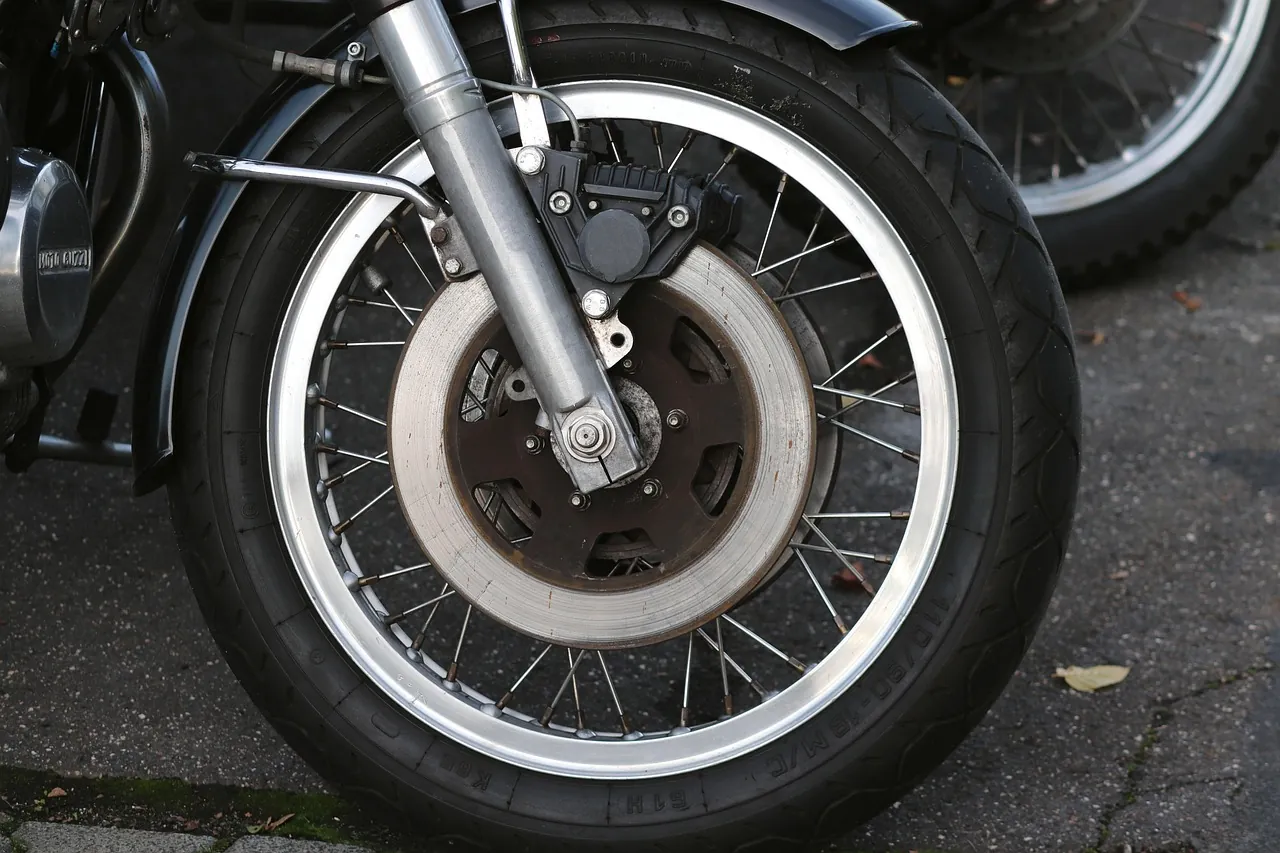
The shelf offers white sprays, dry-lube cans, wax and chain oilers. Anyone trying to settle chain spray or chain wax quickly runs into claims without proof. Here is what the chain makers DID, RK and Regina and a comparison test by the German magazine MOTORRAD actually say, and what cannot be proven as of November 2026. How to clean, adjust and check wear on your chain is covered in Motorcycle Chain Maintenance: Clean, Lube, Adjust. This article is only about choosing the lubricant.
In short
- Modern chains with O-, X- or Z-rings need a lubricant that is suitable for seal rings. DID and Regina say so explicitly.
- For classic chain sprays (white, grease-based) and dry-lube sprays there is an independent test. It does not deliver one overall winner for every case.
- For chain wax on motorcycles we found no statement from the chain makers and no independent test. A recommendation would be pure guesswork.
- Weather, dirt and riding style set the interval. The sources give spans of 500 to 1,000 km.
The lubricant types at a glance
| Type | Proven | Open |
|---|---|---|
| Chain spray, white (grease) | Test winner and several mid-table places in the MOTORRAD test; interval according to the test about 800 to 1,000 km | How individual formulas behave in constant rain |
| Dry lube | According to MOTORRAD little sand adhesion, but weaknesses in corrosion protection; interval about 500 km | The test does not say whether the base is PTFE |
| Chain wax | Found only for bicycle chains (Motorex Chainwax, Bike Line) | Suitability for motorcycle chains and seal rings |
| Gear oil, engine oil | RK warns against motor oil on seal rings | Gear oil: no manufacturer statement found |
| Automatic chain oiler | Scottoiler xSystem: pump lubricates only while riding, refill up to 1,500 miles according to the maker | Seal-ring compatibility of the oil is not stated on the maker's page |
Compatibility with O-, X- and Z-ring chains
The seal rings keep the factory grease inside the chain links. DID recommends lubricants that are explicitly marked as seal-ring safe, and says the same about cleaners. Regina's instructions for its chain kit say to use only branded chain sprays for standard, O-, X- and Z-ring chains. RK points out that some aerosol lubricants contain solvents that can attack seals. It fits that the MOTORRAD test rates material compatibility as part of the application score.
DID's page on X-rings and O-rings says X-rings create less friction according to the maker and hold lubrication better than O-rings. Sealed chains need lubricating less often than open ones. Which lubricant suits them best, DID does not say there.
Adhesion and fling-off
A lubricant that flies off does not protect, and ends up on the rim, the swingarm and in the worst case on the rear tyre. The MOTORRAD test checks fling-off on a spinning aluminium disc and creep between two glass plates. In practice, flash-off time matters most. Regina gives 15 to 20 minutes, MOTORRAD at least 30 minutes before you ride. According to MOTORRAD, spray twice on the inside of the chain.
Dirt pick-up and wet weather
Old lubricant mixes with dust, sand and metal wear. This can form an abrasive layer that increases wear, writes the magazine 1000PS in a piece dated 17 September 2026. It also says that water and dirt break down the lubricant film much faster than dry weather. For dirt pick-up the MOTORRAD test measured with quartz sand: dry-lube products did particularly well. In return they showed weaknesses in the salt-solution corrosion test. The comparison has no wet-weather test of its own, so the question "dry lube in the rain" cannot be answered from it. Regina advises, in general, to lubricate more often in rain. More on riding in the wet is in Riding a Motorcycle in the Rain.
What the comparison test shows
MOTORRAD tested 13 chain sprays bought in shops (published online in April 2024, the picture captions say 2020, formulas may have changed since). Rated were lubrication performance, fling-off, dirt pick-up, creep, corrosion protection and application. First place went to the S100 White Chain Spray 2.0, second to Louis Dry Lube (recommended buy), third to S100 Dry Lube, all rated "very good". Three products got "satisfactory", among them Motul Chain Lube Road+ C2+ and Motorex Chain Lube Road Strong. This is a result under these test conditions, not a free pass for a brand: it was a lab comparison, and wax was not part of it. An older MOTORRAD test from 2010 also shows how differently dry-lube products can turn out: one came second in wear protection, another failed with "poor".
Chain wax, PTFE dry lubricant and gear oil
Chain wax exists mainly for bicycles. Motorex advertises its Chainwax in the Bike Line for bicycle chains. For motorcycle chains with seal rings we found no statement on wax from DID, RK or Regina, nor in any test. That does not mean it does not work. It means you cannot rely on any hard data. Anyone trying it should ask the wax maker whether it is approved for chain drives with seal rings, and check the chain more often.
The same goes for "PTFE-based dry lubricant". The MOTORRAD test speaks of dry lube, not of PTFE. What is in the can is listed on the maker's data sheet. For gear oil as chain lubrication, too, our sources hold no statement from chain makers. RK does warn explicitly against motor oil.
Automatic chain oilers
A chain oiler drips or pumps oil onto the chain. On the Scottoiler xSystem, according to the maker, an electronic pump lubricates only while the bike is moving, with 15 settings for the amount. The Scottoil contains an additive so that less dirt sticks. You read the level through the sight glass, according to the maker.
Application and interval
- Clean with a chain cleaner suited to seal rings. RK says only mineral-oil-based, O-ring-safe cleaners, no wire or hard brushes. DID and RK advise against kerosene, and RK also against WD-40.
- Let it dry. RK recommends a short ride afterwards and lubricating the warm chain.
- Spray thinly on the inside, let it flash off, wipe off any excess.
- Set the interval by the condition of the chain. DID gives as a guide to clean and dry about every 500 km (300 miles); MOTORRAD gives about 500 km (dry lube) to 1,000 km (grease-based) between lubrications and cleaning at the latest every 3,000 to 5,000 km.
Frequently asked questions
Can I use any chain spray on an O-ring chain?
No. DID and Regina require products that are suitable for seal rings, and RK warns about solvents that can attack seals.
Is chain wax better than spray for a motorcycle?
That cannot be proven. For motorcycle chains we found neither a statement from the chain makers nor an independent test on wax.
Does dry lube attract less dirt?
In the MOTORRAD comparison dry-lube products did particularly well on sand adhesion. In return they showed weaknesses in the corrosion test.
How long should I wait after spraying?
Regina says 15 to 20 minutes, MOTORRAD at least 30 minutes.
Sources
- D.I.D Chain Maintenance (D.I.D)
- Differences between X-ring and O-ring chains (D.I.D)
- Chain instruction sheet (RK Excel America)
- Regina chain kit instructions, in German (Louis)
- Chain spray comparison, 13 products, in German (MOTORRAD, online 2024)
- Test of eleven chain sprays, in German (MOTORRAD, 2010)
- Cleaning and lubricating the chain, in German (1000PS, 17 Sep 2026)
- xSystem Chain Oiler (Scottoiler)
- Chainwax, Bike Line, in German (Motorex)
As of November 2026. Products and formulas change; the manual and the manufacturers' instructions take precedence.