Your motorcycle clothing isn't a fashion item you swap on a whim. It's a protective system made of precisely coordinated parts: abrasion-resistant outer fabric, protectors that absorb impacts, load-bearing safety seams and a membrane that keeps water out while still breathing. In a crash, this interplay decides whether your skin, joints and bones stay intact. If you wash and care for your motorcycle clothing properly, you make sure it still works after years.
Yet protective clothing is often treated wrongly. Some wear their jacket and trousers for months without ever washing them. Others put them in the machine like a T-shirt, with regular detergent, high temperature and fabric softener. Both cost function in the long run.
Unwashed clothing slowly loses its protective effect. Sweat and skin oils settle in the material, the membrane clogs, textiles become stiff, leather dries out and seams are chemically attacked. But incorrect washing can permanently destroy the same properties. Often you don't see the damage immediately but only notice it when it matters.
Here you'll learn step by step how to wash and care for textile clothing, membrane jackets, leather suits and protectors properly. You'll read why care is part of safety, which mistakes to avoid and how your gear stays comfortable and protects you for many years.
Why you should wash motorcycle clothing regularly
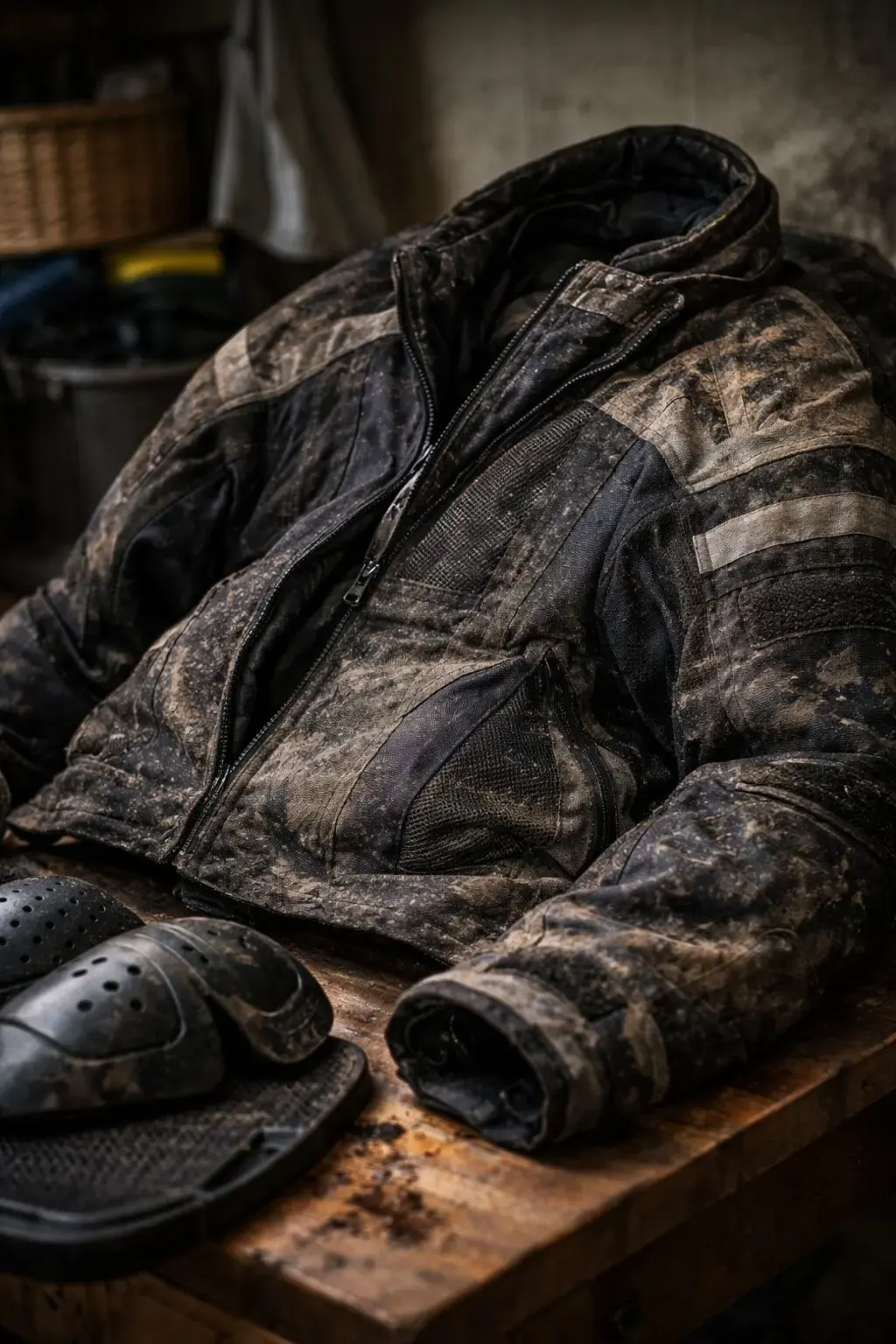
Many underestimate how much strain their protective clothing is under. After just a few rides, residues settle in the material that you can neither see nor smell but that matter a lot technically. On the road, the clothing is constantly exposed to wind, heat, wet and dirt. Inside, body heat and movement create a warm, humid climate at the same time.
Typical stresses are sweat and skin oils, fine dust, brake dust, road abrasion, insect remains and oil and fuel particles. Add to that salt residues from sweat or from rides in the cold season. These substances attack the material from inside and out. Sweat is particularly tricky: its salts and fatty acids damage seams, coatings and membranes.
The result is a gradual loss of function. From the outside the jacket still looks good, but it feels heavier, breathes worse and soaks up rain faster. It insulates worse, you get cold sooner, and the material ages much faster.
Washing properly is therefore not a question of looks or hygiene. It's part of safety. If you care for your motorcycle clothing, you keep the comfort and also the protection it was built for.
Before every wash: read the care label and manufacturer's instructions
Motorcycle clothing is technically complex. Depending on the manufacturer, price range and intended use, it contains different materials, membranes and coatings. The care requirements vary accordingly.
So always read the care label before washing. The information there isn't a recommendation; it's part of the product's design. You'll find the maximum permitted washing temperature, the right wash programme, the permitted spin speed, whether tumble drying is allowed and which detergents and reproofing agents are recommended.
If you ignore this, you risk permanent damage to membrane, seams and outer fabric. If in doubt, also check the manufacturer's website or ask directly. Reputable manufacturers provide detailed care instructions.
Washing textile motorcycle clothing: step by step
Preparation
Good preparation prevents damage in the machine. First remove all protectors from the jacket and trousers: shoulders, elbows, back, hips and knees. Empty all pockets and check them twice. A forgotten key can damage zips or the drum.
Close all zips and all Velcro fasteners too. Open Velcro acts like sandpaper and ruins other laundry and the garment's own fabric. Wipe off coarse dirt such as mud or insect remains with a damp cloth beforehand so the machine doesn't have to scrub unnecessarily.
The right detergent
The detergent decides whether your clothing keeps its function. Regular detergent, colour detergent, fabric softener and bleach are unsuitable. Their surfactants and additives clog the membrane, attack coatings and permanently reduce breathability.
Use a special detergent for technical or motorcycle clothing. Alternatively, a mild fragrance-free delicates detergent will do. Fabric softener is always off-limits. It forms a film over the fibres and seals the fine pores of the membrane, often for good.
Programme, temperature and spinning
30 degrees is usually ideal. Only go to 40 degrees if the manufacturer expressly allows it. Choose a gentle or delicates programme, because it puts less mechanical stress on the garment.
Spin at 600 to a maximum of 800 rpm. More weakens seams, detaches membranes, destroys coatings and deforms the protector pockets. An extra rinse is worthwhile, because detergent residues interfere with a climate membrane more than dirt does.
Caring for motorcycle clothing with a membrane
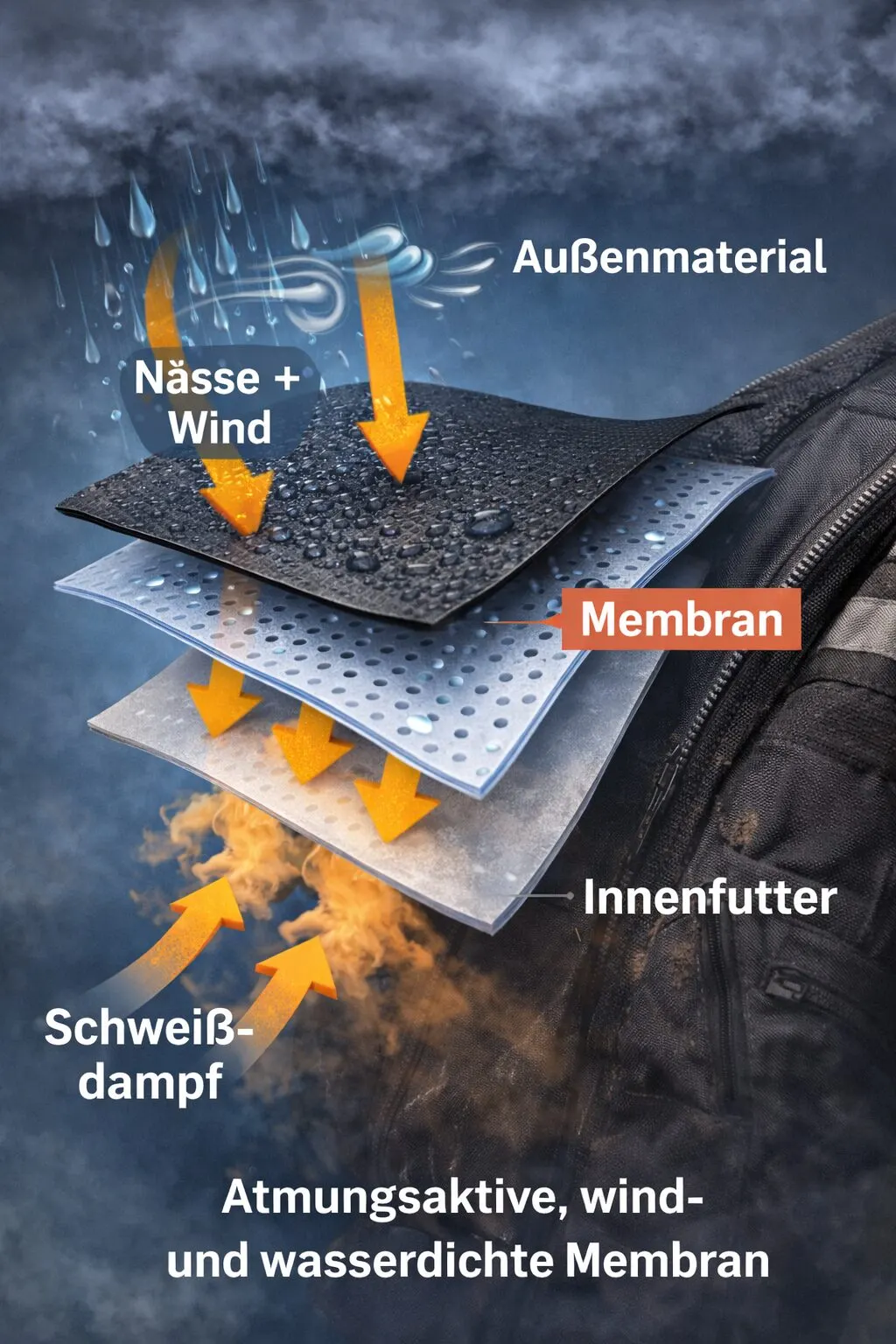
Many believe a membrane must not be washed. The opposite is true: regular washing is necessary for it to work. A membrane has tiny pores that let water vapour out but keep liquid water out.
Sweat oils and dirt clog these pores. Then the clothing breathes worse, feels clammy and seems to leak. A wash restores the original function.
Many membrane jackets also like a little warmth to reactivate the water-repellent outer layer. That works with a short tumble-dry cycle at low temperature or careful ironing with a cloth in between, but only if the manufacturer allows it. Too much heat permanently destroys membrane and coating.
Cleaning and caring for leather motorcycle clothing
Leather is a natural material and very abrasion-resistant, but it doesn't forgive incorrect care. A leather suit never belongs in the washing machine and shouldn't be completely soaked either. Household cleaners, harsh chemicals and direct heat are also off-limits.
Brush off coarse dirt when dry. Then wipe the surface with a slightly damp cloth. For heavier soiling, a special leather cleaner, applied sparingly, helps. Always dry at room temperature, away from radiators and direct sunlight.
When the leather is completely dry, it needs care to stay supple. Leather balm or wax-based products are well suited. Too much grease makes the leather soft and reduces abrasion resistance. Here too: less is more.
Cleaning, checking and replacing protectors
Protectors are usually made of viscoelastic plastic or special foam that hardens on impact and absorbs energy. They must not go in the washing machine. Wash them by hand with lukewarm water and a mild cleaning agent.
Afterwards they must dry completely, without direct heat, tumble dryer or radiator. Also check them regularly. Cracks, hardened areas or deformations show that the protection is no longer there. Then a new protector is due.
Reproofing: why you shouldn't skip it
Reproofing makes water bead off the outer fabric instead of soaking in. Even if the membrane is waterproof, you notice missing proofing immediately. The outer fabric soaks up water, the clothing becomes heavy, cools down and breathes worse.
You need to reproof when water no longer beads off but soaks into the fabric. As a rule of thumb: after every second or third wash. Apply spray or wash-in proofing evenly to the clean, damp clothing. It's activated, if allowed, with a little warmth.
In a nutshell
Motorcycle clothing is high-tech. It only offers the protection it was built for if it's clean and well cared for. Proper washing and regular care preserve abrasion resistance, breathability, weather protection, fit and protective effect.
If you take your gear seriously, you care for it regularly. It pays off: more comfort, longer life and above all more safety on the motorcycle.
Frequently asked questions about washing and care
How often should I wash motorcycle clothing?
Not only when it's visibly dirty or smells. Sweat, skin oils and fine salt residues attack the material from the inside. If you ride regularly, washing roughly every five to ten riding days makes sense. After rides in the rain, summer heat or long tours, better sooner, so the protective function is preserved.
Can motorcycle clothing go in the washing machine?
Yes, modern textile clothing is expressly designed for machine washing. Remove all protectors first and choose a gentle or delicates programme. If you wash according to the manufacturer's instructions, the machine does no harm. On the contrary: it preserves the function of membrane and material.
At what temperature should I wash motorcycle clothing?
30 degrees is usually ideal. That's enough to remove sweat, dirt and residues without damaging the membrane or coating. Only 40 degrees if the manufacturer expressly allows it. Always avoid higher temperatures.
Which detergent is suitable for motorcycle clothing?
Ideally a special detergent for motorcycle or technical clothing. Alternatively, a mild fragrance-free delicates detergent. Regular detergent, bleach and fabric softener are off-limits because they clog the membrane and can permanently destroy breathability.
Why is fabric softener so harmful?
Fabric softener forms a film over the fibres and clogs the tiny pores of a climate membrane. Water vapour can no longer escape, the clothing feels clammy and loses its function. This damage often remains, even after several washes.
Do I have to remove the protectors before washing?
Yes, always. In the machine they can deform, lose their damping or damage the protector pockets. It also prevents water and detergent from collecting in the pads.
How fast can I spin?
Around 600 to a maximum of 800 rpm is ideal. More puts unnecessary strain on seams, membrane and coating and can significantly shorten the garment's life.
Can motorcycle clothing go in the tumble dryer?
That depends on the manufacturer. Some membranes benefit from low, controlled heat to reactivate the water-repellent surface. But temperatures that are too high do a lot of damage. So only if it's expressly allowed, and then on the lowest setting.
What's the best way to dry motorcycle clothing?
The safest is air-drying at room temperature. Hang the clothing somewhere well ventilated, away from direct sun or radiator heat. Patience pays off, because drying too quickly harms material and coating.
How do I clean leather motorcycle clothing?
Leather never goes in the washing machine. Remove coarse dirt dry, then wipe with a slightly damp cloth. Use a special leather cleaner if needed. After drying at room temperature, sparing leather care is important to keep the material supple.
Do I need to reproof motorcycle clothing regularly?
Yes, proofing is important for comfort and function. It makes water bead off the outer fabric. Without it, the clothing soaks up water, becomes heavy and breathes worse, even if the membrane is still waterproof.
How do I know it needs reproofing?
When rain no longer beads off but soaks into the fabric, the proofing is used up. You should renew it after two to three washes at the latest.
How do I clean protectors properly?
By hand with lukewarm water and a mild cleaning agent. Then let them dry completely, without heat. Tumble dryer, radiator or direct sunlight are off-limits.
When should I replace protectors?
When they have cracks, have become hard or have lost their shape. Very old protectors can also lose protective effect, even if they still look good on the outside.
Does frequent washing harm motorcycle clothing?
No. Proper washing suited to the material extends its life. Dirt, sweat and salt attack the material much more than a correct wash. If you care for your gear regularly, you'll ride more safely in the long run.