Motorcycling can become a really expensive hobby, especially if you don't know how the market works. If you buy motorcycle clothing smartly, you can save hundreds of euros, sometimes even more, without compromising on safety. This article is about the right timing, CE classes and materials, the second-hand market and a few tricks the industry would rather not advertise.
Why cheap can end up expensive
If you kit yourself out completely today, from helmet to boots, you can easily spend 2,000 euros or more with well-known brands. The good news for anyone on a budget: price doesn't automatically say anything about protection. A good part of it goes on marketing, MotoGP sponsorship and the name on your chest.
That doesn't mean you should do without quality. On the contrary. It's about finding high-quality gear at low prices. To do that, we'll look at when retailers give discounts, which materials really matter and which digital tricks noticeably save you money when buying motorcycle clothing.
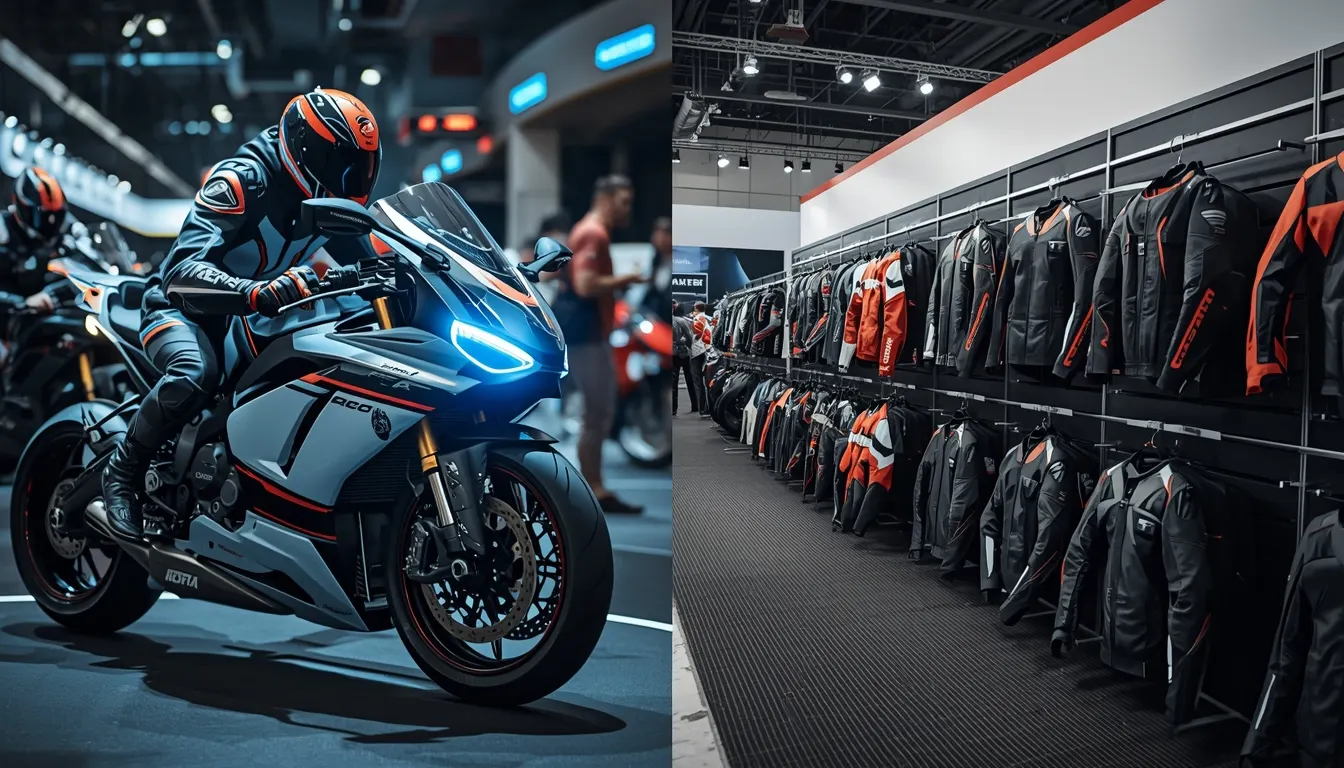
Part 1: the right time to buy
Buying out of season saves the most
Most motorcyclists think about new gear in March or April. That's exactly when retailers are busiest, prices are fixed and there are hardly any discounts. If you really want to save, buy when the roads are icy and the motorcycle is hibernating. Then warehouses are full of last season's stock, and retailers fight for every customer.
The November effect (EICMA): in November, EICMA takes place in Milan. All the big brands show their collections for the next year there. As soon as the first press photos are online, the current models in the shop count as last year's stock. That's the starting signal for big clearance sales.
Storage space costs money: textile suits and leather suits take up a lot of space. A retailer who has to make room for new stock in January often cuts prices significantly.
Buy winter gear in summer: if you look for thick winter gloves or jackets with thermal lining in July, you'll often find remaining stock with up to 60% off.
Negotiating with local dealers
Ordering online is convenient. But the dealer around the corner has a big advantage: they're a person, and they have stock that needs to go.
Negotiate a package price: if you want to buy a helmet, jacket and gloves, don't ask for the price of each item separately. Have everything put together and then ask: "What does it cost together if I take everything today?"
Display items: a helmet that's been on the shelf for three months and tried on by 50 people is technically flawless but no longer factory-new. Often 10–15% off is possible just because the original box is missing or there's a fingerprint on the visor. For a bargain like that, you usually only have to ask.
Part 2: understanding safety: what CE certification tells you
One of the best money-saving tips is knowing the EU standards. For some years now, motorcycle clothing in Europe has had to be certified as personal protective equipment (PPE). These tests follow fixed criteria and have nothing to do with price.
The protection classes under EN 17092
Clothing is divided into classes that tell you directly what it can withstand:
Class AAA: the highest protection class. These items must achieve very high abrasion values. They're usually leather suits or high-quality textile suits.
Class AA: the standard for touring riders, with a good mix of comfort and protection.
Class A: light protective clothing for town.
The money-saving tip: if you find an AAA-certified jacket from an unknown brand for 250 euros, it's objectively safer in a crash than an A-certified designer leather jacket for 600 euros. Rely on the standard, not the reputation. If you want to learn more about CE certification and what the A, AA and AAA classes mean, we have a separate article on it.
Upgrading protectors
Many manufacturers save on equipment and only include simple foam pads or Level 1 protectors. So feel free to buy a reduced jacket that fits you well, even if the protectors are weak. Then put 40 euros into a set of Level 2 protectors. In the end you'll have more protection than with the expensive brand jacket with standard pads and still have saved hundreds of euros.
Part 3: materials and membranes: avoiding the brand premium
Nothing drives up the price as much as a well-known premium logo. Part of the price is often purely a licence fee so the jacket can carry the logo of a particular material manufacturer. That's no longer necessary. Since the uniform standard was introduced, cheaper motorcycle clothing also does a very good job. You can see this with membranes, for example.
Own-brand membrane or branded membrane
Almost every major manufacturer has now developed its own membranes, which often deliver similar values for waterproofness and breathability.
In practice: if you get caught in a shower perhaps three times a year, an own-brand membrane is perfectly adequate. The extra cost of a premium membrane is only worth it if you commute for long periods in heavy rain every day or are planning a round-the-world trip. Even then, you should look at the specific values for waterproofness and breathability. In our materials glossary for motorcycle clothing you'll learn, among other things, what to look for in a membrane.
Leather: cowhide or kangaroo
Kangaroo leather is thinner and more tear-resistant than cowhide but costs almost twice as much. High-quality cowhide 1.2 to 1.4 mm thick offers far more reserves on country roads than you need. Unless you're fighting for every gram, choose cowhide and save a lot of money.
Part 4: buying motorcycle clothing second-hand
Buying second-hand is good for the environment and your wallet, but it has its risks. Here's how to tell what's worth it and what isn't.
Where to look
Classifieds & Vinted: good for leather suits and brand jackets.
Forum marketplaces: in brand forums, enthusiasts often sell well-maintained gear because they're switching to the latest model.
Giving up the hobby: search specifically for the word "hobby". These sellers usually want to get rid of everything quickly and sell complete kits very cheaply.
Checklist for used leather in 5 points
The smell: if the suit smells of a musty cellar, keep your hands off. You'll never get mould completely out of leather.
The seams: if the safety seams at the typical crash points are roughened, the suit has already had ground contact. Then don't buy it.
The zips: having a broken main zip replaced by a tailor costs 50 to 100 euros. So check that everything runs smoothly.
The protector pockets: are they stretched or torn?
Age: incorrectly stored leather becomes brittle over time. Squeeze the leather firmly. If fine cracks appear, it's finished.
What you should never buy second-hand
A helmet is a single-use item. Even if it looks flawless on the outside, the EPS liner can be compressed after a fall from a low height (such as from the mirror onto the asphalt). Then it no longer protects properly. Here you'd be saving in the wrong place. If you want to know what to consider when choosing the right motorcycle helmet, read our detailed article on it.
Part 5: how to save in online shops
Large online shops work with sophisticated algorithms. If you know how they work, you can use them to your advantage.
1. Deliberately abandon your basket
Log into your account at a large shop. Put the items you want in the basket, click through to just before payment and then simply close the browser. What happens then? The system sees high purchase interest and an abandonment. Often an email arrives 24 to 48 hours later with a voucher for 5 or 10% so you'll order after all.
2. Use price trackers
Prices on Amazon or comparison sites change constantly. Browser extensions such as Keepa or CamelCamelCamel show you the price history of recent months. If you see that a jacket is available every three months for 150 instead of 220 euros, you know: waiting pays off.
3. Order from other EU countries
Within the EU single market there are no customs duties. Well-known brands from Italy and Spain are often much cheaper in their home markets or in large online outlets. Just watch out for return costs in case something doesn't fit or is damaged.
Part 6: own brands: who's behind them?
Large retailers often have their own brands made by the same producers as the expensive brands. Technology and design are then often on a par with well-known manufacturers. Compare the features. If a pair of motorcycle trousers has the same ventilation zips, the same outer material (for example Cordura 500D) and the same protector pockets as a branded pair costing twice as much, with the expensive one you're only paying for the name.
Part 7: care saves money
Nothing is more expensive than gear you have to throw away after two years because it's gone to ruin.
Cleaning and caring properly
Textile with membrane: never wash with fabric softener. It clogs the pores of the membrane and ruins breathability. Use a liquid detergent for technical clothing instead.
Reproofing: if the outer fabric of your jacket soaks up water, even if you stay dry inside, evaporation chills you. A 5-euro reproofing treatment makes the jacket much more pleasant again in cool weather.
Leather grease: good leather grease costs 10 euros and keeps a suit supple for 20 years. Neglected leather can tear, and then the protection is gone.
We explain how to care for motorcycle clothing properly in detail in a separate guide. There shouldn't be any questions left open there.
Part 8: hidden costs of a poor fit
A cheap helmet that gives you a headache after 30 minutes is money thrown away. A bargain is only a bargain if you actually wear it.
Check the chin strap: the fastener mustn't press on your larynx.
Test the riding position: always try trousers on in a squat or on a motorcycle stool. Almost all trousers fit when standing. When sitting they ride up, and the knee protectors suddenly end up on your shin. If the protectors aren't in place, they don't protect, and you end up buying twice.
Part 9: where you can save and where you can't
This priority list helps you distribute your budget sensibly:
| Item | Where you can save | Where you should NOT save |
| Helmet | Design, graphics, last year's model | Fit, ECE 22.06 standard, anti-fog visor (Pinlock) |
| Jacket | Own brand, second-hand market, simple membrane | Abrasion resistance (at least class AA), good protectors |
| Trousers | Simple textile trousers, Kevlar jeans (sale) | Hip protectors (often not included) |
| Gloves | No brand names needed | Palm protection (sliders), material (leather is a must here) |
| Boots | Second-hand (if cleaned), simple touring boots | Ankle protection, torsional stiffness of the sole |
Part 10: buy once, cry once
Sometimes you save the most by spending a bit more once. High-quality suits for 800 euros often last many years with good care, and some manufacturers give long warranties. In the same time you might have worn out three cheap suits at 300 euros each because seams split or the membrane leaks. That's what "buy once, cry once" means.
Factor in resale value: clothing from BMW Motorrad or Touratech holds its value very well. If you buy a suit for 1,000 euros and sell it after 3 years for 600 euros, you've effectively only paid 400 euros for high-quality protection. A no-name suit, on the other hand, is worth almost nothing after 3 years.
Buying motorcycle clothing smartly: your plan in 6 steps
If you really want to save money when buying motorcycle clothing, proceed like this:
Clarify your needs: do you only ride in the sun? Then you don't need an expensive membrane.
Get informed: read tests, but above all look at the CE rating (AAA/AA/A).
Timing: buy between November and February.
Check outlets: look at factory sales or the outlet sections of large online shops.
Buy second-hand: use classifieds for leather and textile, but never for helmets.
Upgrade: buy inexpensive basic gear and upgrade it with good protectors.
Motorcycle clothing is an investment in your health. With these tips you make sure it doesn't break the bank and you're still very well protected.
More money-saving tips for online shops
Saving online is almost a hobby in itself. If you know how shops work, you can often push the price down just before buying. These are the most effective shortcuts:
Let digital helpers do the work
Instead of searching for codes yourself for hours, let small tools in your browser or on your smartphone do the work.
Browser extensions: coupon extensions automatically search for codes at checkout. But check what data they collect.
Check the price history: Keepa or CamelCamelCamel show you the price history on Amazon. That way you immediately see whether an offer is really one or whether the price was artificially raised before the sale.
Set price alerts: on price comparison sites you set a target price. As soon as the item you want (for example a particular helmet) falls within your budget, you get a push notification.
Use shop behaviour to your advantage
Online shops track exactly what you do. With a few tricks you can turn that to your advantage.
Leave your basket: log in, put a product in the basket, close the tab. Often the shop sends you a personal discount code (usually 5–10%) after 24 to 48 hours to persuade you to buy after all.
Separate email address for newsletters: create an email address just for shopping. Sign up for every shop's newsletter, take the welcome discount (often €10–15) and unsubscribe again afterwards.
App discounts: many large retailers give an extra discount if you order through their own app, because it saves them the cost of search ads.
Tricks for the last click
The best discounts are often not displayed prominently on the homepage.
Search social media: on Instagram or TikTok, enter the shop's name plus "code". Many influencers have permanent discount codes for 10 or 20% that you won't find on the shop's website.
Cashback portals: through cashback services you buy at the normal price but get part of it back (often 2–8%) after a few weeks.
B-stock and returns: search the shop pages for "outlet", "clearance" or "used & tested". These are often returns with slightly battered packaging but technically as good as new.
Conclusion
Good protection on a motorcycle is no longer a question of income. If you understand how the industry works and are a bit more relaxed about brand names, you can get high-quality gear that would otherwise cost twice as much. It's not about spending as little as possible. It's about spending money where it counts in a crash: on material and fit.
The key points at a glance
The calendar decides: if you buy in winter (December to February), you benefit from the EICMA effect and save a lot through the model change.
Certification before image: an AAA rating protects you in a crash, regardless of whether an Italian designer logo or a German own brand is on it.
Choose your membrane carefully: consider whether you really want to pay for a licensed membrane such as Gore-Tex or whether a good own-brand membrane is enough for your riding profile (fair-weather rider or commuter).
Second-hand is worth it: leather suits and hard-shell protectors are often real bargains on the second-hand market. But: hands off used helmets.
Digital tricks: with basket abandonment, price trackers and newsletter discounts you can get another 10–15% off in online shops.
Bottom line: if you shop smartly, you buy out of season, upgrade inexpensive jackets yourself with Level 2 protectors and put the money saved into a cornering course instead. Because the best protective clothing is the kind whose abrasion resistance you never have to test thanks to your skills.
Frequently asked questions
When is motorcycle clothing cheapest?
Between November and February. After EICMA in November, current models count as last year's stock, and retailers clear their warehouses. Winter gear, on the other hand, is often available in summer with up to 60% off.
Is expensive motorcycle clothing safer than cheap clothing?
Not automatically. What matters is the CE class under EN 17092. An AAA-certified jacket from an unknown brand protects better than an expensive designer jacket with class A.
Can I buy a motorcycle helmet second-hand?
No. The EPS liner can be damaged after a small fall without it being visible. You should always buy a helmet new.
Is it worth upgrading protectors?
Yes. A set of Level 2 protectors costs around 40 euros. That often makes an inexpensive jacket safer than an expensive brand jacket with standard pads.