You're on an Alpine tour or a long motorway stage heading south, and suddenly your eyes are burning. Your concentration drops, your line through the bend gets sloppy. Then comes that leaden weight on your shoulders that even the strongest petrol station coffee can't shift. This is where the danger of microsleep on a motorcycle begins – one of the most dangerous situations you can experience as a biker.
Many riders know this: tired despite breaks. You stop every two hours, drink something, stretch your legs, and as soon as the visor is down again, the exhaustion is back. Why is normal resting often not enough on a motorcycle? Here we look at the physical and psychological causes and show you how to break the cycle.
Why you get tired so quickly on a motorcycle
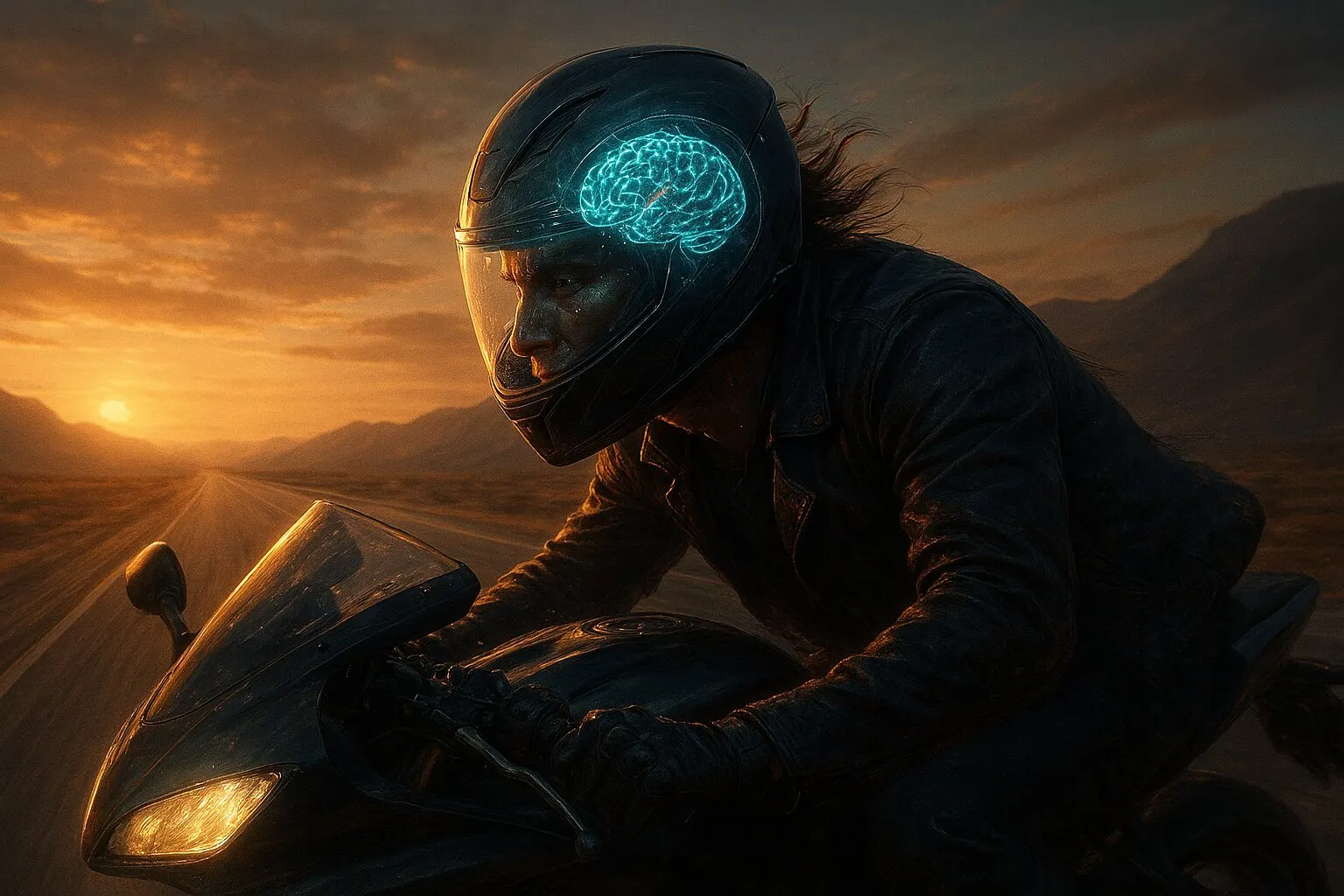
Compared with driving a car, riding a motorcycle is a competitive sport for the brain. In a car you sit passively in an air-conditioned cabin. On a motorcycle you are constantly bombarded with stimuli, and they place huge demands on your nervous system.
Sensory overload behind the handlebars
Behind the handlebars your brain processes thousands of pieces of information per second: wind noise (often over 90 decibels), vibrations, the course of the road, the speed of others and the constant fine-tuning of balance. During breaks we then often sit in a noisy petrol station or scroll on our phones.
The problem: your brain doesn't get into rest mode. Your legs recover briefly, but the sensory fatigue in your head remains.
Airflow and fluid loss
Many underestimate the airflow. It cools you, but also draws a lot of fluid out of you through evaporation, often unnoticed under your suit. Even a fluid loss of about 2% of body weight can noticeably impair concentration and reaction time. On a motorcycle that is life-threatening, because your reaction time becomes considerably longer.
The break trap: why normal breaks often don't help
We all take breaks – just often the wrong way. A typical stop at a service station looks like this: engine off, helmet off, queue for a coffee, quickly check messages, maybe a chocolate bar, helmet on and off you go. The result: your stress level (cortisol) stays high.
- Digital stress: the blue light from the smartphone signals more work to your brain instead of rest.
- Sugar rollercoaster: the sugar in the chocolate bar causes a brief insulin spike. After about 30 minutes of riding, an even deeper slump follows.
- Too little oxygen: during breaks we mostly just stand or sit around. Blood pools in the legs instead of supplying the brain with fresh oxygen.
Seven types of rest for motorcyclists
To really get fit again, you need to know which battery is flat. Physician Dr Saundra Dalton-Smith distinguishes seven areas of rest that also fit bikers well:
| Type of rest | Meaning for bikers | What really helps |
|---|---|---|
| Physical | Tense muscles from the riding position | Stretch hips and neck deliberately |
| Mental | Concentration drops when navigating | 5 minutes of silence without helmet and phone |
| Sensory | Noise from wind and engine | Good hearing protection (earplugs) |
| Creative | Tunnel vision on long stages | Consciously look at the landscape (without a camera) |
| Emotional | Pressure to perform in the group | Say honestly: "I need 15 minutes of rest." |
| Social | Exhaustion from constant chatter on the intercom | Intercom off, ride one stage alone |
| Spiritual | The flow feeling is gone | Remember why you set off in the first place |
Physical causes: when there's more to it
Tiredness often has nothing to do with a lack of willpower, but with biochemistry. If breaks don't help, there may be medical reasons.
Nutrient deficiency and blood values
If you're permanently exhausted, have your doctor check these values:
- Iron and ferritin: they are responsible for oxygen transport. A deficiency makes you weak and short of breath.
- Vitamin B12 and magnesium: important for nerves and muscles on long tours.
- Vitamin D: a deficiency leads to diffuse fatigue, especially after the winter break.
Sleep apnoea: when sleep doesn't restore you
Do you wake up feeling wrecked despite 8 hours of sleep? Do you have headaches in the morning? People with sleep apnoea stop breathing at night and never get into deep sleep properly. On a motorcycle, that almost inevitably leads to dangerous microsleep. An appointment at a sleep clinic can save your life here.
A break strategy against microsleep: the three-pillar rule
Forget the classic petrol station break. Try the three-pillar rule on your next tour:
Pillar 1: get rid of heat
Take off your helmet and gloves immediately and open your suit wide. Your body needs to release excess heat. Overheating in the helmet drives your pulse up and makes you extremely tired. Ideally, hold your wrists briefly under cold running water.
Pillar 2: drink properly and eat light
Don't pour litres of plain water into yourself; go for electrolytes. A splash of apple juice and a pinch of salt in water work wonders. Eat nuts or bananas instead of a heavy meal. That way you avoid the food coma, where blood is needed in the stomach for digestion and is missing in your head.
Pillar 3: cold water on your face
Splash ice-cold water on your face. This triggers the diving reflex, which acts via the vagus nerve and lowers your pulse. Many riders feel noticeably more alert for the next 60–90 minutes.
The night before the tour
Your tour begins the evening before. If you set off with a sleep deficit, you'll hardly make up for it on the road.
- Fixed rhythm: go to bed at your usual time.
- Cool bedroom: 16–18 degrees is ideal. If it's too warm, your nerve cells recover less well at night.
- No screens before sleep: finish planning the route on your sat nav and put your smartphone away 60 minutes before sleeping. Read a book or a motorcycle magazine on paper instead.
Warning signs: when you should end the ride
Be honest with yourself – that's the best protection. Stop or find a hotel if:
- you can't remember the last 5 kilometres,
- you start to feel chilly even though it's warm outside,
- you approach bends too late or steer jerkily,
- you see things at the roadside that aren't there (for example supposed animals that turn out to be posts).
Conclusion
Tiredness despite breaks is a serious signal from your body. As a motorcyclist you should never ignore it. Riding is only really fun with a rested mind and a fit body. Stop masking tiredness with caffeine and instead tackle the causes step by step.
Frequently asked questions about fatigue and microsleep on a motorcycle
Why do I get tired faster on a motorcycle than in a car?
Riding a motorcycle demands your whole body and a great deal of concentration. Wind noise, vibration and constant balancing put much more strain on your nervous system than sitting passively in an air-conditioned car.
Does coffee really help against tiredness on tour?
Caffeine only blocks adenosine, the messenger that makes you tired, in the short term. When the effect wears off, the tiredness often returns suddenly. Caffeine also has a slight diuretic effect, which tends to do harm in the heat under your suit.
How often should I take a break on a day tour?
At least every 90 to 120 minutes for at least 10–15 minutes. That matches your body's natural performance rhythm (ultradian rhythm). Don't wait until you start making mistakes.
Why am I so sluggish after lunch?
That's the food coma (postprandial fatigue). After a heavy meal, a lot of blood flows to the digestive tract and is missing in the brain. At lunchtime, choose light snacks such as bananas, nuts or yoghurt.
What effect does the helmet have on tiredness?
A poorly ventilated helmet leads to heat build-up and more CO2 in the helmet, which makes you drowsy. A loud helmet without hearing protection also stresses your brain. Quiet helmets and earplugs noticeably help against early fatigue.
Can dehydration lead to microsleep?
Yes. Without enough fluid, the blood thickens and the brain is supplied with less oxygen. The consequences are burning eyes, headaches and severe drowsiness up to microsleep.
What do I do when my eyes get heavy?
Stop immediately. Cold water on your face, stretching exercises or a 15-minute power nap in a safe place are the only immediate measures that really help. Riding on is life-threatening.
Why am I tired in the morning despite 8 hours of sleep?
This can be due to poor sleep quality. Possible causes are a bedroom that is too warm, stress or physical problems such as sleep apnoea. If the tiredness persists, have it checked by a doctor.
Do hydration systems like CamelBaks help against fatigue?
Yes. You can take small sips again and again while riding without stopping. That keeps your fluid balance stable and avoids the typical drop in performance caused by dehydration.
Can tiredness be a sign of burnout or depression?
Exhaustion that doesn't improve even with breaks is a classic warning sign of mental overload. If your desire to ride and to do other hobbies disappears permanently, talk to a doctor or therapist.