Motorcycle license classes explained: A1, A2 and A – The guide for beginners
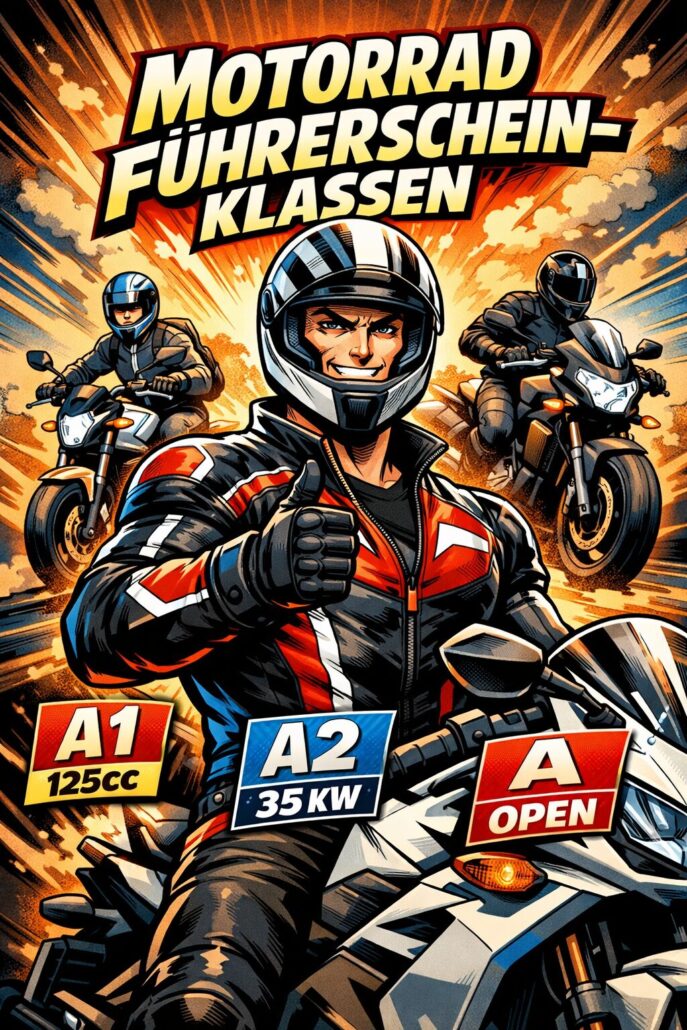
For many people, motorcycling is not just a means of transport, but a way of life. The decision to get a motorcycle license often depends less on rational reasons than on emotions. Maybe it was the sound of an engine at a traffic light, the fascination of a mountain pass or simply the desire for more freedom. Anyone who is seriously thinking about getting a motorcycle license is faced with the question: Which driving license class is right for me? This guide answers this question practically, honestly and step by step.
Why choosing your driving license class is so important
Choosing the right driving license class not only influences costs and driving experience, but also the speed of learning, safety and long-term enjoyment of motorcycling. In Germany there are three central classes for motorcyclists: A1, A2 and A. Each class has its own requirements, advantages and restrictions. If you know these differences, you'll start safer, save money and avoid frustration.
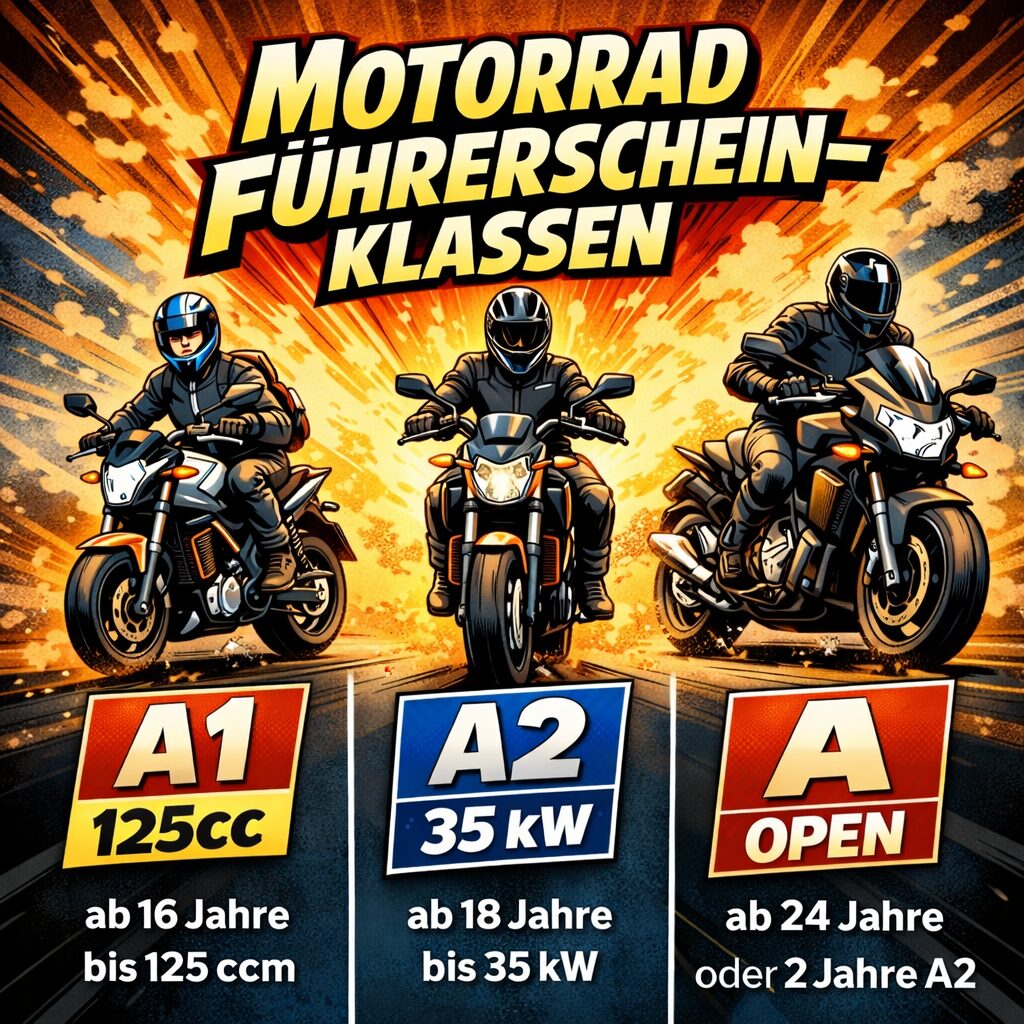
Overview: Driving license classes in Germany
| Class | Minimum age | Displacement / performance | Special features |
|---|---|---|---|
| A1 | 16 years | up to 125 cc / 11 kW | Lightweight motorcycles, ideal for beginners |
| A2 | 18 years | up to 35 kW | Powerful machines, easy to control |
| A | 24 years or 2 years A2 | no limit | Open class for experienced drivers |
The choice of class depends on age, experience, height and personal driving goals. Beginners should realistically assess the performance of the machine and not just pay attention to the price or age.
A1 – entry into the world of motorcycles
Class A1 is the entry level for young drivers and beginners. At the age of 16, novice drivers are allowed to drive motorcycles up to 125 cc and a maximum of 11 kW. These machines are light, handy and relatively easy to handle. A1 is ideal for gaining initial experience and learning the feel of a motorcycle without being overwhelmed by too much power.
Advantages of A1
-
Lower costs for training and driving lessons
-
Machines are handy and easy to control
-
Ideal for teenagers and smaller drivers
Disadvantages of A1
-
Limited performance → less fun on longer tours
-
Quick upgrade to A2 almost unavoidable if you want more performance
A2 – the optimal compromise for beginners
Class A2 is open to drivers aged 18 and over and allows motorcycles with an output of up to 35 kW. A2 motorcycles are more powerful than A1, but still easy to control. This class is recommended by many experienced riders as the best entry level for adults. It combines fun, safety and the ability to learn.
Advantages of A2
-
Powerful enough for everyday use and touring
-
Chassis, brakes and stability like “real” motorcycles
-
Easy to control for beginners
Disadvantages of A2
-
Higher costs than A1
-
Slightly more sophisticated machines require more attention
A – The open class for professionals and experienced drivers
Class A allows all motorcycles, with no limits on performance. Access from age 24 or after two years of A2 experience (level driving license). Anyone who chooses A takes responsibility for maximum performance, speed and technology. This class is not suitable for beginners without experience as the machine is more difficult to control and mistakes can have fatal consequences.
Advantages of A
-
Maximum freedom when choosing the machine
-
Suitable for touring riders and professionals
-
No performance limit
Disadvantages of A
-
High risk of accidents for inexperienced drivers
-
Higher costs for training, insurance and machinery
Practical differences in training and costs
| Class | Driving lessons (including special trips) | Typical total costs including protective clothing | Practical tip |
|---|---|---|---|
| A1 | 12-20 | €1,500-2,000 | Ideal for beginners, quick learning curve |
| A2 | 15-25 | €1,800-2,500 | Stable learning progress, good preparation for A |
| A | 20-30 | €2,500-3,500 | For experienced drivers only, build directly on A2 |
Theory and practice: This is how the classes differ
The theoretical training is similar for all classes, but the complexity increases with the performance of the machine. On A1 the focus is on basic technology, traffic rules and safety behavior. On the A2 and A, safe control of higher speeds, motorway driving, night driving and cross-country driving is also trained.
Important practical tips:
-
Complete theory early, e.g. B. in winter → better concentration
-
Practice driving slowly → train balance, clutch and eye control
-
Regular short units instead of long, rare hours → faster learning
Experience reports: What beginners really learn
Many beginners report that the first practical lessons are surprisingly different than expected. It's less about speed and more about balance, clean starting and clutch feel. The “aha moment” usually comes with a small exercise, e.g. B. a clean figure eight or a quiet start without jerking. This is exactly where you see how important a patient driving instructor is.
Special trips: obligation and advantage
Overland, highway and night journeys are mandatory. Beginners in particular initially find motorway journeys threatening, but these journeys in particular increase self-confidence, concentration and foresighted driving.
| Special trip | Class | Learning objective |
|---|---|---|
| overland | A1/A2/A | Curves, changing road conditions |
| Highway | A2/A | Speed, distance, wind control |
| Night | A1/A2/A | Visibility, defensive driving, responsiveness |
Long-term learning phase after the exam
The driver's license is just the start. The actual learning phase begins afterwards. Regular driving, conscious technique exercises and slowly increasing speed are crucial for long-term safety. Many accidents happen in the first few months because of overconfidence, not because of a lack of technology.
FAQ – driving license classes A1, A2, A
1. Which class is suitable for beginners?
-
Mostly A2 because it is powerful and controllable at the same time.
2. At what age can I start?
-
A1: 16, A2: 18, A: 24 or 2 years A2 experience.
3. Can I switch directly to A2 after A1?
-
Yes, shortened training is possible (level driving license).
4. Are all special trips the same?
-
No, A1 has fewer compulsory hours than A2 and A.
5. How many driving lessons do I need on average?
-
A1: 12-20, A2: 15-25, A: 20-30 including special trips.
6. Is straight A worth it?
-
For experienced drivers only. Beginners should initially choose A2.
7. Which machine is ideal for A2?
-
Handy, stable, max. 35 kW, good chassis.
8. Is riding a motorcycle dangerous?
-
Risk can be controlled through defensive driving, regular practice and appropriate choice of machinery.
9. What protective clothing is mandatory?
-
Helmet, jacket, trousers, gloves, sturdy boots. Quality increases safety and driving experience.
10. Can I reduce costs?
-
Regular practice and good preparation reduce the number of driving lessons.
Conclusion: Choose the right class
The choice of driving license class determines your entry into motorcycling. A1, A2 and A have different advantages and disadvantages. Anyone who takes their own experience, body size and long-term plans into account will start safely, efficiently and with joy. Learn step by step, pay attention to your own speed and drive consciously - this is how your dream of owning a motorcycle will surely become a reality.
After choosing the right class, the driving lessons finally come.
Here you will find suitable tips and tricks for the successful motorcycle driving license test:
For many years I have been intensively involved with motorcycles, their technology and all topics relating to safety, maintenance and equipment. My goal is to present practical information in an understandable way, to realistically assess risks and to objectively classify common myths.
All content on moto-guide.com are based on in-depth research, technical classification and my experience in dealing with motorcycles. I want to help riders make informed decisions and use their motorcycle safely and consciously.




Leave a comment
Participate in the discussion?Leave us your comment!