Riding a motorcycle in winter isn't automatically reckless. For short commutes in the city, on dry and cleared roads, both ADAC and ÖAMTC say it's generally possible if you adjust your speed and riding style. But as soon as frost, snow or black ice enter the picture, the calculation changes. Your motorcycle has no crumple zone, and a fall at 15 km/h on a slippery surface is often enough to break a bone. This article sorts out when winter rides are still justifiable, and what you need to watch for with cold, tires, visibility and your own body.
Riding in winter: who it's actually for
According to ÖAMTC, winter motorcycle rides are best suited to short distances in urban areas, at low speed and on cleared roads. The classic commute to work along well-maintained city streets is a different matter from a country-road tour through the forest. What matters is that you never ride at the limit but always with reserves: because a motorcycle has no crumple zone, ÖAMTC says the key is spotting hazards early and keeping a corresponding distance. If you're already unsure whether a ride is worth it, that's already a good sign to skip it.
Cold and braking: what changes in how the bike feels
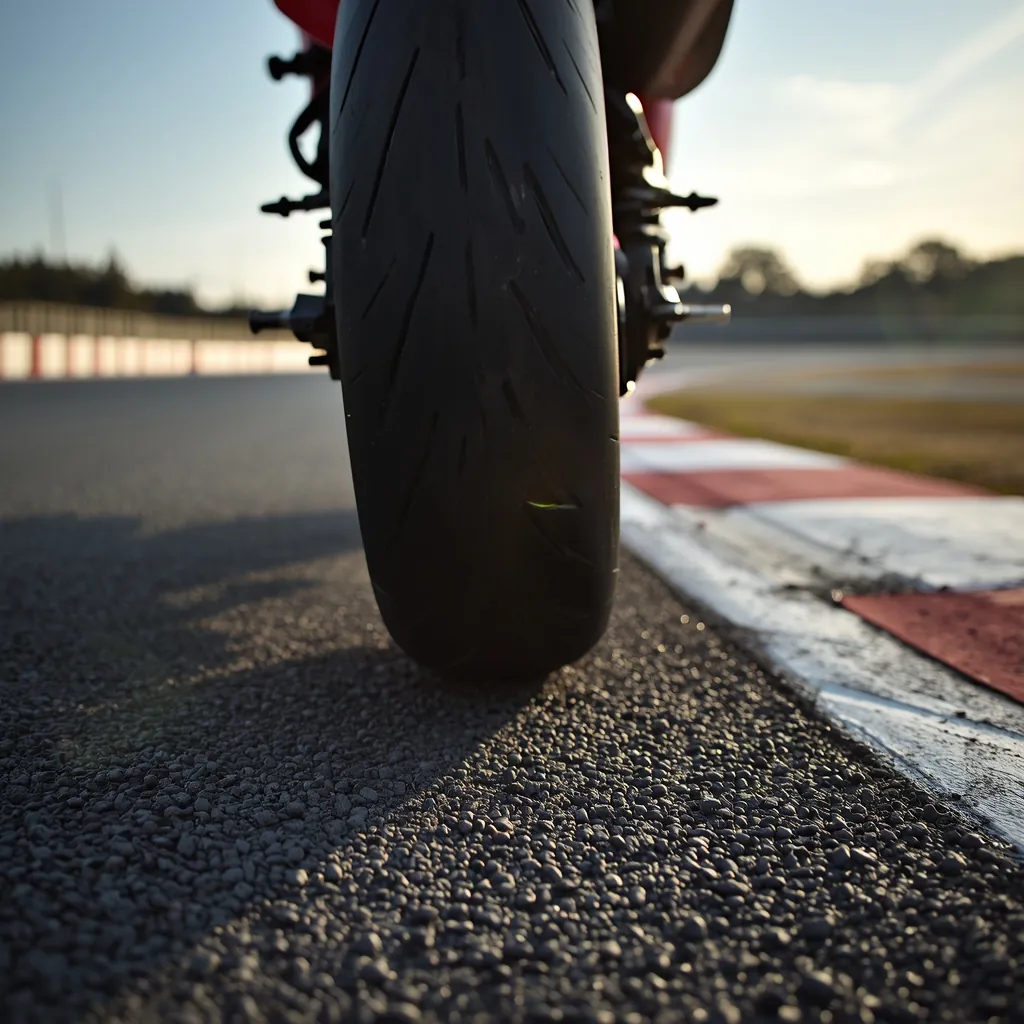
Tires need warmth to reach their full grip. As a rule of thumb, they need an operating temperature of around 35 degrees Celsius, which is only reached after a few kilometers of rolling, braking and cornering. Cold tires have noticeably less grip, which raises the risk of sliding and falling, especially in the first minutes of a ride. On top of that, a cold road surface itself reduces grip further according to ADAC, regardless of tire condition. So ride the first few kilometers deliberately cautiously, brake gently rather than hard, and avoid extreme lean angles until the tires and road are warm enough. How to set tire pressure correctly in cold weather is explained in detail in the article Tire pressure in cold weather on a motorcycle.
Black ice, frost and loose grit: the underestimated dangers
In the morning, frost forms faster on shaded sections, bridges and dips than elsewhere, even when the dashboard thermometer already shows above zero. Wet leaves on the road can act like soft soap in places. And according to ÖAMTC, loose grit on an otherwise dry road is one of the biggest winter hazards of all, because it looks harmless but suddenly cuts your grip in corners and under braking. In such spots, always ride slower than you think you need to, not just as slow as you currently feel is necessary.
Visibility in early darkness and low winter sun
In winter it gets dark noticeably earlier in the afternoon, and the sun sits lower in the sky even during the day. According to ADAC, this hurts your visibility in two ways at once: the low sun blinds you directly, and other road users spot your narrow motorcycle less easily than a car. Reflections off snow or wet asphalt make the glare worse, and a dirty or scratched helmet visor makes it worse still. So ride with foresight, keep your visor clean, and wear clothing that's as bright and high-contrast as possible. Working lights and indicators aren't a minor detail in winter, they're the basis for being seen at all.
Hypothermia: the risk factor you underestimate
Cold doesn't just affect how you feel, it directly affects your ability to ride. According to research by the Institute for Motorcycle Safety (ifz), cold puts your body into a kind of energy-saving mode: blood flow is reduced, concentration and reaction speed drop, and fatigue can set in on top of that. Numb fingers and cold feet further worsen your reaction speed, right when you might need to brake hard or swerve. One important point: moisture conducts heat far better than air, so you cool down faster if you're sweating under your gear than if you stay dry. Layers of breathable technical base layers, a windproof suit and heated gear like grips, a vest or socks help more here than a thick sweater. What gear you actually need is covered in the article Winter accessories for your motorcycle. And because cold-induced loss of concentration follows the same mechanism as fatigue at the controls, it's also worth reading the article on breaks and microsleep: if you're cold, you should stop just as often as someone who's getting tired.
Road salt: what winter rides do to your bike
What cold does to you, road salt does to your motorcycle. A case documented by motorradonline.de shows the scale of it: on an Aprilia Tuareg ridden through one winter, the aluminum under the paint on the engine cover corroded, bolt heads and threads had rusted, the brake pad carrier plates had rusted through completely, and the wheels' spoke nipples could no longer be tightened. According to the report, repairing damage like this can easily cost several hundred euros. Anyone riding in winter should therefore clean, dry and treat the bike with corrosion protection as soon as possible after riding on salted roads, lubricate the chain more often than usual, and seal painted parts with wax. A detailed guide to this is in the article Winter care for your motorcycle.
Winter tires for motorcycles: do they actually exist
A true winter tire with the snowflake symbol isn't currently possible for motorcycles, according to Continental, because there's no suitable approval basis (UNECE R117) for two-wheeler tires. What does exist are so-called M+S tires: in Germany, since a 2021 amendment to the StVZO (road traffic licensing regulations), they count under Section 36 StVZO as approved winter tires for class L vehicles too, meaning motorcycles, trikes and quads, provided they're certified to UNECE R75. According to ÖAMTC, they generally offer more grip than summer tires, but they're only available in a few sizes and are no free pass for riding on snow. Tellingly, Continental itself generally advises against riding motorcycles in wintry road conditions at all, because safety can't be reliably guaranteed then.
Riding in winter: when you're better off not
You should leave your motorcycle parked if:
- Snow, frost or ice is on the road, even just in patches.
- The road hasn't been cleared or gritted.
- Fog and low sun are limiting your visibility at the same time.
- You can't fully concentrate, for example because you're already cold or overtired.
- The route includes country roads or blind corners that you can't safely judge in wet, cold conditions.
ADAC and ÖAMTC agree on one point: as soon as snow or ice affects the road, it's over for two-wheelers, no matter how good your tires or your gear are. That's not excessive caution, it's simply physics: two narrow patches of rubber have almost no grip left on ice, no matter how experienced you are.
Summary
Riding a motorcycle in winter is doable for short, easily manageable routes on dry roads, if you adjust your speed, following distance and riding style and dress warmly enough. As soon as snow, ice or frost come into play, no gear in the world will help, so the bike stays parked. And even on dry, cold days: ride the first few kilometers carefully, pay attention to visibility and body temperature, and clean the motorcycle promptly after every ride on a salted road.
Frequently asked questions
Does it even make sense to ride a motorcycle in winter?
For short rides in the city on dry, cleared roads, ÖAMTC says it's generally doable if you adjust your speed and riding style. In snow, frost or ice, ADAC and ÖAMTC both advise against it.
Are there winter tires for motorcycles?
According to Continental, there's no true winter tire with the snowflake symbol for motorcycles, because the approval basis for it is missing. In Germany, M+S tires certified to UNECE R75 have been approved since 2021; ÖAMTC says they offer somewhat more grip but are only available in a few sizes.
At what temperature does riding a motorcycle become dangerous?
Neither ADAC nor ÖAMTC names a fixed temperature limit. What matters is not the temperature alone, but whether frost, snow or ice is on the road. Even just above zero degrees, shaded or damp spots can already turn slippery.
What does road salt do to a motorcycle?
Road salt attacks aluminum, bolts, brake pad carrier plates and spoke nipples, and according to a real-world example from motorradonline.de it can cause repairs in the range of several hundred euros. Cleaning and treating the bike promptly after rides on salted roads helps prevent this.
How do I protect myself from hypothermia on a motorcycle?
With several dry layers of clothing, a wind- and waterproof suit, and if possible heated gear like grips, a vest or socks. According to ifz research, concentration and reaction speed already drop from cold alone, and moisture under your gear speeds up the cooling further.
Sources
- Riding safely through autumn and winter on a motorcycle (ADAC)
- Riding a motorcycle in winter only with an adapted riding style (ÖAMTC)
- Motorcycles and scooters in winter: ride or store away (ÖAMTC)
- Freezing: cooling down and riding safety (Institute for Motorcycle Safety, ifz)
- M+S tires in Germany, bulletin for motorcycle tires (Continental)
- How winter rides ruin your bike (Motorradonline)
- Optimal grip: how motorcycle tires reach operating temperature (t-online)
Last checked: November 2026.