
Motorcycle tires – extensive tips & tricks for the right tires
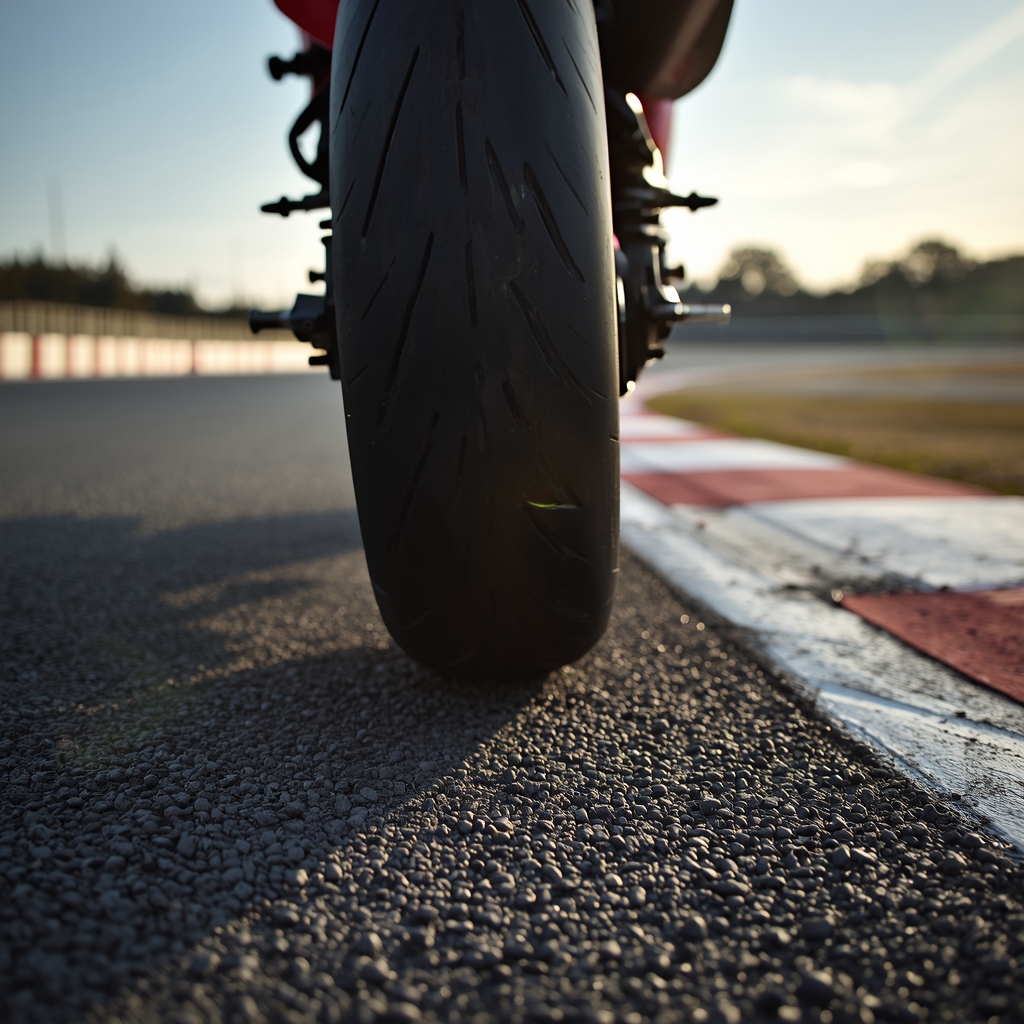
Whether you beat a 200-horsepower superbike around the Nordschleife, explore the Balkans on a travel enduro or relax and roll to the ice cream parlor on a cruiser. Your tires are the only connection to the asphalt. This contact area per tire, the so-called contact area, is hardly larger than a credit card. These few square centimeters determine driving pleasure, braking distance and, in extreme cases, your survival.
Tire development has made a quantum leap in recent years. Artificial intelligence in the development of rubber compounds and adaptive profile structures are no longer a thing of the future, but standard. But as technology grew, so did bureaucracy. In this guide you will find out everything you need to know.

The anatomy of a high-tech tire: More than just rubber
A modern motorcycle tire is a complex masterpiece of engineering. It consists of up to 25 different components. To understand why a tire sticks in 10 degrees Celsius of rain and doesn't melt in 40 degrees of heat, we have to look beneath the surface.
1. The Carcass – The supporting skeleton
The carcass gives the tire its shape and stability. Today there are primarily two types of construction:
-
Bias tires (B): In 2026, this design will almost only be found on heavy cruisers or classic retro bikes. Here the fabric layers cross each other diagonally. They are extremely robust and offer a high load capacity, but tend to deform due to centrifugal force at high speeds.
-
Radial tires (R): The gold standard for athletes and tourers. The carcass threads lie radially (at right angles) to the direction of travel. This allows for a softer sidewall for more grip in corners and a more stable tread.
2. The 0 degree steel belt
Almost all modern performance tires have a steel belt over the carcass that is wound in the direction of travel (0 degrees). This prevents the tire from “mushrooming” at 300 km/h. Today, manufacturers such as Metzeler or Bridgestone often use variable winding densities: the wire is wound tighter in the middle (stability when driving straight ahead) and looser on the sides (more self-damping and feedback when leaning).

3. The rubber compound: The alchemy of grip
This is where the wheat is separated from the chaff. The two most important ingredients are:
-
Silica (silicic acid): Provides chemical interlocking in wet and cold conditions. Modern sport touring tires like the Michelin Road 7 have a silica content of almost 100% in the tread.
-
Carbon Black (Soot): Wird vor allem in Rennreifen oder an den Flanken von Hypersport-Reifen eingesetzt. It offers maximum grip at very high temperatures, but fails in cold and wet conditions.
The tire types: Which rubber is right for you?
The selection has never been as big as it is today. The boundaries are increasingly blurred through “crossover” products.
| category | Typical 2026 models | mileage | focus |
| Hypersport | Pirelli Diablo Rosso IV Corsa, Bridgestone RS12 | 2,500 – 4,500 km | Maximum grip, cornering stability |
| Sports touring | Michelin Road 7, Continental RoadAttack 5 | 8,000 – 12,000 km | Wet grip, everyday life, mile eaters |
| Adventure (80/20) | Metzeler Tourance Next 3, Dunlop Trailmax Meridian | 7,000 – 11,000 km | Stability at speed, light gravel |
| Off-road (50/50) | Continental TKC 802, Heidenau K60 Ranger | 4,000 – 7,000 km | Self-cleaning, traction in the dirt |
| Custom/Cruiser | Metzeler Cruisetec 2, Michelin Commander IV | 12,000 – 18,000 km | High load, linear steering behavior |
The trend: Adaptive profiles
New tires like the Metzeler Sportec 01 RS, which use an adaptive tread design. When driving slowly or in the rain, the grooves actively displace water. Under high loads and lean angles, the tread grooves “close” almost completely due to the mechanical deformation, making the tire almost slick – more rubber on the asphalt means more grip.
Legal situation: The end of tire approval in Germany
Bikers in Germany had to adapt. Die Zeit, in der man einfach eine PDF-Freigabe des Reifenherstellers herunterladen und mitführen konnte, ist endgültig vorbei.
What applies today?
Since then January 1, 2025 The transition period for old tires (produced before 2020) has expired. In 2026 the situation is clear but strict:
-
Vehicles with EU registration (approx. from year of manufacture 2000): You can drive any tire that corresponds exactly to the dimensions, load index and speed index stated in your registration certificate Part I. Legally, there is no longer any brand loyalty, even if it is apparent.
-
Different dimensions: Do you want e.g. For example, if you drive a 190 mm rear tire instead of a 180 mm rear tire, an individual inspection is mandatory in accordance with Section 19 (2) StVZO. The tire manufacturer's document only serves as an assessment basis for the TÜV/DEKRA inspector.
-
Classic cars and ABE vehicles: This is where the situation is most critical. Any change to the tire type (e.g. switching from diagonal to radial) that was not originally intended must be entered.
Die Physik des Grips: Warum dein Reifen hält (oder nicht)
Why do you slip when it rains? Why do tires grease in summer? It's pure physics.
The Kamm friction curve
A tire can only transmit a limited total force. This is divided into longitudinal forces (braking/accelerating) and lateral forces (cornering).
-
If you brake hard in a fully leaned position, there is no capacity left for lateral support - the tire slips.
-
Modern assistance systems such as cornering ABS use exactly this knowledge and regulate the brake pressure so that a certain amount of “lateral guidance” is always maintained.
Slip: The invisible helper
A tire does not have maximum grip at 0% slip, but usually at around 10% to 15%. This means that the rear wheel turns slightly faster than the motorcycle is moving. In this area the rubber interlocks best with the micro-unevenness of the asphalt.
Insider knowledge: professional tips for the road
1. The secret of the red and yellow dots
Have you noticed small colored dots on the side of the tire?
-
The red dot marks the location of the maximum radial force fluctuation value (often interpreted as the lightest location).
- The yellow dot marks the absolute lightest part of the tire.
2. Warm up: Wavy lines are a waste of time
You see it again and again: bikers driving wildly in serpentine lines to warm up their tires. Leave it. It's almost useless and dangerous.
The solution: Tires become warm inside due to flexing. The most effective way is to accelerate hard and brake moderately hard on the straight. This stretches and compresses the carcass, causing the temperature to move from the inside to the outside.
3. The “fear streak” and what it really says
A wide, unused edge on the rear tire (fear stripe) often says less about your ability than you think. It depends heavily on the tire contour. A pointed sports tire can hardly be driven to the edge without your knee dragging on the ground, while a flat touring tire is at its end at a moderate lean angle of 35 degrees.
Maintenance and care: This is how your tires last longer
The right air pressure
The most common mistake. Too much pressure reduces the contact surface (less grip). If the pressure is too low, the tire will overheat and make the handling spongy.
-
Solo country road: 2.3-2.5 bar front / 2.5-2.8 bar rear.
-
Highway/Luggage: At the rear up to 2.9 bar (observe the specification!).
-
Race track: Here the pressure is massively reduced (cold, sometimes to 1.5 bar at the rear), as the heat development causes the pressure to rise sharply while driving. Danger: Only do this with special racing tires!
storage
Tires age due to UV light and oxygen. If you are storing your bike for the winter:
-
Store in a dark, cool and dry place.
-
Spraying tires with tire shine or silicone spray is nice for the look, but fatal for the grip. If so, then only treat the flank; never the tread!
The sawtooth phenomenon
If the tread blocks wear unevenly and look like a saw, this is often due to incorrect rebound adjustment of the chassis or too aggressive braking into a curve. It's not a production defect, but a sign that the chassis is overwhelmed.
FAQ – Frequently asked questions
How long can you sell a “new” tire?
A tire is valid up to an age of 3 years when stored properly as “brand new” and up to 5 years as “new”. The DOT number on the flank tells you the age (e.g. 1226 = 12th week 2026).
What is the difference between “ZR” and “W”?
“ZR” stands for a design (radial tires for over 240 km/h). The “W” in brackets after the load index, e.g. (73W), indicates the exact maximum speed (W = up to 270 km/h, (W) = over 270 km/h).
Do I still have to break in new tires for 100 km?
In the past, tires were covered with a greasy separating layer from the mold. Modern tires hardly have that anymore. Nevertheless, you should drive carefully for the first 50 km to mechanically roughen the smooth surface.
Can I use a sports tire at the front and a touring tire at the rear?
Legally often permitted with the same dimensions, but technically mostly scrap. The contours don't fit together, which can lead to unstable sway or aggressive rollover in curves. Always stick with a set of the same model.
Conclusion: Which tire wins?
Technology has reached a level that was unthinkable 10 years ago. The modern sport touring tire is now the “Swiss Army Knife”. It can do it all: rain, frost, heat and even the occasional trip to the race track.
Our recommendation: If you're not exclusively chasing the last tenth of a second, go for it Sports tourer. The mileage is twice as high as a sports tire, and at 15 degrees on a wet country road it is vastly superior to the sports tire.
For many years I have been intensively involved with motorcycles, their technology and all topics relating to safety, maintenance and equipment. My goal is to present practical information in an understandable way, to realistically assess risks and to objectively classify common myths.
All content on moto-guide.com are based on in-depth research, technical classification and my experience in dealing with motorcycles. I want to help riders make informed decisions and use their motorcycle safely and consciously.




Leave a comment
Participate in the discussion?Leave us your comment!