Albania is one of the few countries in Europe that still feels like new territory on a motorcycle. Many classic motorcycle regions are now fully planned for tourism, heavily regulated or simply crowded. Albania, on the other hand, is unpredictable, wild and extremely varied in its landscapes. That's exactly what makes a motorcycle trip through Albania so appealing. And at the same time demanding.
Here you don't just ride from sight to sight. You're travelling in a country that's changing fast, where modern infrastructure and very traditional rural life often sit right next to each other. A perfectly surfaced road can suddenly turn into a bumpy track, and a few kilometres after a well-built coastal route there are cows or roadworks on the road. Albania demands attention and adaptability, and in return you get a riding experience that stays with you for a long time. So that you're on the safe side legally too, here are all the important laws and regulations for motorcyclists in Albania, plus route ideas and practical tips.
Why Albania is a special destination for a motorcycle trip
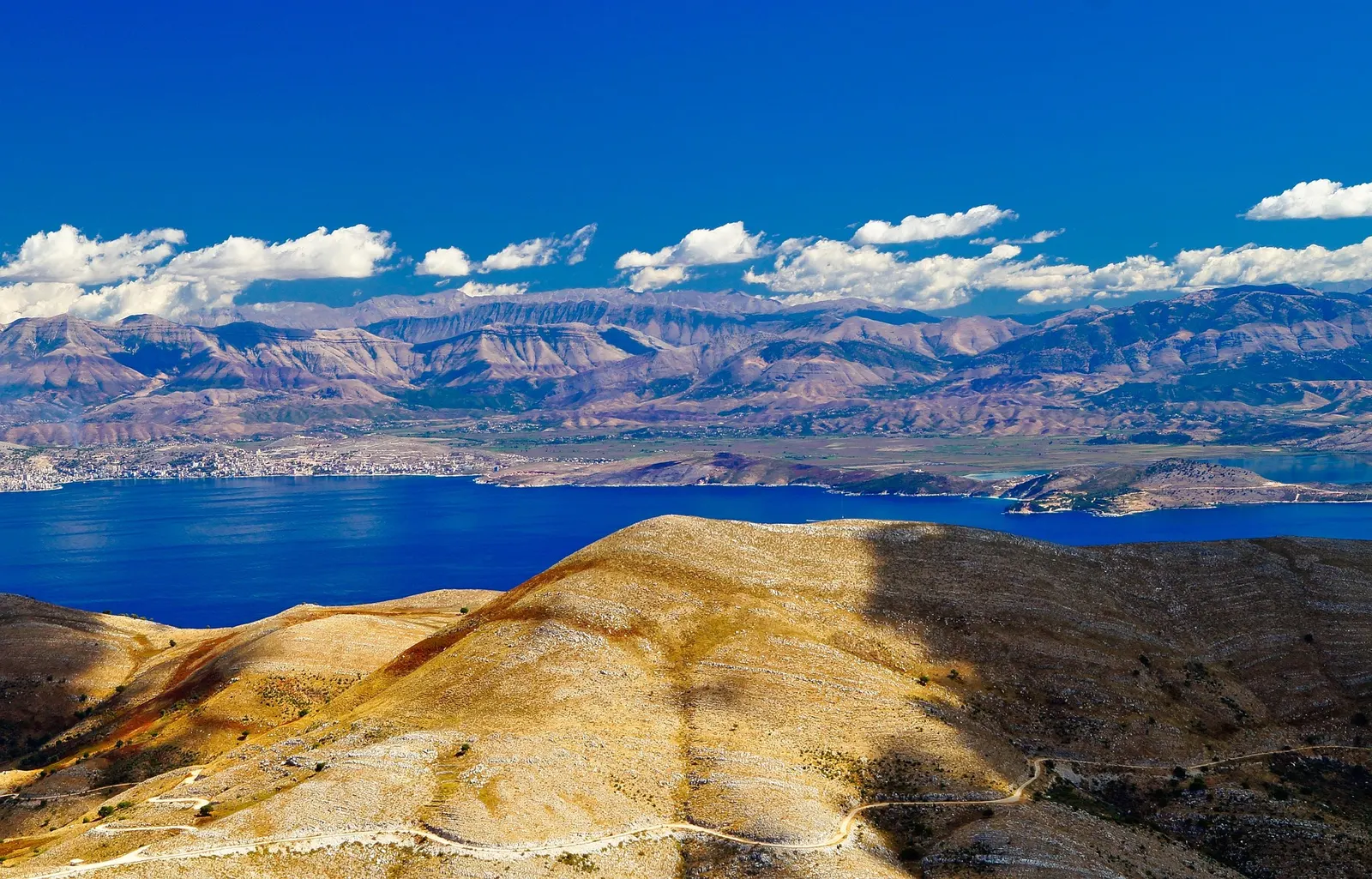
If you want to clock up as many kilometres as possible, Albania isn't for you. The country suits you if you travel consciously, can read the landscape and cope with changing conditions. In a relatively small area you'll find high mountains, deep gorges, remote mountain villages, coastal roads on the Mediterranean and historic towns that have so far been largely spared mass tourism.
A big advantage: there's little tourist traffic. Even on spectacular stretches you're often alone for many kilometres, without convoys of motorhomes and without heavy day-tripper traffic. Add to that moderate prices for accommodation, food and fuel. That makes longer stays and flexible route planning easier.
What clearly distinguishes Albania from classic motorcycle countries is the lack of predictability. Not every road is what the map promises. Always expect to have to change your route spontaneously. That's exactly the appeal, but it also demands responsibility from you.
Entry, stay and legal basics
For EU citizens, entering Albania is straightforward. You can stay up to 90 days without a visa, and a valid ID card is usually enough. It still makes sense to take a passport as well, especially if you're travelling to remote regions or border areas or staying longer.
If you want to stay longer than 90 days, you can generally extend your stay. But you must apply to the relevant authorities in good time. Bring patience; the administration often works more slowly than in Central Europe. Without a valid extension, you face heavy penalties when leaving.
Licence, vehicle documents and insurance
For your motorcycle trip in Albania you need a valid class A motorcycle licence and your motorcycle's registration certificate. The Green Card is very important, and Albania must be expressly listed on it as a valid country. Many underestimate this point. Not every European insurance policy automatically covers Albania.
If the country code is missing, you're not insured in the event of a claim. With personal injury, that can ruin you financially. At larger border crossings you can take out local liability insurance, but it only covers minimum benefits and doesn't protect you comprehensively. So sort out your insurance properly before you leave. That's a must, not an extra.
Traffic rules in Albania and what they look like in everyday life
On paper, Albanian traffic rules hardly differ from those of other European countries. The limit is 40 km/h in built-up areas, 80 km/h outside, 90 km/h on expressways and 110 km/h on motorways. For alcohol, practically zero applies to motorcyclists (the limit is 0.1 ‰), and it's consistently checked.
But in everyday life, don't rely on everyone else taking the rules as seriously. Overtaking without visibility, sudden lane changes and a very free interpretation of right of way are normal. For you this means: riding defensively isn't a recommendation here, it's a must. Insisting on your rights puts yourself and others in unnecessary danger.
Traffic culture and riding strategy
Perhaps the most important point for a safe motorcycle trip in Albania is understanding the traffic culture. Many drivers act spontaneously, react late or assume others will get out of the way. That's usually not reckless. Traffic simply relies heavily on improvisation.
So ride with anticipation, always expect obstacles and leave enough reserve in bends. In the mountains especially, a car, an animal or a pile of loose stones can come towards you in your lane. Once you've got used to this uncertainty, you'll quickly find your own rhythm. Then riding is more relaxed than you'd think at first.
Road quality and infrastructure
Albania's roads are as varied as the country itself. A lot of money has been invested in the main routes in recent years, so you'll find surprisingly good asphalt on many stretches. But there are also plenty of side roads that are rarely maintained and sometimes badly damaged.
The abrupt change is what's dangerous. Fresh asphalt turns into a potholed track without warning, and after heavy rain some sections look completely different within a few hours. That's why all-round solutions for motorcycle and tyres give you a clear advantage. Pure sports tyres quickly reach their limits here.
The best regions for motorcyclists in Albania
North: the Albanian Alps
The north with the Albanian Alps is one of the most spectacular but also most difficult regions of the country. Narrow valleys, steep passes and partly unpaved roads demand riding skill and full concentration. In return you get a landscape that has few equals in Europe.
South: the Ionian coast and the SH8
The south is easier to access and offers a good mix of bends, sea views and well-built roads. The well-known SH8 along the Ionian coast is one of the most beautiful motorcycle routes in the Balkans and combines riding fun with Mediterranean flair.
Central highlands
Between these two extremes lie the often underestimated central highlands. There's little traffic, the villages are traditional, and the roads are technically demanding without being excessively risky.
Navigation and orientation
A sat nav helps you in Albania, but it's not infallible. Digital maps aren't always up to date, and some supposed roads turn out to be farm tracks or dead ends. So don't rely on online navigation alone. Take offline maps and ideally a classic paper map too.
Talking to locals is just as valuable. A short stop in a village or at a petrol station often gets you better information about road conditions and alternative routes than any app.
Fuel, supplies and logistics
In larger towns and on the main routes, filling up is no problem. In remote areas, however, petrol stations are rare or surprisingly closed. So fill up whenever you can and don't wait until the reserve light comes on.
Cash is still important, because cards aren't accepted everywhere. With a few Albanian lek in your pocket you'll be more relaxed in many situations, especially in the countryside.
Accommodation, food and hospitality
There's a wide choice of accommodation, from modern hotels to simple guesthouses. Away from tourist spots you'll often experience hospitality that goes well beyond what you know from typical holiday countries. It's not unusual to be spontaneously invited to eat or to get help without anyone expecting anything in return.
The cuisine is hearty, with Mediterranean and typical Balkan influences. Fresh ingredients, simple preparation and large portions are normal. Just right after a long day of riding.
Safety, police and what to do in an emergency
Albania is generally considered a safe travel destination, for motorcyclists too. Violent crime is rare; thefts usually only happen when an opportunity arises. Still secure your motorcycle overnight and ideally choose accommodation with a locked courtyard.
Police checks are usually matter-of-fact. Staying friendly, having complete papers and keeping calm is the best way. Better avoid discussions or attempts to settle things "unofficially".
The best time for a motorcycle trip through Albania
It's best to ride in late spring or early autumn. In May, June, September and October the temperatures are pleasant, the weather is stable and the roads are comparatively quiet. In high summer, however, it can get extremely hot, especially in the south and in the cities.
15 practical tips for your motorcycle trip through Albania
- Never ride with a fixed daily distance target. In Albania, road conditions determine how far you get, not the distance. 150 kilometres can be a relaxed morning or a whole day's ride. Plan plenty of buffer time and leave room for detours, roadworks and spontaneous changes.
- Petrol stations can be planned, roads can't. Don't assume every road on the map is passable. Fill up whenever possible. A half-full tank isn't a luxury here, it's your safety reserve.
- Ask locals about road conditions, not the route. Ask specifically what the road is like rather than for directions. A simple "Asfalt apo keq?" (asphalt or bad?) usually gets better information than any app.
- Ride mountain passes in the morning. In the morning the roads are drier, visibility is better and there are fewer animals about. In the afternoon, weather changes and loose scree increase significantly.
- Consistently avoid riding at night. Unlit vehicles, free-roaming animals and missing road markings make riding after sunset unnecessarily risky.
- Small guesthouses are better than big hotels. In the countryside, guesthouses often have a safe parking spot for your motorcycle and provide valuable local tips.
- Wild camping works if you're respectful. Look for remote spots, leave no litter and avoid protected areas. A short chat with locals often works wonders.
- Don't rely on Google Maps alone. Combine Google Maps with offline maps such as OsmAnd or Maps.me, especially away from the main roads.
- Ride defensively but confidently. Hesitation is misunderstood more quickly than a clear decision. Ride calmly, predictably and decisively.
- See ferries as an experience, not just a connection. The ferry across Lake Koman is a highlight of any Albania trip. Take your time and enjoy the break.
- Cash saves days. Card payment doesn't work reliably everywhere. A few Albanian lek in reserve save you stress and keep you flexible.
- Don't blindly trust freshly patched asphalt. Loose chippings, bitumen patches and loose stones can be extremely slippery, especially in bends.
- There are workshops, but hardly any spare parts. Start with a technically sound motorcycle and take a repair kit, fuses and chain spray.
- Respect opens doors faster than money. Friendliness and genuine interest often get you help and recommendations faster than tips.
- Say goodbye to perfectionism. If you accept that not everything can be planned, you'll have less stress and experience much more.
Conclusion
A motorcycle trip through Albania isn't a comfort holiday or an off-the-peg tour. It challenges you but also gives you a lot back. If you can cope with the unexpected, ride defensively and respect the country's peculiarities, you'll take away experiences that go far beyond normal holiday memories.
You don't ride Albania in passing. You experience it, bend by bend.
Frequently asked questions about a motorcycle trip to Albania
Is Albania safe for solo motorcyclists?
Yes. Albania is considered one of the safest travel countries in Europe in terms of crime against tourists. Hospitality ("besa") is deeply rooted in the culture. The biggest risks are road conditions and free-roaming animals.
Do I need an international driving permit?
The EU card licence is usually accepted. An international driving permit (1968 convention) is still strongly recommended to avoid misunderstandings at police checks.
What do I do if "AL" is crossed out on my Green Card?
You can take out border insurance directly at the border. It usually costs 15–25 euros for 15 days. You need cash in euros for it.
How do I recognise a good petrol station?
Preferably fill up at big chains such as Kastrati, Alpet or Gulf. Better avoid very small backyard petrol stations, because contaminated fuel can damage modern injection systems.
Is wild camping allowed in Albania?
Yes, wild camping is generally allowed and tolerated as long as you're not on private land or in strictly protected national parks. Still, asking residents briefly is a good idea.
How should I behave at a police check?
Stay calm and friendly and take off your helmet. The police are usually relaxed with tourists. If you're fined, insist on an official receipt.
Are there tolls for motorcycles in Albania?
Most roads are toll-free. One exception is the Kalimash tunnel on the "Rruga e Kombit" towards Kosovo.
What is medical care like after an accident?
In Tirana there are private clinics with European standards. In the countryside, care is basic. Travel health insurance with repatriation is therefore essential.
Can I use the Koman ferry without a reservation?
In the low season it usually works. In high season you should definitely book, otherwise you risk long waits.
Which offline maps are best for Albania?
OsmAnd and Maps.me are much more accurate than Google Maps, especially away from the main roads.
What does a litre of petrol cost in Albania?
Usually around €1.60 to €1.80 per litre (as of 2026), i.e. European levels.
How do I communicate in the hinterland?
English works well with younger people, Italian often with older people. A few Albanian words such as "Mirëdita" (good day) open many doors.
Should I take spare parts?
Yes. Brake pads, clutch cable, tyre repair kit and the most important wear parts belong in your luggage.
How strict is the 0.1 per mille limit?
Very strict. There are frequent checks, and penalties are high. If you ride, don't drink.
Can I pay in euros in Albania?
Sometimes, but usually at a poor rate. In everyday life and in the hinterland you need Albanian lek.