If you want to head north on your motorcycle, Denmark is a good choice. You won't find Alpine hairpins there. Instead there are coastal roads, gentle hills, salt in the air and very relaxed traffic. So that your motorcycle trip through Denmark doesn't get stuck at a police check or with an expensive ticket, I've put together the most important laws and regulations for motorcyclists here. Plus practical tips on ferries, fuel, overnight stays and food.
The Danes are laid-back, but they don't joke about speed and paperwork. So better read up beforehand than pay afterwards.
1. Before you set off: papers and technology
Before you strap on your panniers, a quick word about paperwork.
Your documents
You need your driving licence and vehicle registration certificate. Denmark is in the EU, so your EU licence is perfectly sufficient. Also pack your Green Card. It's no longer compulsory in all EU countries, but in Denmark it's a straightforward proof of insurance if something does happen.
Tech check: is your motorcycle ready for Denmark?
The Danish police look closely at the condition of machines. The legal minimum tread depth is 1.6 mm. But because the weather in the north often changes, I recommend at least 3 mm.
- Exhaust: leave the dB killer in. The Danes like it quiet, and machines that are too loud immediately catch the attention of the "Politi".
- Lights: daytime lights are compulsory. Check before you leave that your dipped headlights work. If your machine has automatic daytime running lights, that's usually fine. If in doubt: dipped headlights on.
2. Traffic rules in Denmark for motorcyclists
Riding in Denmark is actually very relaxed. People drive defensively, leave gaps and hardly ever honk. You should still know a few rules, because otherwise it gets really expensive.
Speed limits: the biggest risk to your wallet
Fines in Denmark are among the highest in Europe. Arguing gets you nowhere.
- Built-up areas: 50 km/h
- Outside built-up areas: 80 km/h (also on expressways unless otherwise signposted)
- Motorway: usually 130 km/h, but often limited to 110 km/h
Beware of the law against "vanvidskørsel" (insane driving): since 2021 Denmark has had one of the toughest laws in the world. If you're more than 100% over the limit (for example 100 km/h in a 50 zone) or ride over 200 km/h on the motorway, your motorcycle is confiscated immediately and auctioned by the state. The proceeds go to the treasury. Whether the motorcycle belongs to you or is only borrowed makes no difference. So: keep your right hand calm.
Overtaking and filtering in traffic jams
A traffic jam on the motorway outside Copenhagen, and you'd like to squeeze between the cars? Don't. Lane splitting or filtering is prohibited in Denmark. Drivers don't expect it and won't make room for you either. Join the queue and wait; that's part of Danish composure.
Roundabouts
There are roundabouts on every corner in Denmark. The rule is simple: whoever is in it has right of way. Indicate when leaving. Motorcycles are often overlooked here, so ride with particular anticipation.
3. The Marguerite Route: side roads instead of motorways
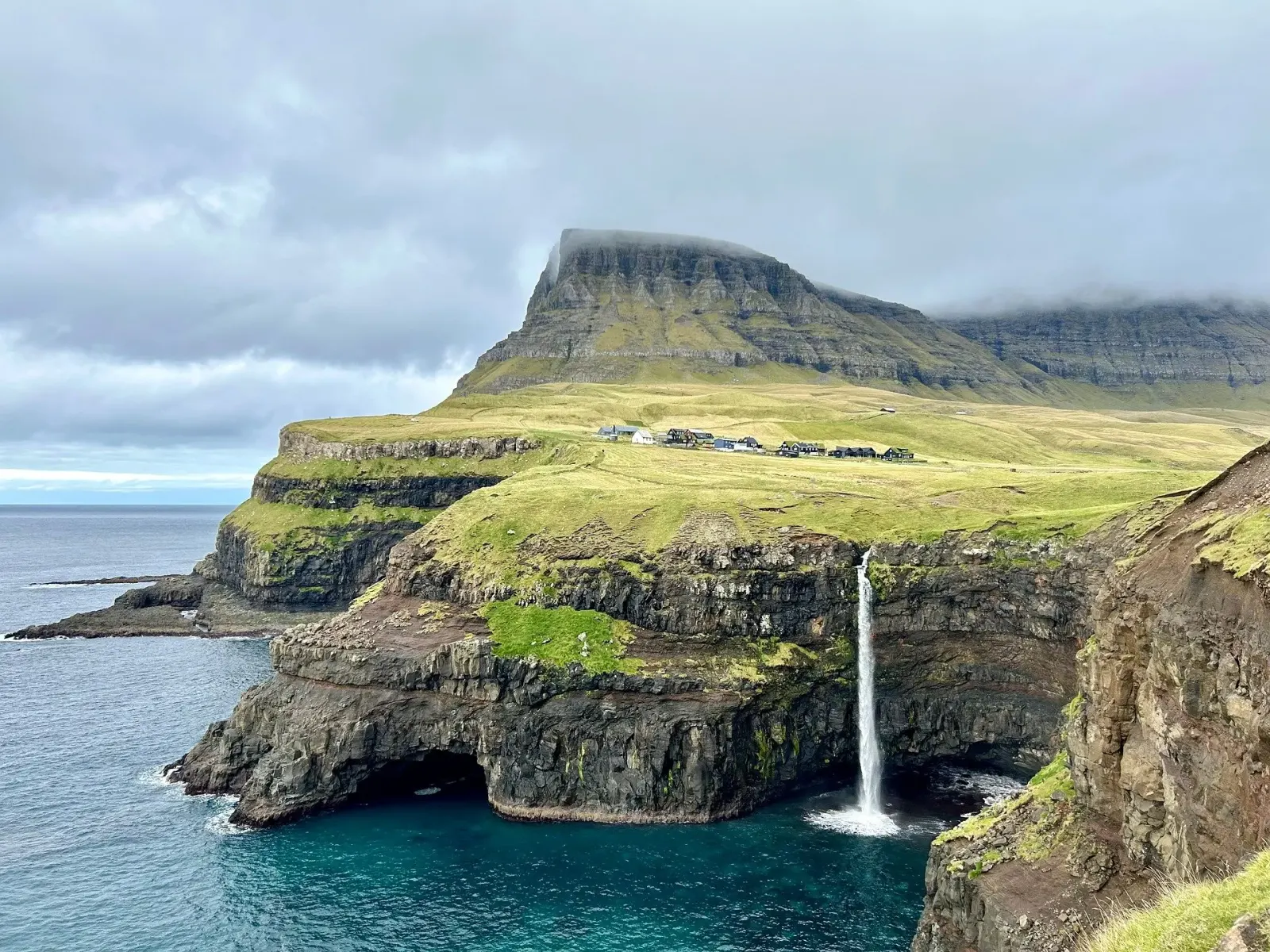
If you really want to see Denmark, leave the motorway aside and follow the Marguerite Route ("Margueritruten"). It's a network of side roads over 3,500 kilometres long, marked with small brown signs showing a white marguerite flower. The route passes castles, beautiful stretches of coast and national parks and avoids the main traffic arteries. That's exactly why it suits motorcycles so well. It's also where you'll find the bends you'd otherwise search for in flat Denmark.
4. Bridges and ferries: from island to island
Denmark consists of over 400 islands. Sooner or later you'll have to cross the water.
The big bridges
- Storebæltsbroen (Great Belt Bridge): it connects Funen with Zealand. On a motorcycle, take the yellow "Manuel" lanes or the automatic payment service. Watch out for the wind. The bridge is high, and crosswinds can shake you around properly.
- Øresundsbroen: it connects Copenhagen with Malmö in Sweden. First you go through the tunnel, then over the huge bridge. Worth it for the ride alone.
Ferry tips
On many small island ferries, motorcycles have a special role and are often allowed to ride past the queue to the front. Look out for markings or ask the staff. For securing: most ferries have straps on board. Put the motorcycle on its side stand, engage first gear and tension a strap over the seat (with a cloth underneath). The Baltic can get rough too.
5. Fuel, parking and paying
Filling up without stress
In Denmark almost all petrol stations are self-service. You insert your card (Visa, Mastercard or debit card) into the machine, enter your PIN and choose the pump. Important: often an amount of around €100–150 is first reserved on your card and correctly settled after a few days. That's normal, no reason to worry.
- Fuel types: "Blyfri 95" is normal unleaded (equivalent to E10). For older motorcycles, choose "Blyfri 98" or super plus (E5).
Parking: watch the signs
Motorcycles may often park on the pavement as long as pedestrians aren't obstructed. But don't rely on it blindly. In cities such as Aarhus or Copenhagen there are dedicated MC parking spaces. If you're on a normal time-limited parking space, check the signs carefully. If a parking disc is required, attach it so it can't blow away, for example with a rubber band on the handlebar. Danish parking attendants are quick and show no mercy.
You hardly need cash
Denmark is practically cashless. Even the smallest ice cream at the harbour is paid by card, Apple Pay or Google Pay. A few Danish kroner (DKK) for emergencies don't hurt, but your wallet can stay deep in your rucksack.
6. Overnight stays: from cabins to shelters
Camping and cabins for motorcyclists
Campsites in Denmark are really good, and many offer small wooden cabins ("hytter"). For us motorcyclists that's ideal: you have a roof over your head, don't have to pack a wet tent and can dry your gear.
Our tip: get the "Camping Denmark" app or look for sites with the "Biker Welcome" label.
Shelters: the rustic option
If you like it simple, look for shelters. These are open wooden shelters in nature that you can often use for free or for a few euros. There's usually a fire pit and a compost toilet nearby. The "Shelter" app shows you all locations. But beware: wild camping with a tent or motorcycle in the forest is strictly prohibited in Denmark.
7. Riding a motorcycle on the beach
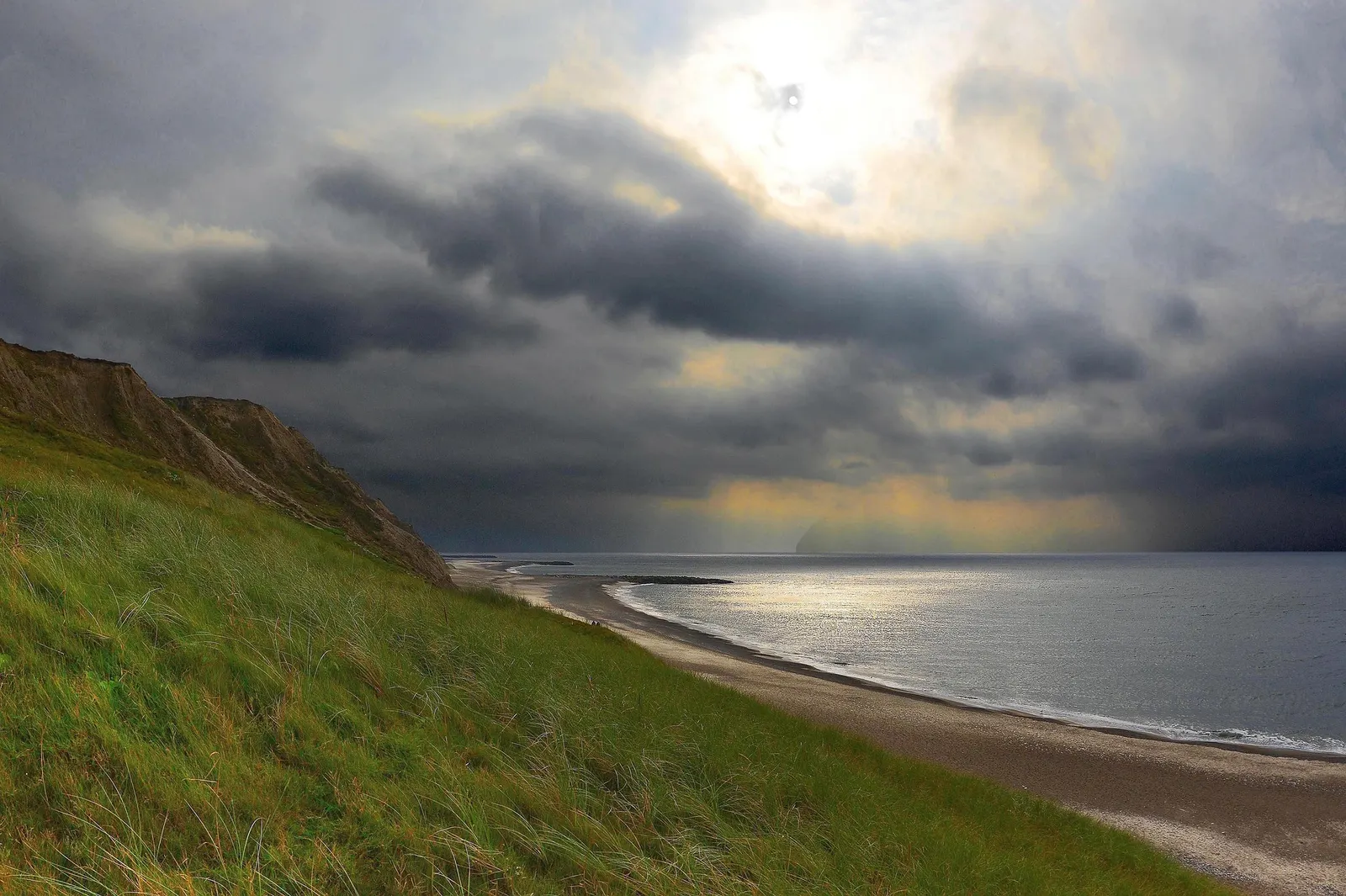
On the North Sea coast you can do something that's allowed almost nowhere else in Europe: ride your motorcycle directly on the beach. On Rømø and on the drivable beach at Løkken/Blokhus, the sand is so firm that it officially counts as a road. Normal traffic rules apply, usually with 30 km/h.
Tip: stay on the firm, wet sand. In the soft sand at the edge, your front wheel digs in faster than you'd like. And salt is poison for your motorcycle. Afterwards, go straight to the nearest car wash and rinse everything thoroughly.
8. Dogs, drones and nature
Travelling with a dog?
If your dog rides in the sidecar: Denmark has very strict dog laws. A valid pet passport and rabies vaccination are compulsory. Certain breeds (such as pit bulls) aren't allowed to enter at all.
A drone in your luggage
Denmark looks great from above, but the rules are strict. Flying is prohibited near cities, airports and military facilities. In open countryside it's often possible as long as you don't disturb anyone. Check the "Droneluftrum" app before take-off.
Environmental protection
Danes are proud of their nature. Leaving litter is a no-go. If you take a break on the beach or in the forest, take everything with you. "Leave nothing but footprints (or tyre tracks)."
Video: motorcycle tour through Denmark (YouTube)
9. Emergencies and breakdowns in Denmark
Denmark is safe, but technology can still let you down.
- Emergency number: 112 for everything: police, ambulance, fire brigade.
- Breakdown assistance: if you're a member of an automobile club, its local partners will help you, often "Falck". You can also contact Falck without membership, but then it's more expensive.
- Health insurance: with your European Health Insurance Card (EHIC) you'll be treated in Danish hospitals. The health system is very good. But expect that you'll sometimes pay the doctor directly by card and claim the money back from your insurer later.
10. Food on the way: pølser and smørrebrød
Riding through Denmark without stopping at a pølsevogn (hot dog stand) is almost impossible. These stands are a real institution. A "rød pølse" with fried onions and remoulade is the ideal snack in between. For a longer break, find a café with smørrebrød, generously topped rye bread slices that look almost like little works of art. Prices for food and especially alcohol are high, though. A beer in the evening quickly costs €8–10.
Frequently asked questions about a motorcycle trip to Denmark
Do I have to ride with lights on during the day in Denmark?
Yes. As for cars, motorcycles must have lights on during the day all year round. Dipped headlights must always be on. On modern machines daytime running lights are often enough, but if in doubt, dipped headlights are the safe choice.
Are there tolls for motorcycles in Denmark?
There's no general motorway toll. But the two big bridges are tolled: the Great Belt Bridge between Funen and Zealand and the Øresund Bridge between Copenhagen and Malmö. Motorcycles pay much less there than cars. You'll find more information on tolls in Denmark on the operator's official website.
Can I filter past cars in a traffic jam?
Officially no. Lane splitting or filtering isn't allowed in Denmark. It's tolerated in some countries, but the Danish authorities are strict about it. Better join the queue.
Which helmet standard is required in Denmark?
Helmets are strictly compulsory. The helmet must be approved to ECE 22.05 or 22.06. A violation means a fine, and often you won't be allowed to ride on.
Where can I park my motorcycle in cities?
In Copenhagen and other big cities there are often specially marked motorcycle parking spaces, which are frequently free. If you park on a normal car space, you have to buy a ticket unless otherwise signposted. Check the signs to see whether a parking disc is required.
How strict are speed checks?
Very strict. Denmark uses mobile speed cameras and laser guns. Even small excesses cost high three-figure sums. For massive excesses (more than 100% over or over 200 km/h), the motorcycle can be confiscated and auctioned. The proceeds go to the state.
What should I watch out for regarding road conditions?
The main roads are excellent. But on small side roads and near the coast, always expect drifting sand or loose chippings in bends. In the countryside, mud from farming on the road is not unusual either.
Do I need a high-visibility vest or a first-aid kit?
Unlike in Germany or Austria, a vest, first-aid kit and warning triangle are not compulsory for motorcyclists in Denmark. For safety reasons you should still carry them.
How does filling up work?
Most petrol stations are automated ("selvbetjening"). You pay directly at the pump with a credit or debit card and need your PIN. Better fill up in good time before longer rides in the countryside or in the evening.
What should I consider on group rides?
Denmark is well suited for groups. Ride staggered so the safety distance is right. The Danish police pay close attention to "aggressive" riding. So stay calm and enjoy the landscape.
Can I ride my motorcycle on the beach?
On a few beaches in North Jutland and in the south (for example Rømø or Børsmose), vehicles are allowed on the sand. Still be careful: the sand can be treacherous, and the salty air quickly takes its toll on the machine.
What alcohol limit applies to motorcyclists?
The same 0.5 per mille as for car drivers. But riding a motorcycle requires full concentration, and penalties for alcohol offences in Denmark are draconian (often a month's salary). That's why our advice is: no alcohol at all.
Can children ride as pillion passengers?
Yes, if they're big enough to reach the footpegs safely. A suitable helmet is compulsory, and good protective clothing is strongly recommended. Check the current rules for children as passengers before your trip.
Do I have to carry spare bulbs?
It's not compulsory. But because riding without lights means a high fine, a small set of spare bulbs makes sense if your motorcycle doesn't have LED lighting.
What do I do in a breakdown?
The Danish breakdown service is usually Falck. If you're a member of an automobile club, breakdown assistance is usually covered through partner agreements. You can also call 112 on the motorway in technical emergencies if there's a danger.
Conclusion
Denmark isn't for people in a hurry. If you come here, you want wind, wide open spaces and a quiet spot in front of your tent or cabin in the evening. If you take speed limits and the lights requirement seriously, watch the parking signs and have a card for paying, your motorcycle trip through Denmark will be relaxed.
Here's the short checklist again:
- Lights on? Always.
- Right hand calm? Because of confiscation.
- Card with you? You'll hardly need cash.
- Rain suit to hand? The weather in the north is fickle.
- Left stress at home? Then you'll fit right in.
Further links
Adapt to the rhythm of the country. The roads are good, the people friendly and the horizon wide. So: helmet on, into gear and over the border.