Deep fjords, salty air on the Atlantic Road, lonely high plateaus like the Dovrefjell: travelling by motorcycle in Norway is something different from a normal road trip. Here nature sets the pace, and the roads follow it. That makes the country demanding to ride and one of the most beautiful destinations in Europe. For a relaxed tour you should know the rules, regulations and laws, because in Norway there are few checks, but penalties are expensive.
Demanding roads, lots of nature and comparatively calm, safe traffic: this mix makes Norway interesting for beginners and old hands alike. But for the way to the North Cape or through the fjords in the west, you need more than a charged battery and a route in your sat nav. Changeable weather, strict traffic rules and the ferries need preparation. Here's everything you need, step by step.
Rules and laws for motorcyclists in Norway
Basically, a motorcycle trip through Norway is straightforward as long as you stick to the rules. You rarely see the police (Politiet). But when they check, they do it thoroughly. The penalties are among the highest in the world, and that's exactly why most Norwegians ride calmly and defensively.
Licence and documents
Of course you need a valid motorcycle licence. Norway isn't an EU member but belongs to the European Economic Area (EEA). EU documents are therefore recognised without any problems.
- Licence classes: for big machines you need the full A licence; for lighter motorcycles the corresponding A1 or A2 classes apply. Make sure your motorcycle's power exactly matches your licence.
- International driving permit: not required with an EU or EEA licence. It's still often recommended, especially with old paper licences. That way there are no communication problems at checks or after an accident.
- Take these documents in the original:
- driving licence
- vehicle registration certificate
- ID card or passport (valid for at least 3 more months)
- Green Card: it's your proof of insurance. Request it from your insurer before the trip. In the event of a claim it saves you long discussions.
Helmets and protective clothing
Safety is taken seriously in Scandinavia. Helmets are compulsory for rider and pillion. The helmet must meet the European standard ECE 22.05 or 22.06. American DOT helmets without ECE approval may be objected to at a check.
Extra tip: there's no general requirement for special protective clothing (leather or textile with protectors). But in this harsh climate it would be grossly negligent to do without. On the passes it can be around freezing even in summer.
Warning vest and triangle: you must carry at least one reflective high-visibility vest. Pack it so you can reach it immediately in a breakdown. A folding motorcycle warning triangle isn't compulsory but adds real safety.
Lights on around the clock
In Norway motorcycles always ride with lights on, 24 hours a day, even under the midnight sun. That way you're seen better against dark rock faces and in the many tunnels. In fog or rain, daytime running lights aren't enough; then you must switch on dipped headlights.
Alcohol limit: 0.2 per mille
Norway has one of the strictest alcohol rules in the world. The limit is 0.02% (0.2 per mille), which means practically zero tolerance. If you've had a lot to drink in the evening, better leave the motorcycle parked the next morning. Penalties are often based on monthly income and quickly reach four figures.
Phone while riding
Phoning without a hands-free device is prohibited. If you operate your smartphone in moving traffic – and that includes waiting at a red light – you'll pay a high fine. For navigation and calls, a helmet intercom system is best.
Radar detectors and speed camera apps
Active radar detectors that interfere with measurements are prohibited. Speed camera apps on your phone are also legally tricky, and the government is becoming stricter about warning functions in sat navs. The easiest approach is to see fixed speed cameras (usually signposted) as a sign of a danger spot and ride accordingly.
Traffic rules in Norway in detail
Speed limits
Speed limits in Norway are strict and not a recommendation. The police measure frequently, including from unmarked vehicles or by laser from a great distance.
| Area | Limit | Notes |
|---|---|---|
| Built-up areas | 50 km/h | Often 30 or 40 km/h in residential areas and near schools |
| Outside built-up areas | 80 km/h | Standard on almost all country roads and passes |
| Expressways | 90–100 km/h | Mostly in the south of the country |
| Motorway | Up to 110 km/h | Only on a few sections around Oslo |
Distance and overtaking
Keep at least 3 seconds behind the vehicle in front. That's strongly recommended, especially in tunnels. Only overtake when you have a truly clear view. Many fjord roads are very narrow, so above all you need patience. Use the passing places signed "Møteplass" to let slower vehicles past or to make room yourself.
Right of way and pedestrians
Traffic drives on the right, and at junctions without signs the rule is consistently priority to the right. A special feature: pedestrians always have priority at zebra crossings. Drivers often brake as soon as someone just looks towards a zebra crossing. Do the same as a motorcyclist.
Parking
Parking bans are enforced consistently. Never park your motorcycle on the pavement unless a sign expressly allows it. In cities such as Bergen or Oslo there are dedicated motorcycle parking spaces, some even free. Check in advance and you'll save yourself expensive towing costs.
Tolls, weather and tunnels
The AutoPASS toll system
Norway is far ahead with digital tolls. Almost all toll stations work fully automatically with cameras.
- Motorcycles are mostly toll-free: on almost all public roads and through almost all tunnels you ride through the scanners free of charge on a motorcycle.
- Exceptions: some private roads or individual new major projects may charge fees. If you're travelling with a support vehicle, register it in advance with AutoPASS or EPASS24. Otherwise high administration fees are added.
Tyres and sudden winter weather
Your tyres need enough tread; for the trip at least 3 mm is recommended. On passes such as the Sognefjellet, snow can suddenly fall even in August. Then the rule is: the vehicle must be suitable for the conditions. There are hardly any winter tyres for motorcycles, so this usually means a forced break until the snowplough has been through.
Safely through the tunnels
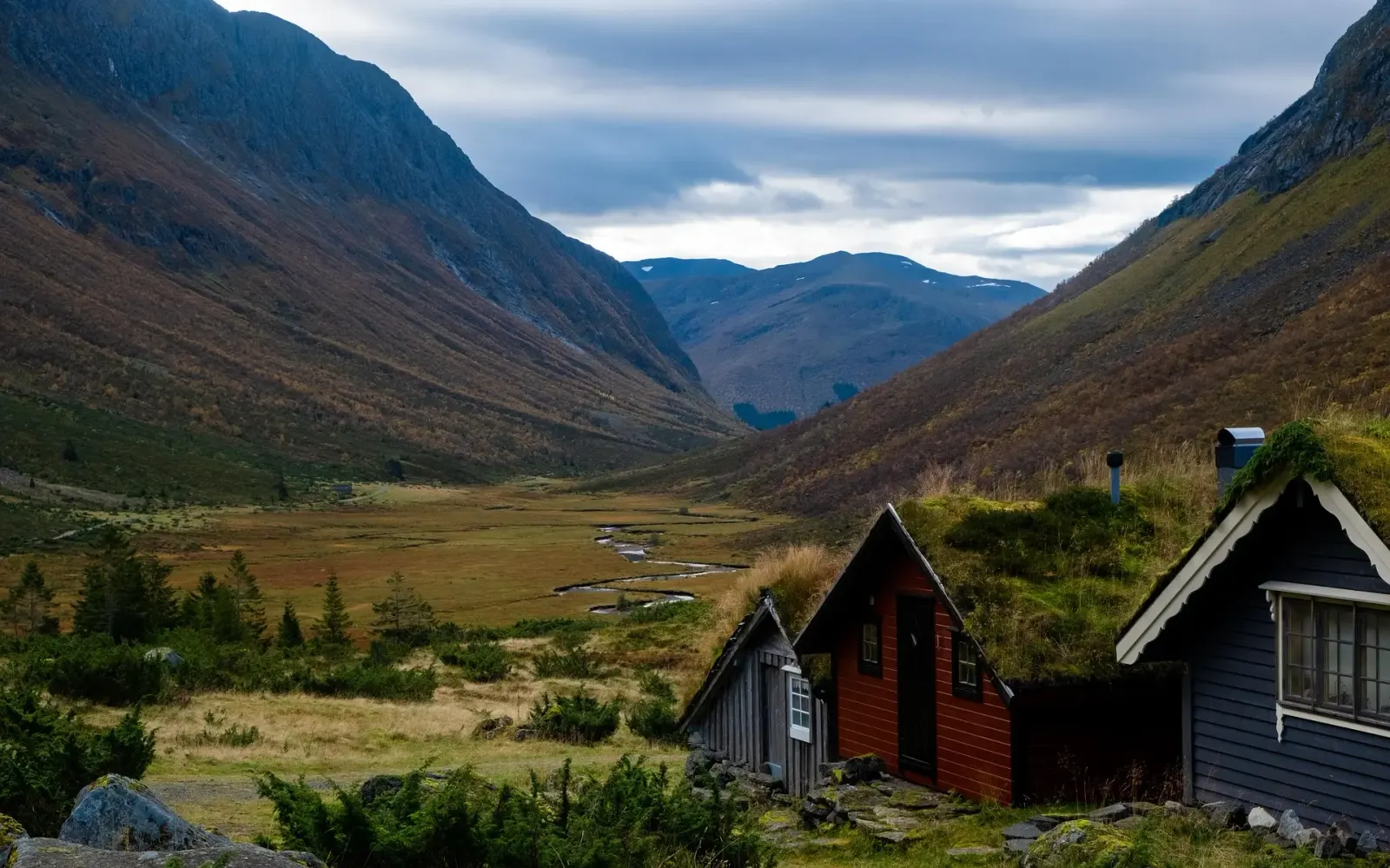
Norway is the land of tunnels. Some are modern and bright, others narrow, dark and damp.
- Cold: it can suddenly be 10 degrees colder in a tunnel.
- Visor: ease off the throttle briefly when entering and flip up the visor if it fogs. Better leave heavily tinted visors at home.
- Distance: keep extra distance in tunnels because of exhaust fumes and poor visibility.
Wild camping and the right to roam (allemannsretten)
The right to roam is highly valued in Norway and allows everyone to use nature. For motorcycle travellers it means a freedom to stay overnight that doesn't exist like this in Central Europe.
- Where can you camp? Basically in open, uncultivated nature.
- 150-metre rule: keep at least 150 metres from the nearest inhabited house or cabin (hytte).
- Duration: stay at one spot for at most two nights, then move on.
- Fire: from 15 April to 15 September, open fires near forests or on heathland are strictly prohibited. Better take a safe gas stove.
- Parking the motorcycle: very important: the right to roam does not allow off-road riding. So you may not ride onto a meadow or into the forest. Park the motorcycle in an official car park or on a firm verge and carry your luggage to the campsite.
Tour planning: season, routes and ferries
The best time to travel
The season is short. It's best to ride from mid-June to the end of August.
- June: walls of snow at the edge of the pass roads, very long days with the midnight sun.
- July: the warmest month, but also the most tourists and motorhomes.
- August: more stable weather, berry season and slightly cooler nights.
Well-known motorcycle routes
- Trollstigen (RV63): 11 hairpins winding up the steep slope next to a waterfall. Belongs on every list.
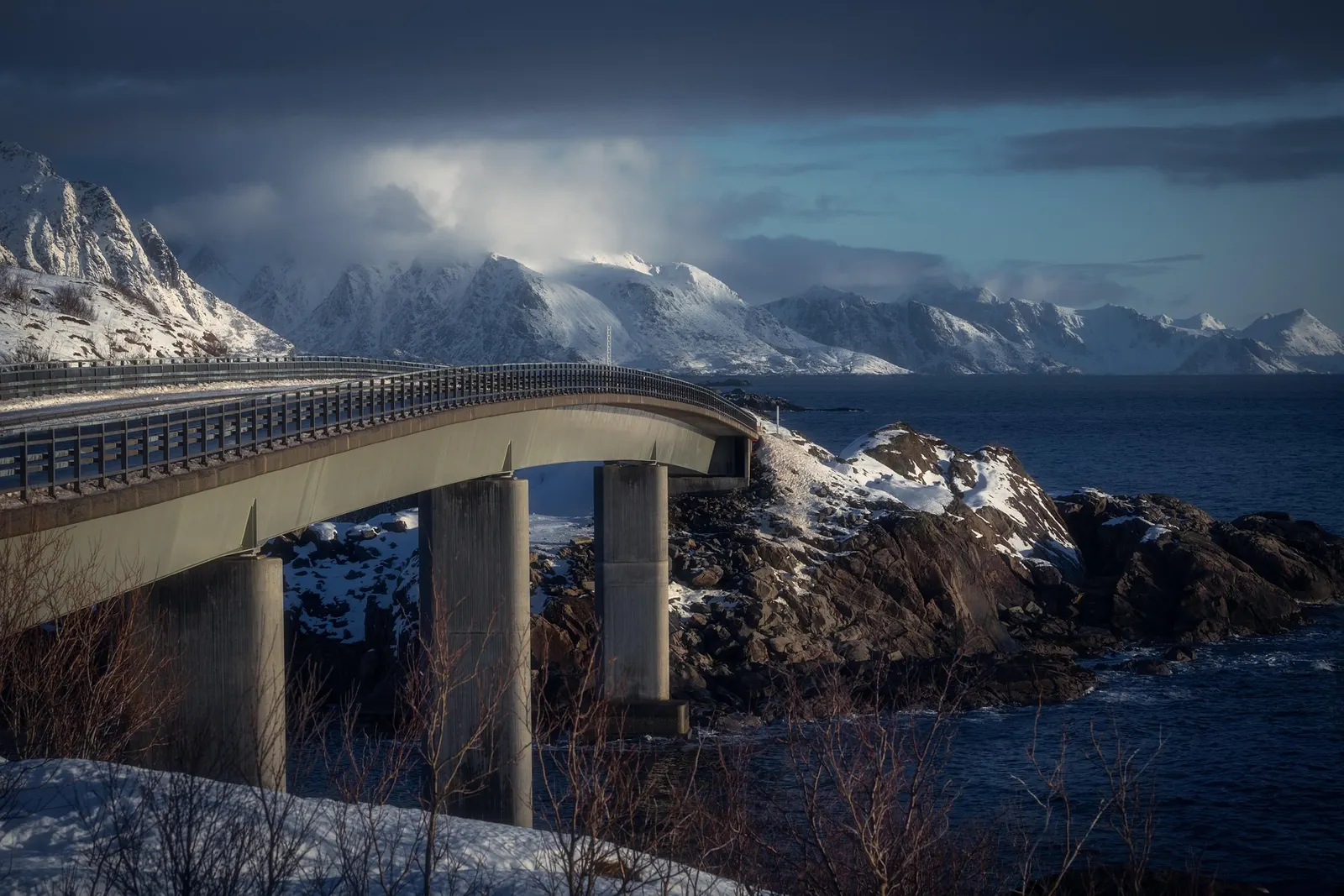
- Atlantic Road (Atlanterhavsveien): eight bridges connect the islands right by the open sea. A masterpiece of road engineering.
- Sognefjellsvegen (RV55): the highest mountain pass in Northern Europe takes you to over 1,400 metres through an almost arctic landscape.
- Lysebotn: 27 hairpins and a tunnel that makes a 180-degree turn inside the rock.
Ferries without stress
In the fjords, ferries replace bridges. You usually don't need to book.
Advantage for bikers: on a motorcycle you can often ride past the queue of cars and line up right at the front. The loading staff usually wave you on board first to fill small gaps.
Securing: many ferries have straps or chocks. A small strap of your own and a cloth to protect the seat still make sense.
Petrol stations and fuel prices
There are plenty of petrol stations in the south. In the far north (Finnmark), there can be 100 km or more between two stations.
Rule of thumb: always fill up when you have the chance and the tank is only half full. Fuel is expensive, often over €2.20 per litre. Almost all petrol stations are automated, and you pay by credit card and PIN.
Clothing for the weather
Pack according to the layering principle. Merino as the bottom layer is worth its weight in gold: it warms when it's cold and cools when it gets warm. Your rain suit should be completely waterproof and quick to pull on. Take two pairs of gloves, a light pair for warm days and a lined pair for the cold passes.
Behaviour in Norwegian traffic
Norwegians are calm and polite, and you notice that on the road too.
- Ride defensively: tailgating is considered very rude and can even lead to other drivers reporting you.
- Avoid noise: in the quiet valleys your engine echoes for kilometres. Don't rev unnecessarily when stationary.
- Helpfulness: if you're at the roadside with a breakdown, almost every Norwegian will stop and ask if they can help.
Conclusion
Norway isn't a country for best times. It suits people who like to look, discover and adapt to the pace of nature. If you prepare well legally, technically and organisationally, you'll experience one of the most impressive motorcycle tours of all. Stick to the rules, plan enough time for the slow kilometres and enjoy the roads between mountains and sea.
Frequently asked questions about motorcycling in Norway
Do I need an international driving permit?
For EU citizens, the normal card licence is enough. For non-EU citizens, an international driving permit is highly recommended.
Do motorcycles pay tolls in Norway?
No, most roads, tunnels and toll stations are free for motorcycles. Exceptions are very rare.
Do I have to ride with lights on during the day?
Yes, permanent lights (dipped headlights) are compulsory throughout Norway, even during the day.
What is the alcohol limit?
It's 0.2 per mille. If you ride, you shouldn't drink anything at all.
Can I camp in the wild?
Yes, thanks to the right to roam. You must keep at least 150 metres from houses and may not park your motorcycle off-road.
What happens if I'm caught by a speed camera?
Fines are very high and are also pursued across borders. Appeals usually have no chance.
Do I need a high-visibility vest?
Yes, at least one vest is compulsory and must be worn in a breakdown or accident.
Are there low-emission zones?
Yes, in Oslo for example. Motorcycles are currently exempt from most city toll rules.
Do I have to book ferries in advance?
Usually not for domestic ferries. For international ferries, for example from Denmark, booking is recommended.
Are winter tyres compulsory?
Not in summer. But in snow or ice the vehicle must be safely equipped. With summer tyres that effectively means: don't ride.
How expensive is petrol or diesel?
Norway is one of the most expensive countries in Europe. Expect around €2.10 to €2.40 per litre.
What is allemannsretten?
The historic right to roam, which allows free access to nature and staying overnight outdoors.
Can I take a pillion passenger?
Yes, if the motorcycle is approved for it. The pillion also needs an ECE-approved helmet.
What do I do in a breakdown?
Call NAF (the Norwegian automobile club, partner of clubs such as ADAC) or your insurer's emergency number. The infrastructure is very good.
How safe are the roads?
Very safe. Above all, watch out for loose chippings in bends and for animals such as sheep or reindeer.
Sources and useful links
The content of this article is based on official information from Norwegian authorities, tourism organisations and recognised traffic and safety institutions. These links will help you plan your motorcycle trip through Norway: