Your first motorcycle often decides whether riding becomes a passion or whether frustration, insecurity and an expensive bad buy spoil the fun right at the start. Young riders in particular are under pressure when buying for the first time. Social media shows almost nothing but superbikes, friends talk about power and sound, and dealers want to sell. What's missing is experience.
This buying guide is aimed at young beginners who are just taking their licence or have recently passed. No marketing talk and no unrealistic promises, but honest assessments, clear recommendations and practical help with the decision. It follows on from your licence training without repeating what you learn there. And nobody here wants to sell you anything.
Your first motorcycle is not a status symbol
Many beginners buy their first motorcycle for the wrong reason: it's supposed to impress. Friends, Instagram and your own ego often weigh more than common sense. Yet the first motorcycle has exactly one job: to help you learn to ride safely, relaxed and with enjoyment.
A good beginner motorcycle forgives mistakes, doesn't overwhelm you and gives you confidence. It's also no drama if it falls over or gets a scratch. Many people underestimate exactly that.
Typical misconceptions of young riders sound like this: "I'll grow into it", "you can always dose the power" or "the bike just looks brutal". In practice, exactly these thoughts often lead to insecurity, stress and unnecessary risk. You don't learn faster with more power, but with more control.
Which motorcycles are really suitable for beginners?
Whether a motorcycle is beginner-friendly doesn't depend on engine size. What matters is the overall package: weight, seating position, power delivery and handling. Many modern machines look harmless on paper and aren't in practice.
Weight is a big issue. The lighter the motorcycle, the easier it is to control manoeuvring, stopping, riding slowly and emergency manoeuvres. As a rule of thumb for beginners: under 200 kilograms fully fuelled is ideal; anything above that you should examine critically.
Seat height is also enormously important. When stopping, you should at least be able to get the balls of your feet securely on the ground. Insecurity when stationary is one of the most common reasons for tip-overs, and they mostly happen in everyday situations, not at high speed.
Power delivery counts just as much. A beginner-friendly motorcycle accelerates evenly and predictably, without sudden surges of power. It translates your throttle input cleanly and doesn't surprise you in a bend or when pulling away.
Suitable motorcycle types for beginners
A few motorcycle categories have proven particularly suitable for beginners. Not because they're boring, but because they offer a lot of control and are practical for everyday use. Before you buy, you should know which licence category suits you (all categories explained).
Naked bikes are among the most popular beginner motorcycles. The upright seating position gives you a good overview in traffic, the handling is usually neutral and the technology manageable. They show their strengths above all in town and on shorter country road rides.
Light adventure or crossover bikes also suit many beginners. The ergonomics are relaxed, visibility is good and power delivery is often very forgiving. They tend to forgive small riding mistakes more readily than sporty machines.
Entry-level tourers are an option for young riders planning longer distances. They are comfortable, stable and usually very predictable. But keep an eye on the total weight.
Modern motorcycles between 125 and 500 cc are now technically so good that they remain fun long after you pass your test. You learn without stress and often have surprisingly much riding fun at manageable costs.
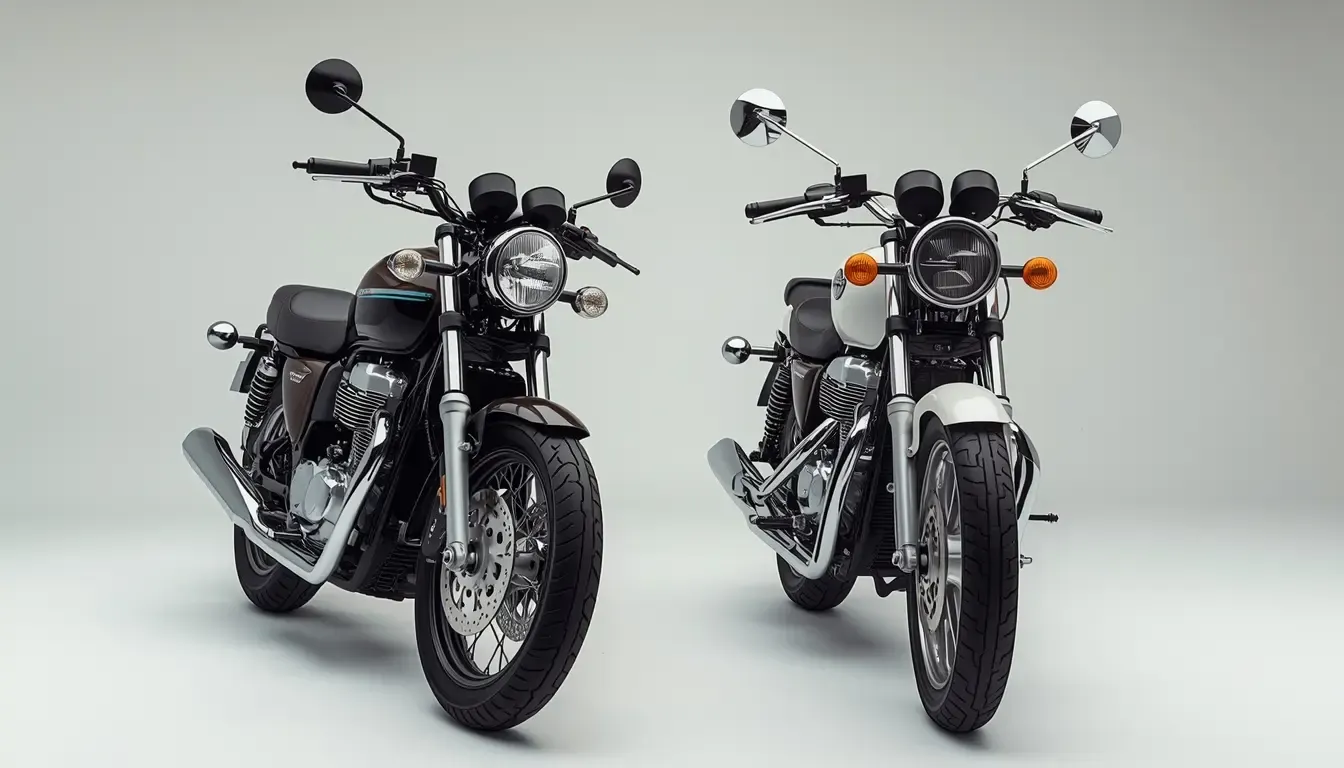
Buy your first motorcycle new or used?
One of the most important questions when buying your first motorcycle: new or used? Both have their merits, but for beginners the answer is often clearer than many think.
A new vehicle comes with a warranty, no previous damage and modern safety technology such as ABS and traction control. That gives security, but it costs. The biggest disadvantage is the high depreciation in the first months. There's also the reluctance to really use a new motorcycle casually, because the fear of scratches always rides along.
For many beginners, a used motorcycle is the better choice. It's cheaper, loses less value, and a few signs of wear take a lot of pressure off in everyday use. You do have to look closely, though.
The buying checklist for beginners
Even without mechanical knowledge, you can check a lot yourself when buying a motorcycle. Some warning signs are visible at first glance. The engine should start cleanly from cold, run smoothly and not rattle or clatter noticeably. The gears should shift easily and without crunching.
A look at the chain and sprockets says a lot about how the bike has been looked after. If the teeth are pointed or unevenly worn, that points to a maintenance backlog. The tyres shouldn't be older than five to six years, even if the tread still looks good.
On the test ride, what counts most is your feeling. Can you get your feet securely on the ground? Do you feel relaxed or tense? Does the motorcycle steer intuitively, and can you dose throttle and brakes well? If something feels odd, take it seriously.
Negotiating the price: doable even as a beginner
Many young buyers don't dare to talk about price. Yet objective negotiation is completely normal. An upcoming service, old tyres or worn parts are legitimate arguments. Accessories, on the other hand, don't automatically justify a higher price.
A calm, friendly sentence is often enough: "I really like the motorcycle, but because of point X we'd need to talk about the price again." If you're unsure, simply take someone you trust along to the purchase.
What many underestimate: the real costs
The purchase price is only part of the bill. Insurance, protective clothing, maintenance, tyres and accessories quickly add up. If you plan for this from the start, you won't get any nasty surprises later.
Frequently asked questions about your first motorcycle
1. How much horsepower should my first motorcycle have at most? For most beginners, less is more. More important than the horsepower figure is how controllably the power comes in. Smooth power delivery helps you ride cleanly and avoid stress.
2. Are 125 or 300–500 cc really enough to start with? Yes. Modern motorcycles in these classes are practical, reliable and remain fun long after your test. Many underestimate how much fun controllable power is.
3. Isn't a more powerful motorcycle safer when overtaking? No. Safe overtaking depends mainly on judgement, overview and timing. More power doesn't replace experience and tends to put beginners in risky situations.
4. Do I need ABS on my first motorcycle? Absolutely. ABS is one of the most important safety systems for beginners. It prevents the wheels from locking under panic braking and significantly reduces the risk of accidents. Older used bikes don't always have it, so keep an eye out.
5. New or used: which is better for beginners? For most beginners, a well-maintained used motorcycle makes more sense. It's cheaper, loses less value, and small scratches take the pressure off in everyday use.
6. How old can a used motorcycle be at most? Age alone says little. More important are maintenance, condition and service history. An older motorcycle with a complete service record is often the better choice.
7. What should I pay attention to on the test ride? Whether you feel relaxed, stand securely, can steer the motorcycle intuitively and feel no insecurity when stopping or manoeuvring.
8. How important is seat height for a first motorcycle? Very important. Insecurity when stationary is one of the most common causes of tip-overs among beginners. Secure contact with the ground gives you calm and control.
9. Is a sporty seating position suitable for beginners? Usually not. A sporty seating position strains wrists and back and is less forgiving of mistakes. Sitting upright is much more beginner-friendly.
10. How much money should I budget in total? Add about 20–30% to the purchase price for insurance, protective clothing, maintenance, tyres and accessories.
11. Should I buy from a dealer or privately? Buying from a dealer gives you more security thanks to the statutory warranty.
Conclusion
Your first motorcycle is not proof of courage or status. It's your training partner. The better it suits you, the faster you learn, the safer you become and the more fun you have. Light, predictable, reliable and affordable: that's what matters. Everything else comes later. And believe me, that happens all by itself.