Motorcycle clothing is personal protective equipment. Its job is clear: to protect your body from injury as well as possible in a crash. It's not just about the armour, but about how material, workmanship, cut and standards work together. Because this is rarely explained clearly, many misunderstandings persist. Here you'll learn what CE levels, abrasion resistance and materials really mean and how protective clothing works technically.
Why armour alone isn't enough
In motorcycle crashes many injuries, especially to the skin, don't happen at the first impact but while sliding over the tarmac afterwards. Large frictional forces and a lot of heat act on the clothing. If the outer material gives way too early, your skin is directly on the road. The result is deep abrasions and burns.
Armour dampens the force of an impact, but doesn't help against abrasion. Judging protective clothing by the armour alone therefore makes little sense. It's always about the combination: abrasion-resistant outer material, strong seams and armour that sits in the right place.
What the CE standard EN 17092 means
In Europe, motorcycle clothing is tested to EN 17092. The whole garment is assessed as a unit, not just the material but also the workmanship, seam strength and the position of the armour.
The standard has five classes: AAA, AA, A, B and C. B stands for abrasion protection only without armour, C for impact protection only (such as an armour vest), A, AA and AAA for both. For the combined classes: the more As, the more the product can take. CE-A is the lowest level with the highest wearing comfort, CE-AA and CE-AAA stand for much higher abrasion and tear resistance. For normal everyday road riding, CE-AA is a sensible standard because protection and comfort are well balanced.
CE certification doesn't replace your own risk assessment, though. It only shows that a product meets defined minimum requirements in the lab. A real crash can be completely different. So see the CE values as a guide, not a guarantee. How well clothing protects in a crash depends on many factors.
What the CE test covers
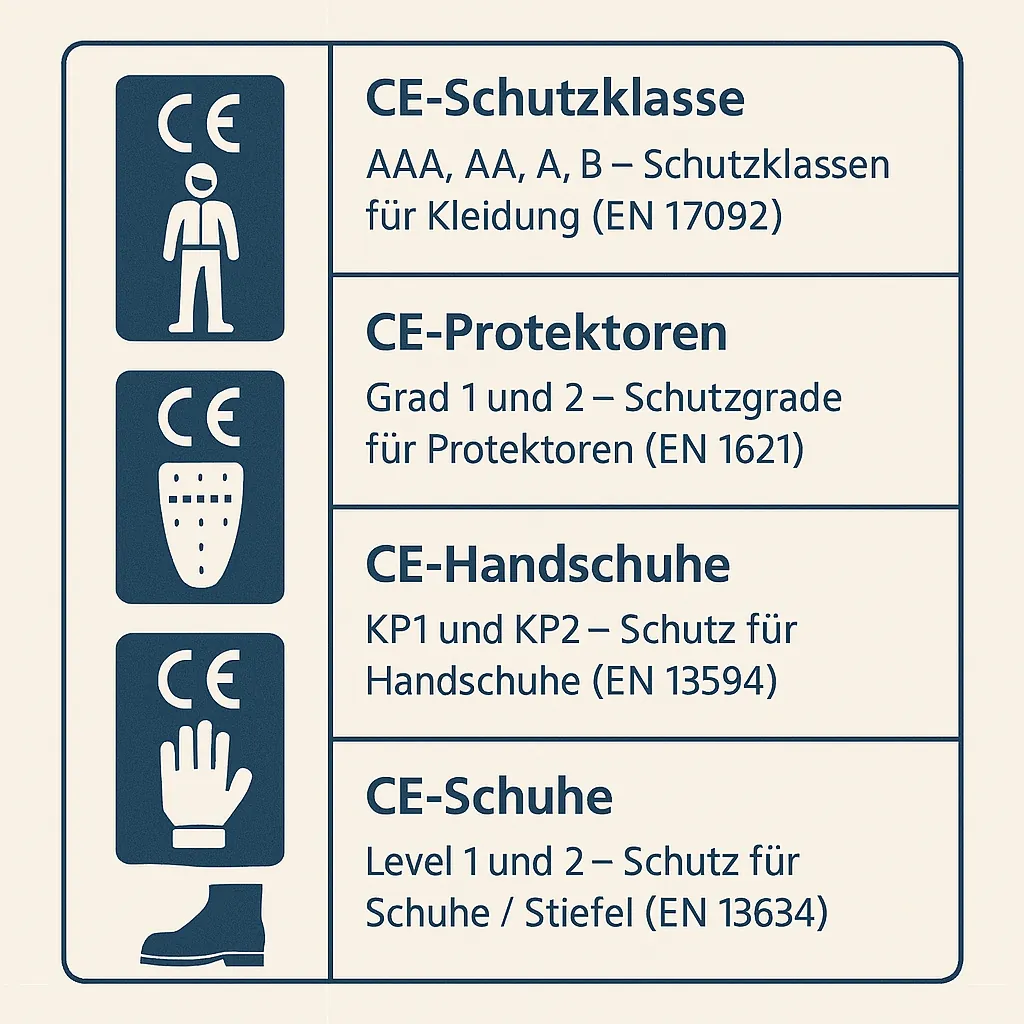 The EN 17092 test covers several properties. One is abrasion resistance: it measures how long a fabric lasts on a simulated tarmac surface. It also tests how much tension the seams can take, because they are heavily stressed in a crash.
Another important point is whether the armour stays in place. It must sit where it belongs, even if the clothing shifts during a crash. So a good fit isn't just a question of comfort but also of safety. In another article we explain what's worth buying in motorcycle gear and what to watch out for.
CE levels for armour: level 1 and level 2
Armour is tested to EN 1621. It measures how much force from an impact gets through the protector to the body. Limb armour (EN 1621-1) may transmit on average no more than 35 kN for level 1, back protectors (EN 1621-2) no more than 18 kN. Level 2 has much stricter limits, so level 2 armour lets less residual force through.
Level 2 armour therefore takes much more load off bones and joints. With modern materials this is possible without noticeably restricting your movement. Technically, level 2 armour is clearly ahead, especially at highly stressed points such as shoulders, elbows, knees and back. In return it's usually a little more expensive than level 1.
Abrasion resistance: the most important protective factor
Abrasion resistance describes how well a material withstands contact with the road surface. Sliding creates high temperatures and large mechanical forces. If the material gives way, serious skin injuries quickly follow.
Even small differences in abrasion time can make a big difference. That's why manufacturers pay special attention to the zones that hit the ground first in a crash. There, abrasion values must be much higher than in areas that are rarely affected.
Materials and their protective effect
Leather has been the benchmark for decades because it has a uniform structure and is very abrasion-resistant. It protects very well but is heavier, less ventilated and needs more care than textile.
Textile clothing can achieve a similar level of protection if high-quality materials are used. High-strength polyamides such as Cordura have much better abrasion and tear values than simple fabrics. On their own they're enough for medium protection classes, with additional reinforcements for higher ones.
Aramid fibres such as Kevlar or Twaron withstand a great deal of heat and abrasion. They are usually used as an extra layer in the impact zones. There they improve protection significantly without greatly affecting comfort.
Modern fibres such as UHMWPE, known by the brand name Dyneema, are very strong yet light. They can make sense especially in riding jeans. How well they protect in the end depends heavily on workmanship and the proportion of fibre in the fabric.
 Why the material mix matters
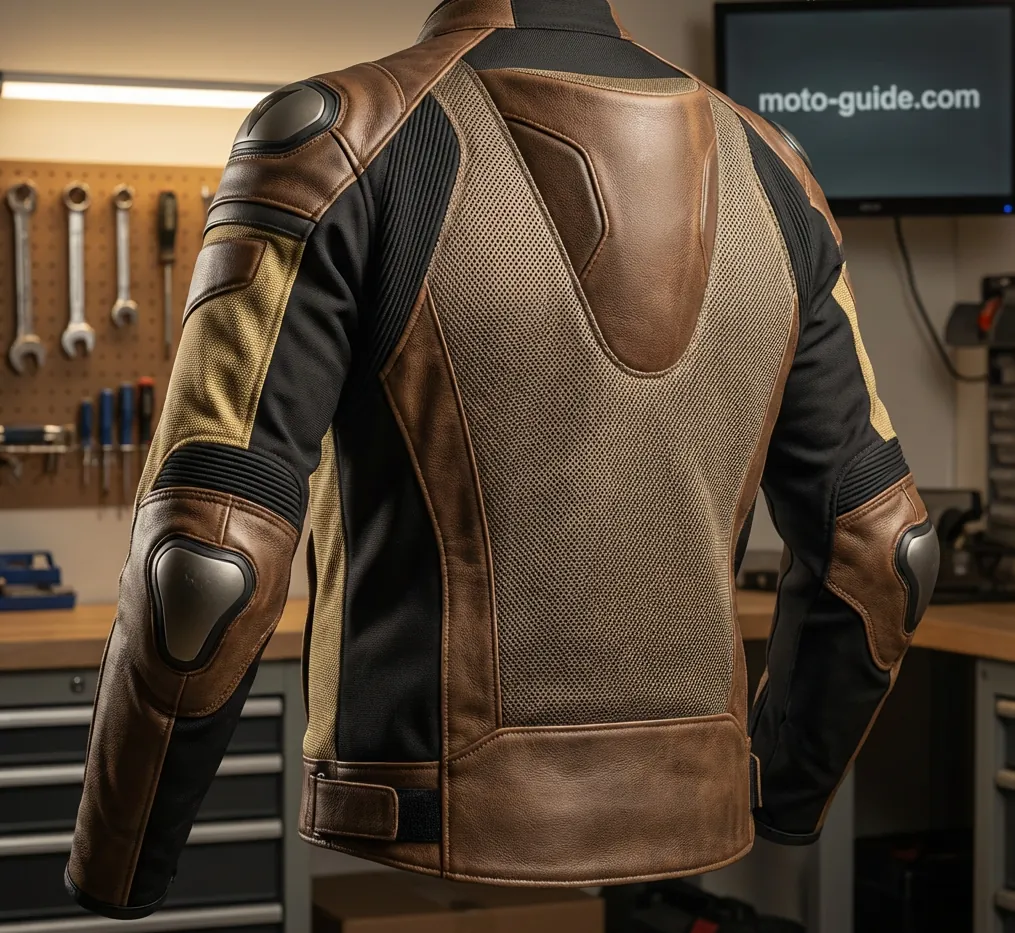
Motorcycle clothing has to meet very different requirements. Impact zones need maximum abrasion resistance, joints need freedom of movement, and air has to get through in warm weather. A single material can't do all that.
Good protective clothing is therefore always built in zones. Each material sits where its strengths are needed. Products with a very simple construction usually don't achieve this balance and protect correspondingly less well.
Why seams matter so much
Seams are often a garment's weak point. Even the most abrasion-resistant material is useless if the seam bursts. That's why special seam types and very tear-resistant threads are used in the safety-relevant areas.
Double or overlapping safety seams make clothing much stronger. As a buyer you hardly see such details, but they have a big influence on protection.
Ventilation and safety
Ventilation makes clothing more comfortable but often reduces abrasion resistance. Large mesh panels offer little protection when you slide over tarmac. Such materials therefore never belong in the areas that hit the ground first in a crash.
Sensible ventilation uses targeted openings, air channels and breathable membranes. That keeps the protective basic structure intact.
Summary
Motorcycle clothing only protects reliably when material, construction and standards fit together. CE levels give you a guide. But they don't replace knowledge about abrasion resistance, material quality and workmanship.
If you know these basics, you can assess protective clothing better and choose more deliberately. That won't prevent every accident, but it significantly reduces the risk of serious injuries.
Frequently asked questions
Which CE class do I need for everyday road riding?
CE-AA is a sensible standard for normal road use because protection and comfort are well balanced. CE-A is the lowest of the combined classes, CE-AAA the highest. B and C only cover abrasion or only impact.
What is the difference between level 1 and level 2 armour?
Both are tested to EN 1621. Level 2 armour passes less residual force to the body in an impact and therefore protects bones and joints better.
Does textile protect as well as leather?
Textile can reach a similar level of protection if high-quality materials such as Cordura are combined with reinforcements, for example made of aramid. Leather is still considered the reference, though.
Are mesh jackets safe?
Large mesh panels offer hardly any abrasion protection. Abrasion-resistant material should therefore always sit in the impact zones.
Sources
- MAIDS: In-depth investigation of motorcycle accidents (ACEM)
- CE marking (European Commission)
- 5 safety standards for motorcycle clothing (Motorrad, German)
- How do motorcycle jacket and pants certifications work (Dainese)
- EN 1621: Motorcyclists' clothing protecting against mechanical impact (SATRA)
Last checked: September 2026. Standards can change.