It feels good, looks good and is cheap too. The jacket fits, looks sporty, costs less than a weekend trip, and the label says "motorcycle clothing". This is exactly where the illusion of safety begins for many riders. Anything cheap seems sensible at first. And that's why cheap motorcycle clothing is so deceptive.
This article is uncomfortable but necessary. When it comes to your skin, your bones and your life, "it'll do" isn't a strategy. We don't want to scare you. But we hope that after reading it you'll have a better sense of what matters.
The most dangerous assumption many motorcyclists make
- "I ride carefully."
- "I only ride in town."
- "I don't ride fast."
- "I don't need a race suit."
- "My child or my partner doesn't ride pillion that often."
You hear sentences like these all the time, often from riders who are convinced they're being perfectly sensible. But accidents don't follow such rules. The asphalt doesn't care whether you land on it at 50 or 100 km/h. And a crash doesn't ask how much your jacket cost. You'll almost always get hurt.
The biggest risk isn't your riding style. It's a false sense of security.
Why cheap motorcycle clothing looks so convincing
Cheap motorcycle clothing is better presented today than ever before. The reason is simple: manufacturers want to sell. And that works with
sporty design,
a clearly visible CE label,
the note "protectors included",
marketing terms such as abrasion-resistant, touring, urban style and many more.
For beginners, but also for experienced riders, this is reassuring. The problem: you can't see safety in a jacket. How to recognise a good motorcycle jacket is summarised in a separate article.
What you don't see in the shop:
the actual material thickness
the quality of the seams
how hot the material gets when sliding
how the protectors behave under load
And it's exactly these points that decide things in an emergency.
Protectors don't save skin
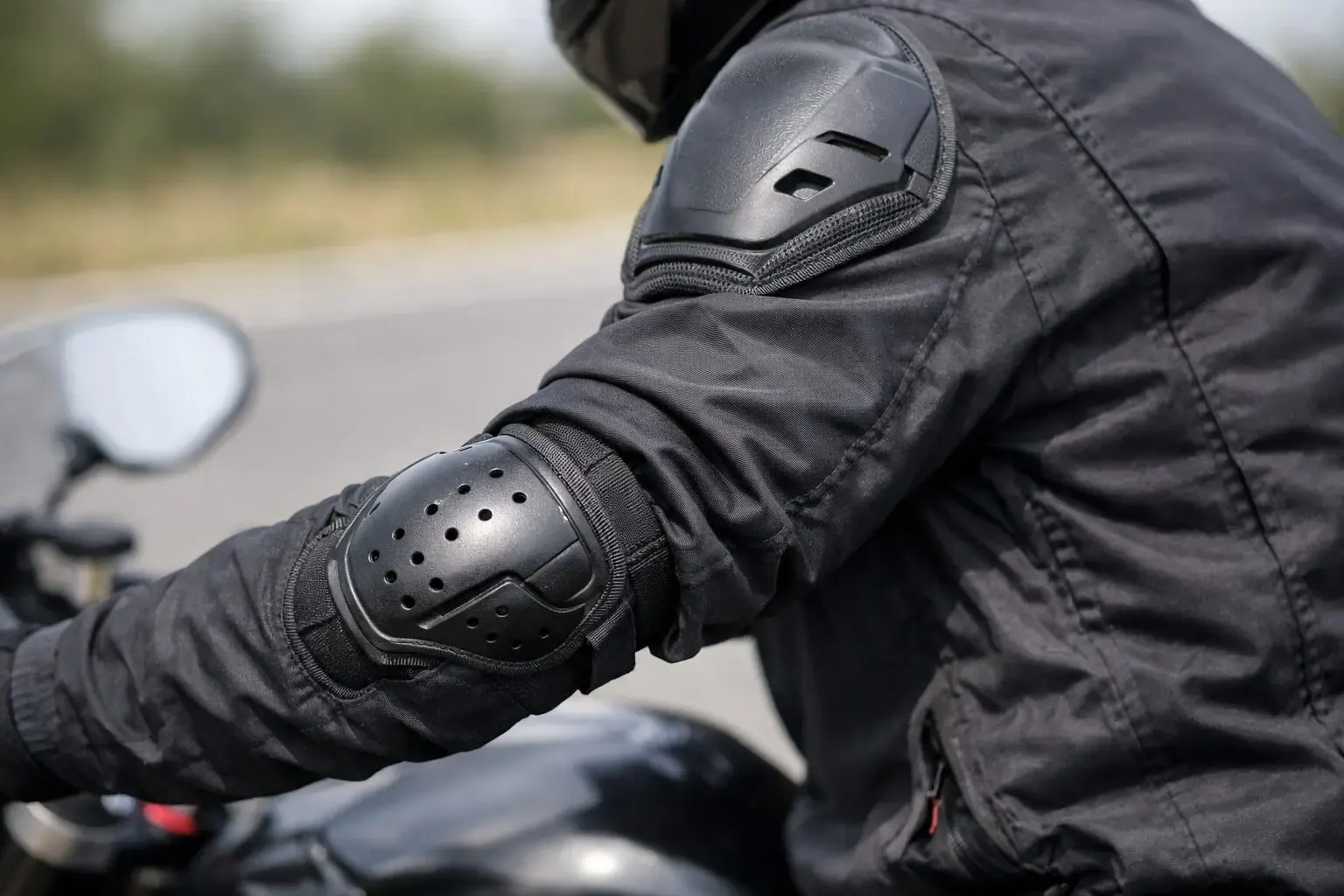
Sounds harsh, but it's true: protectors alone don't protect you. In practice, many serious injuries occur not on impact but while sliding over the asphalt. And that's exactly where cheap clothing fails particularly often.
Why?
The outer material tears too early.
Seams burst open.
The fabric melts or is worn through.
Protectors shift or are suddenly exposed.
What's left is bare skin on rough asphalt.
So the protector isn't the problem. The problem is that the material around it can't keep up.
The myth of the CE label
"It has CE, so it's safe." Unfortunately not.
CE means:
The product has been tested.
It doesn't mean it protects well.
Nor does it mean it's designed for real accidents.
Many cheap garments only meet the minimum requirements. The tests are controlled, short and run under laboratory conditions. A real crash is chaotic and brutal, and the conditions are different from the lab every time. We've analysed a number of crashes professionally and drawn our conclusions. Fortunately, many manufacturers feed such findings into product development. Unfortunately, not all of them.
There are worlds between the CE minimum standard and real protection.
The material is the real protection
High-quality motorcycle clothing works with material zones:
particularly abrasion-resistant areas at the shoulders, elbows, hips and other places that hit the ground first in a crash
flexible zones where you need to move
heat-resistant materials for long slides
Cheap clothing skips this. It's usually equally thin everywhere and therefore equally weak everywhere. That lowers costs and raises margins. Unfortunately, it doesn't lower the risk of injury.
When marketing replaces safety
Many cheap products sell a feeling, not a function. A few examples:
eye-catching quilted seams that add nothing to stability
racing looks without abrasion protection
thick-looking fabrics that melt under friction
protectors that are there but sit in the wrong place
The result: you feel safe, but you aren't. That's exactly what's dangerous, because you're lulled into a false sense of security and may take more risks.
Why we underestimate risks when buying
When it comes to safety, we rarely decide rationally. We compare prices, looks and reviews.
What we don't compare:
realistic crash scenarios
material failure
medical consequences
rehabilitation times
permanent damage
A jacket for 129 euros seems sensible. But skin grafts, operations and months off work don't appear anywhere in that calculation.
"I've been riding like this for years and nothing has ever happened"
That's not proof. That's luck.
Many motorcyclists get through years without an accident, and that's exactly what reinforces their belief that their gear is good enough. The first real crash, however, isn't a learning experience but often the point of no return. The question isn't whether you'll crash, but when and how.
Safety isn't something you learn from experience. It's preparation for the worst case.
Where cheap motorcycle clothing fails most often
From practice we know a few typical weak points:
Weak seams
Often only single-stitched instead of double or triple. They burst open when sliding, and the material opens up.
Too few or weak abrasion zones
No reinforcement material at the shoulders, elbows or knees.
No heat resistance
Synthetic fabrics melt from the friction heat.
Poor fit
Too loose or too tight, and the protectors are in the wrong place. There's usually little room for adjustment.
Rapid ageing
Cheap materials quickly lose their protective effect. Then the clothing is basically useless.
How cheap is "cheap" really?
An uncomfortable truth: the price difference between cheap and high-quality motorcycle clothing is small compared with the consequences of a crash.
Skin heals slowly.
Nerves often don't heal at all.
Mobility doesn't always come back.
Many save on clothing and later pay many times over for treatment, time off and pain.
High quality doesn't automatically mean expensive
Important: we're not saying that only premium brands protect you.
But clean workmanship, traceable materials, clear protection classes and reliable manufacturer information come at a price, and for good reason.
It's not about luxury, it's about protection concepts that work.
The right question isn't "What does the jacket cost?"
But:
What happens to me if I crash?
Does the material stay intact?
Do the seams hold?
Do the protectors stay in place?
Does the clothing protect me while sliding too?
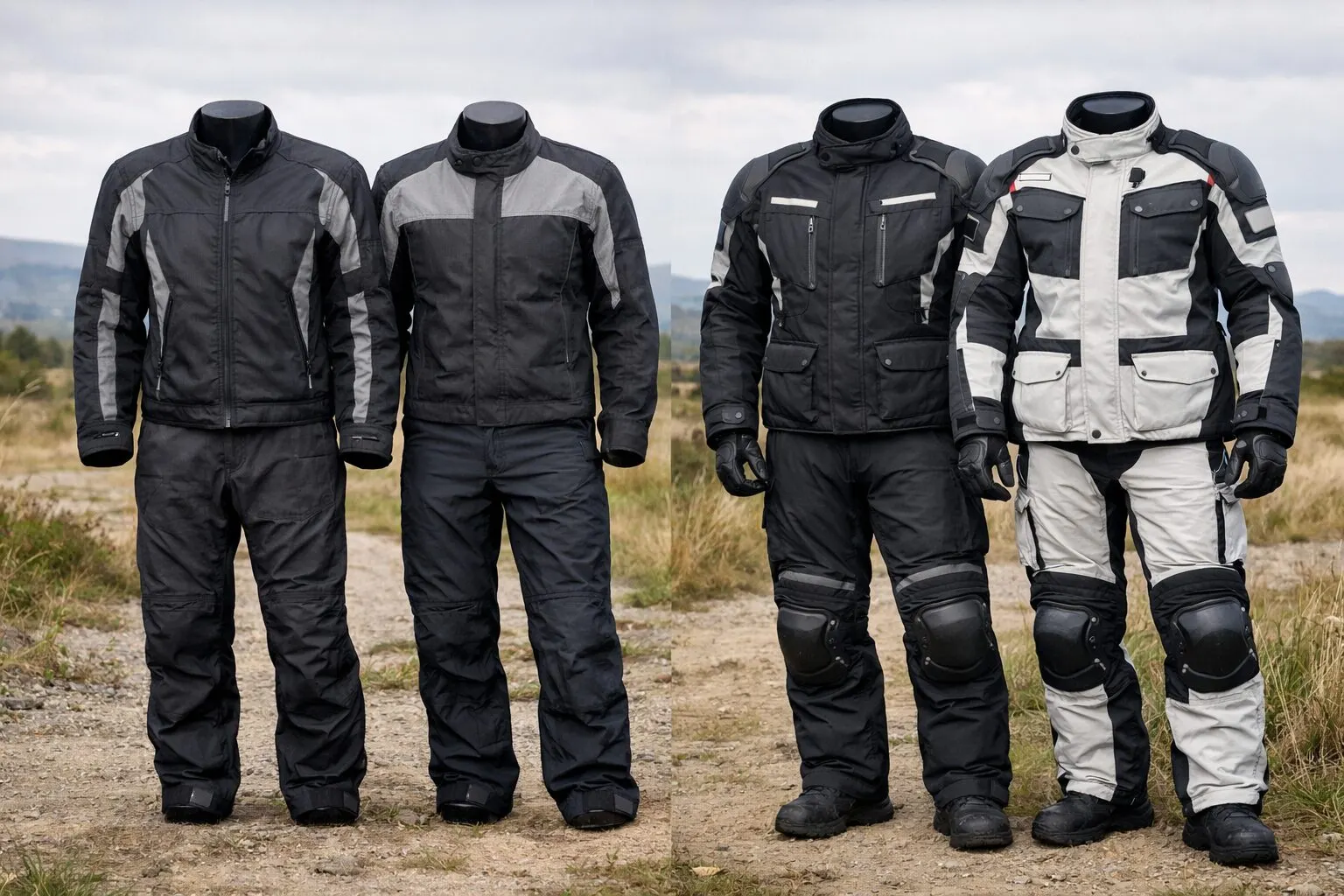
If you don't have an answer to these, be sceptical, however good the jacket looks. Motorcycle clothing is meant to protect you and, if it comes to it, save your life. It may look good too, but that comes third.
Why this topic is uncomfortable
Nobody likes to hear that they may have made the wrong decision. Safety isn't a lifestyle topic. And cheap solutions feel good until they don't.
Motorcycling is passion and emotion. But asphalt is merciless.
Conclusion
Cheap motorcycle clothing isn't automatically useless. But it's often deceptive. It looks modern, meets minimum standards and gives you the feeling of being adequately protected. That's exactly where the danger lies: safety is assumed but not checked.
In an emergency, neither design nor price nor a single CE label decides. What matters is material quality, workmanship, abrasion resistance and whether the clothing holds up while sliding over asphalt. Many cheap products quickly reach their limits here.
Riding a motorcycle means taking a risk. But you don't need to add another one unnecessarily. Your skin isn't a spare part, and your body isn't a wear part.
So don't judge your gear by looks or price, but by its actual protective effect. High-quality motorcycle clothing isn't a luxury, it's a conscious decision for your safety. If you inform yourself and compare critically, you'll ride better equipped and with a clearer head. That's what it should be about: protection that works when it counts.
Our advice: safety doesn't start with the price, but with the honest question of what really protects you in an emergency. We wish you a good eye when shopping and a safe ride, always.
Frequently asked questions
Is cheap motorcycle clothing with a CE label safe?
Not necessarily. CE only means the product has been tested and meets the minimum requirements. It says little about how well it protects in a real crash.
Where does cheap motorcycle clothing fail most often?
Typical weak points are single-stitched seams, missing abrasion zones at the shoulders, elbows and knees, melting synthetic fabrics, a poor fit and rapid material ageing.
Are the protectors in the jacket enough?
No. Many serious injuries happen while sliding over the asphalt. If the material around them tears, the protectors are exposed or shift.
Does good motorcycle clothing have to be expensive?
Not necessarily. It's not about the brand but about clean workmanship, traceable materials, clear protection classes and reliable manufacturer information.