You know that sound. Metal screeching across asphalt. Plastic splintering. And then that strange silence.
As you lie there and slowly realise what has just happened, more breaks than just your protective clothing. The feeling of being invulnerable on a motorcycle gets deep cracks. Maybe you swore to yourself: "I'm quitting." Maybe you have rebuilt your motorcycle a hundred times in your head, but as soon as you pick up the key, your hands shake. Fear after a motorcycle crash is much more common than most people admit.
You don't need to be ashamed of it. This is not about technology or torque, but about what happens in your head when the visor goes down. And about how you come back: with a clearer head and more consciously than before.
The "post-crash syndrome": your brain wants to protect you
First things first: the fear you feel is not a sign of weakness. It is a rather clever protective mechanism. Your brain has stored the crash as life-threatening. The amygdala, your internal alarm system, now keeps a kind of blacklist. At first that feels paralysing, but it has kept humans alive for millennia.
What does that mean in practice?
Lean angle? Mortal danger.
Patchwork of tar repairs? Death trap.
A revving engine? Flight reflex.
So you are not fighting a lack of coolness, but a biological programme that only cares about survival. If you simply ignore it ("just open the throttle and it'll go away"), you risk the next mistake. Because tense riding is more dangerous riding.
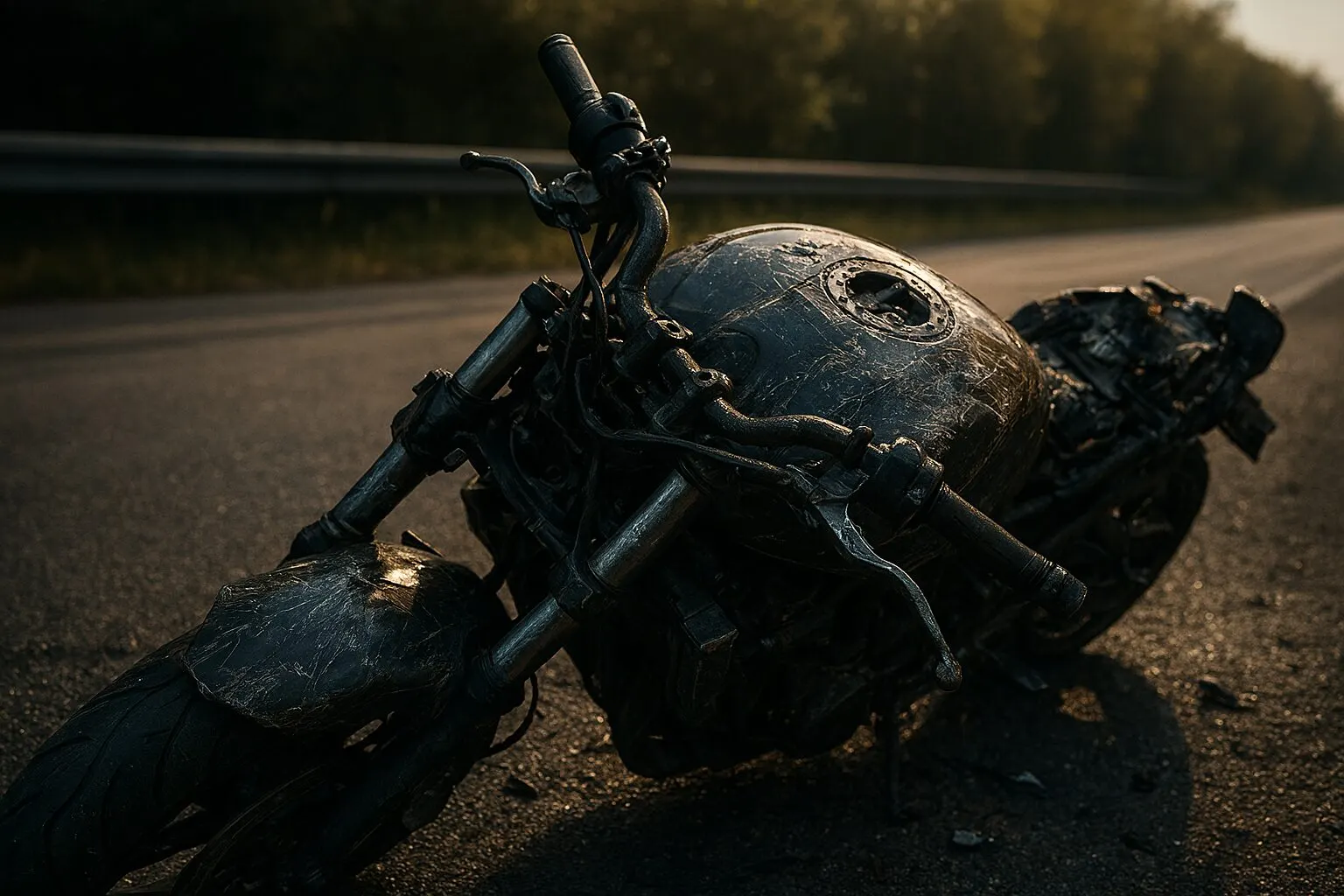
Riding again after a crash: step by step
The big Alpine tour will have to wait for now. You rebuild your confidence bit by bit. In psychology this is called graded exposure. For us it simply means: take your motorcycle back.
Step 1: calm in the garage. Go to your motorcycle and sit on it in full gear, but with the engine off. Feel the seat, the handlebars, the levers. Breathe deeply through your helmet. If your heart races, stay seated until it calms down. You are showing your brain: "Look, we're sitting on it and nothing bad is happening."
Step 2: engine on. Start the engine, but don't ride off yet. Feel the vibrations. Let the adrenaline come and consciously let it go again. Only when you are relaxed at idle are you ready for the first metres.
Step 3: five minutes around the block. Ride just one lap. Shift up once, shift down once. Park the motorcycle with a real sense of achievement. Your brain needs these small safety updates. You overwrite the old memory of the crash with many small positive experiences.
Why you often ride better after a crash
It may sound crazy, but the crash can make you a better rider. Many riders ride with the feeling that nothing can happen to them and don't really look properly. After a crash your senses are sharpened and you recognise dangers much earlier:
You now read the asphalt much more closely.
You feel your tyres' grip limit long before you reach it.
You have more respect for physics. In the end that even makes you faster, because you ride more smoothly rather than more aggressively.
You no longer just go along for the ride – you ride consciously. You know your limit and respect it, instead of overlooking it out of ignorance. With a few tips and tricks on riding safety, you can also check what you want to do differently on your next tour.
Talk about the fear instead of staying silent
In the biker scene there is often an unspoken pressure: "Fall off, get up, ride on." It is precisely this silence about the mental block that makes many riders give up altogether at some point. Do it differently. Find a friend who doesn't judge. Or ride to an empty car park and just practise braking, again and again. There's no shame in relearning the basics. The only pity would be if fear ends up deciding whether you still ride.
Flow instead of force: your new rhythm
When you are back on country roads, don't look for speed but for flow. Pay attention to your breathing. Keep your shoulders loose. If you notice that you are gripping the handlebars, roll off the throttle immediately.
Imagine gliding through the bend instead of wanting to conquer it. A motorcycle is built to ride stably. You just mustn't get in its way. If you still feel unsure in bends, also read our article on cornering technique and line choice.
Tools against fear after a motorcycle crash
After the feelings comes the practical toolkit. Experts in mental training and riding safety agree: a crash is not the end but a chance to correct your riding style.

Visualisation: training in your head
Mental trainers (as recommended by the magazine 1000PS) rely on a technique that MotoGP professionals also use: positive visualisation. Instead of replaying the crash in your head again and again, you overwrite it. Sit down quietly in the evening and ride the road where it happened in your mind – but this time cleanly and without mistakes. Feel how you take the bend and the motorcycle stays stable. Your brain hardly distinguishes between an intensely imagined action and a real one. You train muscles and nerves while sitting relaxed on the sofa.
Practise in a safe setting: return-to-riding training
Sometimes willpower alone isn't enough, because body awareness (proprioception) is disturbed after an accident. A return-to-riding course (for example from the ADAC in Germany, or advanced rider training elsewhere) helps here. It is the safest way to bring you and your motorcycle back together:
Slow riding: on a closed-off area you learn to balance the motorcycle again at walking pace. That gives you back your feel for the centre of gravity.
Emergency braking under supervision: nothing takes away the fear of losing control as well as experiencing that you and your technology (including ABS) work reliably in an emergency.
Resetting where you look: after a crash, riders often stare at obstacles (target fixation). Experienced instructors help you direct your eyes far ahead again. Because the motorcycle always goes where you look.
You are not alone
Almost every good rider has had that one moment at some point. Between those who quit and those who have many good years on the motorcycle afterwards, there is often just one decision: get help and carry on step by step. Your motorcycle is standing in the garage waiting. Now it's your turn.
Conclusion
Every scratch on the motorcycle and every scuff on your suit tells a story. They say: "I'm still here. I've learned something. I'm not invulnerable, but I'm carrying on."
Getting back on is not a sprint. It is a tour where, for once, the destination is not the pass or the ice-cream parlour, but yourself. Are you ready to engage first gear?
Next time you put on your helmet and the visor clicks into place, remember: the road threw you off once, but you can take it back. Welcome back.
Frequently asked questions
Is fear after a motorcycle crash normal?
Yes. Your brain has stored the crash as life-threatening and now reacts with protective reflexes. It is not a sign of weakness.
What is the best way to get back on a motorcycle after an accident?
In small steps: first sit on it in the garage with the engine off, then let the engine run while stationary, then ride a short lap around the block.
Does a rider safety course help against the fear?
Yes. A return-to-riding course practises slow riding, emergency braking and where to look on a closed-off area, giving you back confidence.
What does visualisation achieve after a crash?
You ride the accident route in your mind without mistakes. Because the brain hardly distinguishes between intensely imagined and real experiences, you build confidence without sitting on the motorcycle.
Have you been through a crash yourself? What was your first moment back in the saddle like? Share your story with us and encourage others not to give up.