Hardly anyone decides to ride a motorcycle out of pure reason. Usually there's a feeling behind it. The sound of an engine at the traffic lights, an encounter with a biker on a mountain pass or simply the wish to get around more independently. If you're seriously considering getting your motorcycle licence, you quickly notice: the way there is clearly regulated, but often feels more intense than expected. Here you get an honest, practical overview of the process in Germany, from the first thought to the moment you ride off alone for the first time after the test.
Before your first lesson: which licence category fits?
Before you get on the bike, you have to choose a category. In Germany, A1, A2 and A differ in engine power and minimum age, but also in the character of the training. Many new riders underestimate how much this choice later affects costs, learning pace and riding practice.
Young beginners or anyone who deliberately wants to start small often take A1. Older beginners usually start directly with A2 or, from age 24, with the unrestricted category A. If you've had A2 for two years, you can move up to A from age 20, then with a practical test only. Many experienced riders consider A2 the most sensible compromise: enough power for real motorcycles, but still easy to control for beginners. If you want to know more about the different licence categories, have a look at the German Federal Ministry of Transport's website (German). In short: A1 from 16 (up to 125 cc and 11 kW), A2 from 18 (up to 35 kW). More in Motorcycle licence categories A1, A2 and A. You'll find the same assessment in many experience reports from the motorcycle community, by the way.
As soon as you've decided and signed up with a driving school, the theory starts. Many smile at this part, yet it's especially important for motorcyclists. On a motorcycle you're more vulnerable than in a car, more directly connected to your surroundings and far more reliant on anticipatory riding. If you really understand hazard awareness and don't just memorise questionnaires, you'll later ride more relaxed and safely.
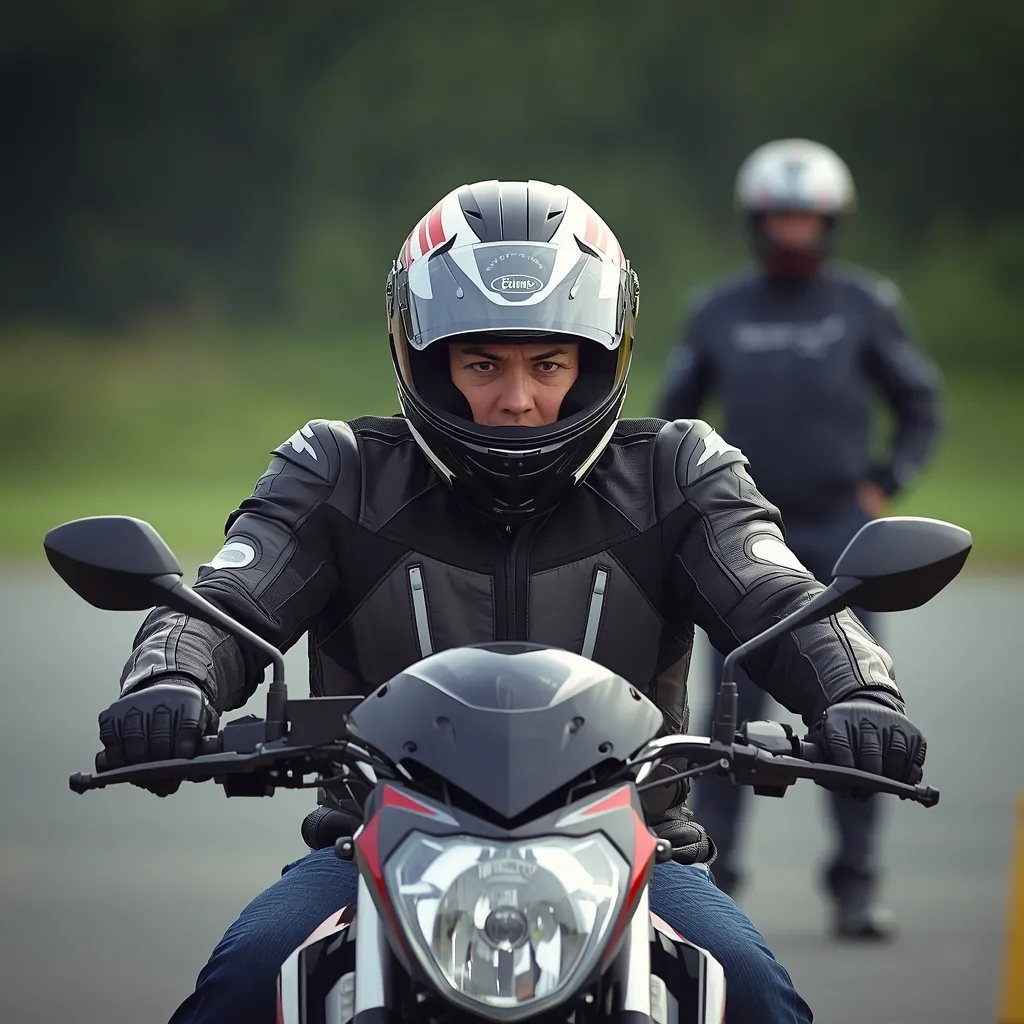
It has proven worthwhile to do the theory as early as possible and outside the season. Many learners say they could concentrate better in winter and carry straight on with the practical part in spring without time pressure or scheduling stress.
The first lessons: slow is harder than fast
Switching from theory to the motorcycle is the real turning point for most. This is where you notice how little your own idea has to do with reality. In many experience reports, learners write quite openly that the first lessons are hardly about speed and bends. Instead there are things nobody thinks about beforehand: pushing the bike, controlling the weight, finding the clutch's biting point, pulling away cleanly, riding slowly, keeping your balance. Almost all beginners find slow riding in particular surprisingly hard. The bike wants to tip, your eyes drift downwards, the clutch feels strange. That has nothing to do with a lack of talent. It's completely normal.
A moment keeps cropping up in the reports when suddenly something "clicks". Often it's just a small thing, a clean figure of eight or a smooth pull-away without jerking, and your self-confidence rises noticeably. Many describe this as their first real contact with the feeling of riding a motorcycle. Wind, vibrations and the direct connection to the machine create a mix of respect and excitement you don't know from a car. At the same time, this shows how much a patient instructor matters. A good instructor allows mistakes, explains calmly and builds up step by step. A bad one puts on pressure, and that's exactly what blocks learning.
The more confident you become on the practice area, the more the training moves into real traffic. That's where theory and reality part ways. Now it's no longer just about technique, but about real traffic situations, other road users, unpredictable reactions and stress. At first many learners simply feel mentally overwhelmed: throttle, clutch, brake, indicator, shoulder check, signs, all at the same time. That's normal too. Experience shows that it usually settles after a few lessons, once the routines become automatic. If you stay patient in this phase and ride regularly, you often make big progress quickly.
Special rides: annoying, but useful
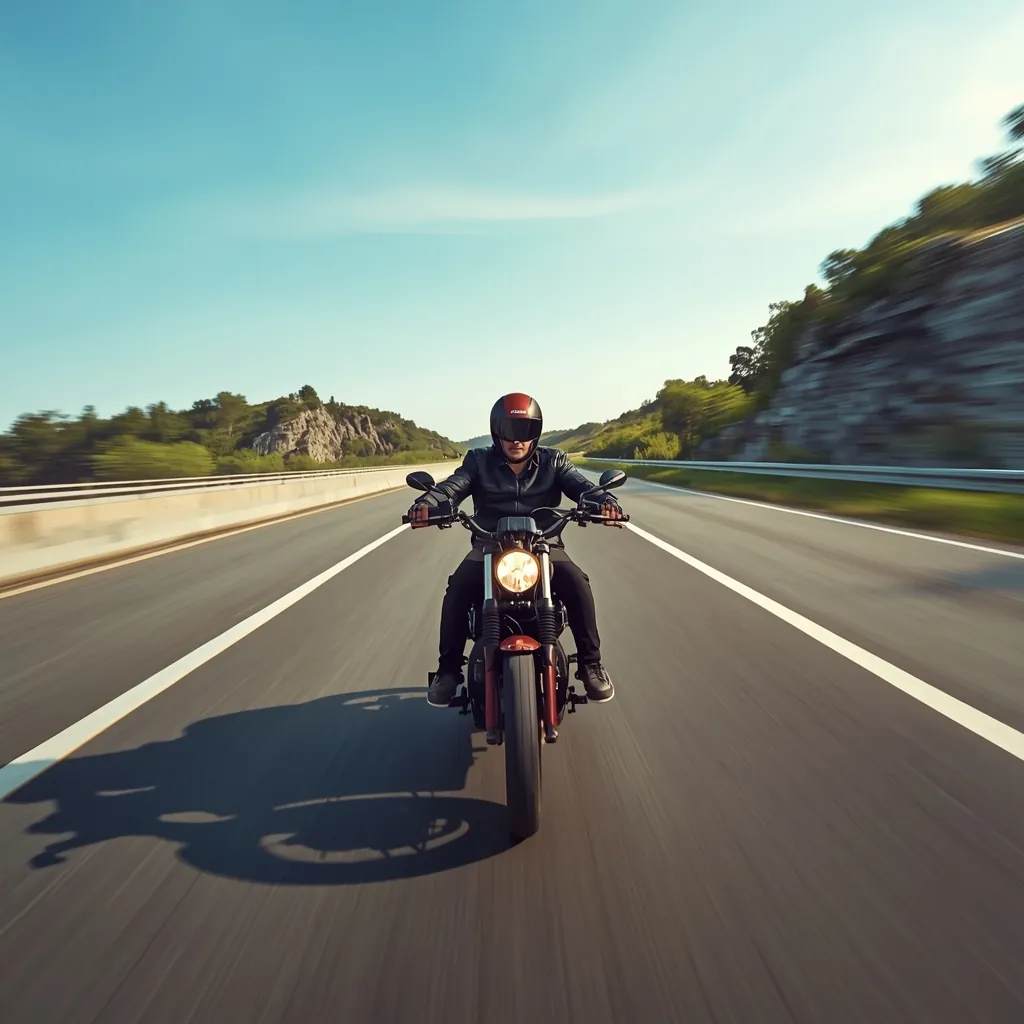
A fixed part of German training are the special rides: country roads, motorway and night riding, a total of 12 sessions of 45 minutes each for the basic training. They're compulsory, and for good reason. A motorway ride on a motorcycle seems threatening to many beginners at first. High speed, crosswinds, lorry traffic, all of it costs concentration. In hindsight, though, many learners say that these rides in particular strengthened their self-confidence considerably. It's similar with the night ride. Once you've ridden in the dark, you'll automatically ride more defensively, with more foresight and more calmly afterwards.
What does the motorcycle licence cost?
Hardly any topic is discussed as much in forums and driving schools as the costs. The motorcycle licence is expensive, there's no way around it. Depending on the region, driving school and your own talent, according to the German automobile club ADAC you'll usually end up at 2,500 to 3,000 euros in Germany, in expensive regions over 4,000 euros. That already includes official fees, test fees, the first aid course and the eye test. Many forget protective clothing. Helmet, jacket, trousers, gloves and boots aren't a side issue, but a fixed part of the training. If you save here, you save in the wrong place. Some manufacturers also give discounts on new bikes to fresh licence holders, see Manufacturer discounts for new licence holders.
Still: expensive isn't automatically better. For beginners in particular, well-fitting, certified textile clothing often makes more sense than stiff leather.
From the community we know you can definitely influence the total costs. If you go into lessons well prepared, ride regularly and don't let long breaks occur, you usually need fewer practice lessons. Speaking openly with your instructor helps too. Say clearly where you feel unsure, then you'll get more targeted training and learn faster. Another practical tip: extra practice on closed-off areas or a traffic training ground often brings a lot, especially for basic manoeuvres such as slalom or slow riding.
The practical test: what the examiner looks for
For many, the practical test is the most emotional part of the entire training. Almost everyone is nervous, that's part of it. Interestingly, many say afterwards that the test was easier than feared. If you ride cleanly, stay calm and take no unnecessary risks, you have very good chances. Examiners pay less attention to perfection than to safety, awareness and controlled behaviour. Small mistakes are often no problem as long as you notice and correct them in time. Practising defensive riding improves your chances further.
After the test, the learning really begins
After passing the test, a phase begins that driving schools rarely talk about: the actual learning. The licence isn't the end, but the beginning. Many experienced motorcyclists say they learned more in the first months afterwards than in the whole training. Making your own decisions, riding alone, planning tours, coping with changing weather and road conditions. All of that only really starts now. Experienced riders therefore strongly advise not to overestimate yourself after the test. A manageable motorcycle, regular riding and continued conscious work on technique and where you look are the key to staying safe in the long run. More in Your first motorcycle.
Learning from mistakes is part of it
New riders' questions keep revolving around the same topics. How many lessons are normal? Honest answer: as many as you need. Everyone learns at a different pace, comparisons don't help much here. The worry about failing is justified too. Yes, it can happen. But it's not a drama.
Many really good motorcyclists failed at the first attempt. What matters is learning from it and sticking with it. Another constant topic is the fear of dropping the bike. Here too: almost everyone drops the bike at least once during training. That's part of it and says nothing about your ability.
Frequently asked questions about the motorcycle licence
How hard is the motorcycle licence really?
It's more demanding than the car licence, especially in practice. You don't just apply traffic rules, you coordinate balance, clutch, throttle and where you look at the same time. With patience and regular practice, though, anyone can do it.
How many lessons do beginners need on average?
Most beginners need 15 to 25 lessons, including the special rides. That depends heavily on talent, previous experience, how often you have lessons and the quality of the training.
Is riding a motorcycle harder than driving a car?
Yes, especially at the beginning. You need more body coordination and attention. In return, many find it more direct and intense than driving a car.
What do new riders find hardest?
Slow riding, balance and clean clutch work. Speed is rarely the problem, control more likely is.
Do I have to be afraid of dropping the bike?
No. Drops happen to many learners, usually at a standstill or during very slow manoeuvres. That's part of the learning phase and not a sign of a lack of talent.
Which licence category makes most sense for beginners?
For most adults, A2 is the best start. The bikes have enough power for everyday riding and touring and are still easy for beginners to control.
How long does it take to get a motorcycle licence?
Realistically, expect three to six months. Weather, available appointments at the driving school and your personal learning pace make a big difference here.
How expensive is the motorcycle licence really?
According to the ADAC, around 2,500 to 3,000 euros on average in Germany, more depending on region and effort. On top of that comes protective clothing, which you should budget for from the start.
Can I reduce lessons if I practise privately?
Practising on a traffic training ground helps, but doesn't replace official lessons. It can still speed up your learning curve considerably.
Is the practical test very strict?
It's fair, but attentive. Examiners mainly look at safety, awareness and calm riding. Perfect technique counts less than controlled action.
What happens if I fail the test?
Then you retake it, in Germany after two weeks at the earliest and often after a few extra lessons. You pay the test fee again. Many good motorcyclists failed at the first attempt.
Should I buy a powerful motorcycle straight after the test?
Better not. Straight after the test you still lack real experience. A forgiving, manageable bike helps you build routine and avoid mistakes.
Which protective clothing is really compulsory?
For training and the test, the driving school requires a helmet, gloves, motorcycle jacket, trousers and sturdy boots. On German roads only the helmet is required by law, but good protective clothing makes you safer and is more comfortable to ride in.
Is motorcycling dangerous for beginners?
The risk is higher than in a car, but you can influence it. If you ride defensively, take your time and practise regularly, you significantly lower your accident risk.
What's the most important tip for new motorcyclists?
Take your time. Don't compare yourself with others, ride regularly and work on clean basics. Safety comes before speed.
In short
Getting your motorcycle licence isn't a walk in the park, but it's absolutely doable. If you take your time, have realistic expectations and want to learn, you'll be rewarded. In the end you gain a skill that demands concentration and responsibility and gives you a very special way of getting around in return. And that experience doesn't only begin with your first own tour, but with your very first lesson.
Good luck with it.
Sources
- Driving licence categories at a glance (Federal Ministry of Transport, German)
- Motorcycle licence: costs for category A and A2 (ADAC, German)
- § 18 FeV: common rules for tests (gesetze-im-internet.de, German)
- § 21a StVO: seat belts, helmets (gesetze-im-internet.de, German)
- Information on the motorcycle licence (fahrschule.de, German)
Last checked: September 2026. Rules and fees can change.