The season doesn't have to end with autumn. In winter there's less going on, the air is clear and riding feels calmer. At the same time, cold, wet, dirt and poor visibility demand much more from you and your motorcycle. The right motorcycle accessories for winter are therefore not a nice extra but part of your safety. It's not about looking tough. It's about controlling the machine cleanly at all times and staying warm, even when the cold wind is whistling around your ears.
Why you need different motorcycle accessories in winter
Cold affects your riding indirectly. As temperatures drop, blood flow to your hands and feet decreases. Your movements become slower and less precise. On top of that, you tire more quickly because your body constantly uses energy to stay warm.
More comes from outside: wet roads, gritting salt, leaves, early darkness and low sun. If you set off with unsuitable gear, you increase your risk unnecessarily. In the worst case, that ends in a crash or a collision with others.
Good winter accessories have one clear goal: to keep your body warm and capable without restricting your movement or making it harder to operate the motorcycle.
Winter gloves for motorcyclists
Warmth, protection and feeling in your fingers
 Your hands have a particularly hard time on a motorcycle. They're in the airflow all the time and have to operate throttle, clutch and brake at the same time. In winter, gloves are therefore among the most important parts of your gear.
Good winter gloves combine several things. An insulating layer keeps in the warmth without making your fingers stiff. A weatherproof outer shell keeps moisture out. That's important, because wet gloves hardly insulate any more, and your fingers quickly go numb.
A grippy palm is just as important. You must be able to modulate clutch, brake and throttle precisely even in the cold. A non-slip surface ensures you keep control, even when rain or spray is added.
Pay attention to fit. Gloves that are too tight restrict blood flow, and your fingers get cold faster. Gloves that are too loose take away your feel for the levers. Winter gloves should fit snugly without pressing and still leave enough room for normal finger movements.
And protection mustn't be neglected in winter either. Reinforcements on the knuckles and palms are part of it. Warmth doesn't replace impact protection.
The motorcycle helmet in winter
Visibility, insulation and concentration
In winter your helmet has to do more than usual. It not only protects you in a crash, it also helps determine how warm, how quiet and how clear-sighted you are on the road.
A typical problem in the cold is a fogged visor. The difference between warm breath and cold outside air quickly takes away your view. A working anti-fog system (such as a Pinlock) is therefore a must. Clear vision in winter isn't a question of comfort but of safety.
Sealing at the chin and neck is also important. Cold wind chills you and makes the helmet louder. Both are tiring and cost concentration.
Ventilation should be adjustable. Too much air chills you, too little makes the inside of the helmet damp. With easily adjustable vents, the climate in the helmet stays stable and you're less distracted.
A winter-ready helmet doesn't have to do anything spectacular. It should make sure you concentrate on the road and not on cold, draughts or a fogged visor.
Heated motorcycle accessories
Help at really low temperatures
For many riders, heated accessories are what decides whether winter riding is fun or not. Especially on longer journeys or if you ride every day, you quickly notice the difference.
Heated gloves or heated grips keep your hands evenly warm. That preserves fine motor skills, and you can still operate clutch and brake precisely. You feel this clearly on long rides at low temperatures.
Heated vests or jackets warm your core directly. If your upper body is warm, your arms and legs get better blood flow too, and you cool down less overall. The warmth spreads evenly without restricting your movement.
Such systems need a bit of planning. Batteries must be charged and cables routed properly. If you ride regularly in winter, however, the effort is clearly worth it.
Important: heated accessories don't replace suitable basic gear. They complement it.
Thermal underwear for motorcyclists
The most important layer is at the very bottom
The decisive layer of your winter gear is the one right on your skin. Thermal underwear determines how well all the other layers above it work.
It should retain heat and wick moisture away from the skin. If sweat stays on your skin, it cools and lowers your body temperature. Good functional underwear prevents this and keeps your body climate stable.
Thermal underwear should fit snugly without constricting. It must follow every movement and must not press anywhere. Modern materials insulate well even though they're thin. That keeps you mobile.
If you're cold in winter, it's often not because you're wearing too little but because you're wearing the wrong layers.
Motorcycle boots for winter
Protection from cold and wet
Your feet have a hard time in winter too. The cold comes up from the asphalt, and wet chills them even more. Winter-ready motorcycle boots therefore have to be up to a lot.
An insulating sole keeps out the cold from below. Waterproof material keeps moisture out. And a non-slip outsole gives you a secure footing, even on wet ground or gritting salt.
When choosing the size, allow a little room for warmer socks without your foot losing grip inside the boot. Only then can you still operate the gear lever and rear brake precisely.
Winter boots aren't a luxury. They're part of the deal if you want to keep your motorcycle safely under control.
Visibility and lighting in winter
Being seen is safety
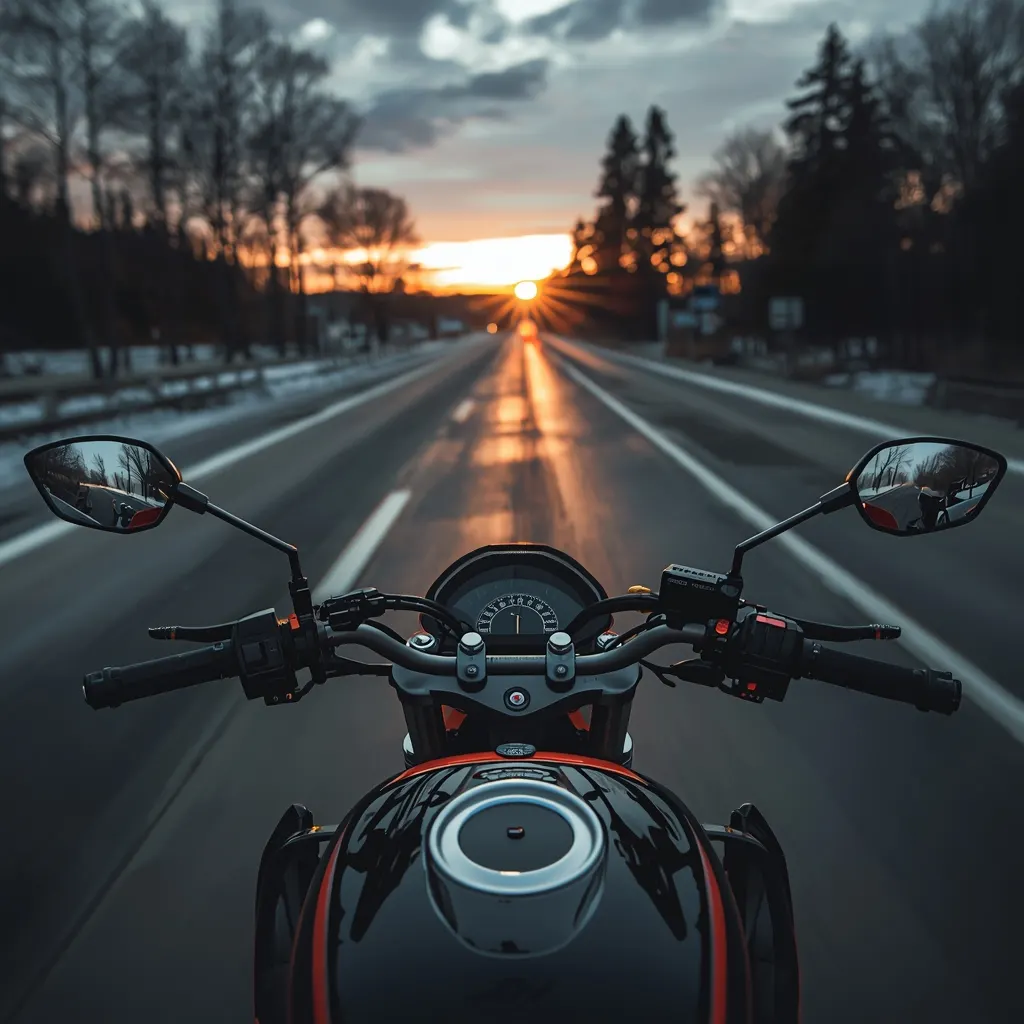 Visibility gets much worse in winter. Short days, dusk, fog and rain increase the risk of others overlooking you.
Reflectors on clothing or accessories make you much more visible, especially in poor light. Additional lights on the motorcycle improve your own view and at the same time make other road users notice you earlier.
The simple things are also part of the winter routine: a clean visor, working lights and clean reflectors. In winter you have to actively make sure you're seen.
Wind protection and other winter accessories
Besides clothing, there are accessories that make winter rides much more pleasant. Handlebar muffs keep the direct airflow off your hands. Wind deflectors on the fairing or in the leg area mean you cool down less on the road.
Insulating seat covers prevent the cold from the motorcycle from drawing straight into your body. A waterproof bag for spare gloves or a small visor cleaning kit makes you more flexible in everyday use.
Hardly anyone talks about such little things, but they bring noticeably more comfort.
Typical mistakes with winter motorcycle accessories
A common mistake: choosing gear only by thickness. Lots of volume doesn't automatically mean good insulation. What matters is that insulation, moisture transport and fit work together.
Just as problematic is trying to make summer gear winter-ready with extra layers. Summer gloves with liner gloves or thin boots with thick socks often cost you control. Your gear becomes winter-ready through targeted choices, not improvisation.
Here are the ten most common mistakes in detail.
10 typical winter gear mistakes and how to avoid them
1. Switching gear too late
Many only react to the cold when the first ride has already been unpleasant. Then they improvise instead of plan.
How to avoid it:
Prepare your winter gear before temperatures drop for good. If you switch early, you ride more relaxed and more safely.
2. Buying winter gloves too small
In winter many reach for particularly tight gloves to have more feel for the levers. The result is often cold fingers.
How to avoid it:
Winter gloves should leave enough room for normal finger movements. A good fit promotes blood flow and preserves fine motor skills.
3. Wearing lots of layers without a system
More clothing doesn't automatically mean more warmth. Poorly combined layers restrict you and trap moisture.
How to avoid it:
Stick to the layering principle: a functional layer on the skin, an insulating mid-layer and a weatherproof outer layer. That works better than layers pulled on at random.
4. Underestimating moisture
Many only think about warmth and forget that moisture is just as much of a problem.
How to avoid it:
Choose materials that actively wick moisture away from the skin. If you stay dry, you stay warm longer. Better leave fabrics that store sweat in the wardrobe.
5. Simply carrying on with your summer helmet
A helmet that works well in summer isn't automatically suitable in winter. Draughts and a fogged visor quickly become a problem.
How to avoid it:
In winter your helmet needs adjustable ventilation, good sealing and a reliable anti-fog system.
6. Compensating for thin boots with thick socks
Thin motorcycle boots are often combined with extra-thick socks in winter. As a result, the foot usually sits worse in the boot.
How to avoid it:
Winter boots should be insulated and weatherproof from the outset. Thicker socks can complement them but don't replace suitable boots.
7. Using heated accessories incorrectly
Heated gloves or vests often run on the highest setting. That drains the batteries quickly and can lead to overheating.
How to avoid it:
Set the heat output so that the warmth is even. The aim is a constant temperature, not the maximum.
8. Treating visibility as a side issue
Many keep riding in dark clothing in winter, even though visibility is much worse.
How to avoid it:
Reflective elements and conspicuous areas make you much easier to see. Think about visibility from the start when choosing your gear.
9. Not testing accessories in everyday use
Some winter solutions sound good in theory but are annoying or impractical in everyday use.
How to avoid it:
Test new gear on short everyday rides before you do a longer tour. Small adjustments often make a big difference.
10. Ignoring your own body
Everyone reacts differently to cold. What works for others doesn't have to suit you.
How to avoid it:
Be honest about how you react to cold. Breaks, shorter stages and suitable gear are part of riding responsibly.
Conclusion
Riding a motorcycle in winter needs preparation. The right winter motorcycle accessories don't just keep you warm, they make sure you stay focused and keep your motorcycle safely under control. Gloves, helmet, underwear, boots and the other accessories all work together.
If you consistently adapt your gear to winter, you'll ride more relaxed, more safely and more predictably. That has nothing to do with excessive caution, but with experience.
Frequently asked questions
What are the most important motorcycle accessories for winter?
Good winter gloves, a helmet with an anti-fog system and adjustable ventilation, thermal underwear and insulated, waterproof boots. Heated accessories and wind protection complement this basic kit.
Are heated grips or heated gloves worth it?
If you ride regularly or for longer periods in winter, yes. Warm hands keep their fine motor skills so you can operate clutch and brake precisely. But don't keep the heating on the highest setting permanently, or the batteries will run flat quickly.
Can I use summer gloves with liner gloves in winter?
Better not. Such combinations often cost feel and control. Real winter gloves with insulation, a weatherproof shell and a grippy palm are the better choice.
Why am I cold despite several layers?
It's often down to the wrong layers rather than too little clothing. A functional layer that wicks sweat away from the skin, an insulating mid-layer and a weatherproof outer layer keep you warmer than lots of random layers.