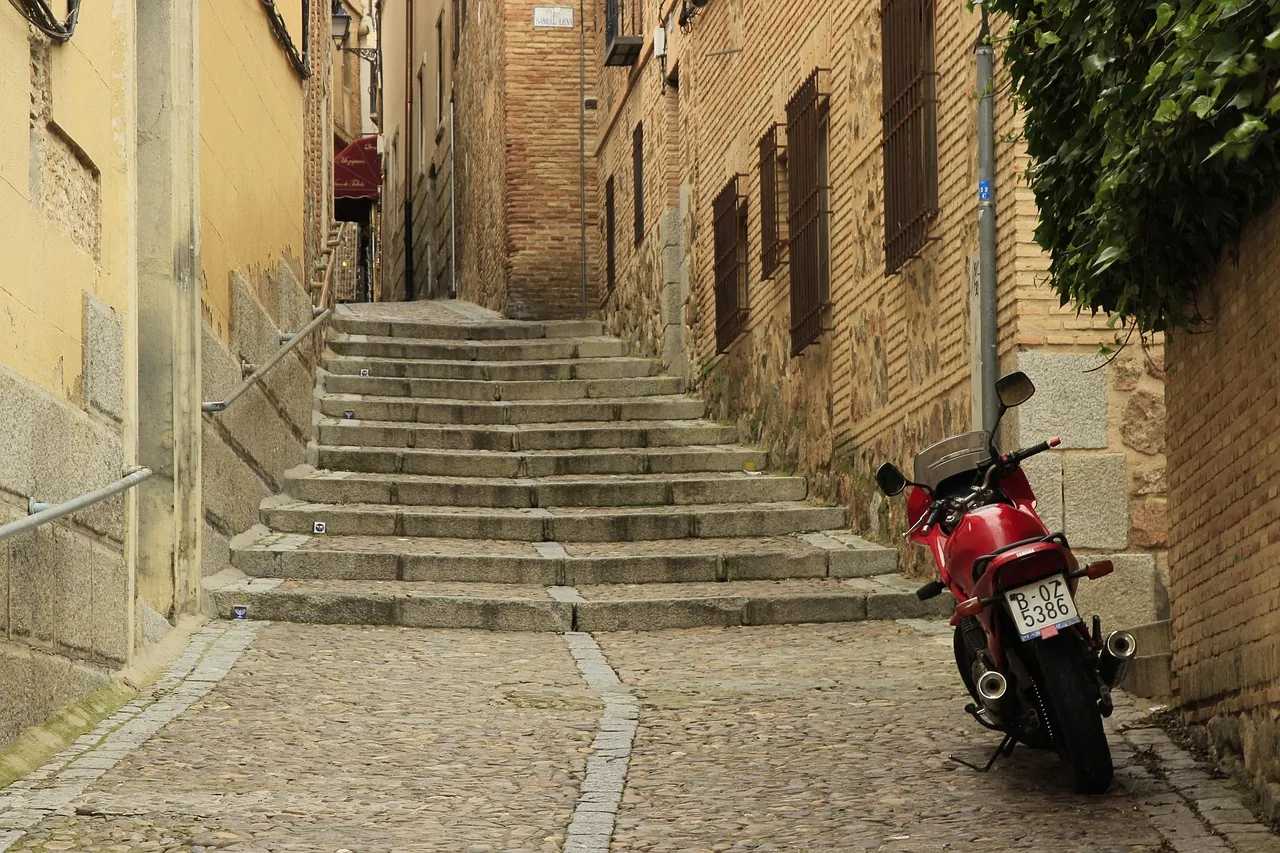
Since 15 April 2024, motorcycles, scooters and mopeds in France must also pass the contrôle technique, the French roadworthiness test. The obligation was phased in according to the year of first registration. The next deadline is the end of this year: bikes first registered in 2020 and 2021 must be tested by 31 December 2026 at the latest. Here is who has to go when, how the test works, what it costs and what applies when you sell. All information as of November 2026.
In short
- Who: all category L vehicles registered in France, meaning motorcycles, scooters, mopeds, three-wheelers and quads. Some vehicles are exempt.
- First test: within the six months before the fifth anniversary of first registration. Older vehicles follow a transition calendar.
- After that: every three years.
- Selling: if the vehicle is more than five years old, the buyer must receive a test report less than six months old.
- Penalty: usually 135 euros, up to 750 euros.
Which vehicles are affected
The rule covers all two- and three-wheeled motor vehicles and motor quadricycles registered in France. The French registration certificate, the carte grise, shows whether yours is included: box J gives the European category L (L1e to L7e), box J.1 the national type, for example MTL, MTT1 or MTT2 for motorcycles and CL for mopeds. That means 50 cc mopeds are included too.
Some vehicles are exempt. The list is in article R323-3 of the French Highway Code (Code de la route). If in doubt, check the official Service-Public.fr page linked in the sources.
If you ride through France on a bike registered in another country, the French test does not apply to you. Your vehicle falls under the inspection rules of the country where it is registered. For Germany, that is the TÜV inspection.
When the first test is due
For new vehicles the basic rule is: the first test takes place within the six months before the fifth anniversary of first registration. Vehicles registered before 2022 follow a transition calendar:
| First registration | First test |
|---|---|
| before 2017 | by 31 December 2024 at the latest |
| 2017, 2018 and 2019 | in 2025 |
| 2020 and 2021 | in 2026, no later than four months after the anniversary of first registration and in any case by 31 December 2026 |
| from 2022 | within the six months before the fifth anniversary of first registration |
Two examples from the French administration: a motorcycle first registered on 20 June 2021 must be tested by 20 October 2026. A motorcycle first registered on 1 October 2022 must be tested between 1 April and 30 September 2027.
Note: there is no reminder letter. You have to book an appointment yourself. A government online service lists the approved test centres by département.
How the test works
The centre checks 80 points, including vehicle identification, brakes, steering, visibility, lights, axles, wheels, tyres and suspension, frame, horn, emissions and noise. Defects are rated minor, major or critical. This leads to one of three results:
- A (pass): no major and no critical defects. The result is valid for three years and the expiry date is stamped on the carte grise.
- S (fail, major defects): you may keep riding for two months from the test date.
- R (fail, critical defects): the result is only valid on the day of the test.
After an S or R result, the retest (contre-visite) must take place within two months. Only the defects found are checked. You can go to another approved centre, but you need the original test report and the carte grise. If the retest is passed, the test is valid for three years from the date of the original test.
Tip: Checking brakes, lights and tyres yourself before the appointment avoids the most common reasons for a retest. See our guides on checking your brakes and the spring check.
What the test costs
There is no fixed price. Each centre sets its own price and must display it clearly at the entrance. France's National Consumer Institute (INC) quotes a range of about 50 to 80 euros depending on the centre. The owner pays.
What applies when you sell
If you sell a motorcycle to a private buyer and it is more than five years old, you must hand over a test report less than six months old. If a retest is required, the report must be less than two months old. For vehicles under five years old, no test is needed for the sale.
As a buyer, you can view a vehicle's test history through the government service HistoVec. For the viewing itself, use our used bike checklist.
What happens if you miss the deadline
Riding without a valid test can cost up to 750 euros. Usually a fixed penalty of 135 euros applies. During a roadside check, the police can also:
- keep the carte grise and give you a seven-day permit to ride to the test centre,
- immobilise the vehicle,
- have it impounded, for example if you do not take it to the test or do not carry out repairs.
You get the carte grise back once you show a passed test report.
Other French rules worth knowing
The test is not the only French specific. Mandatory gloves, reflective stickers on the helmet and lane splitting are covered in our article on motorcycle rules in France. For cities such as Paris or Lyon you also need a Crit'Air sticker, see our guide to low-emission zones in Europe.
Frequently asked questions
Does a foreign-registered motorcycle need the French test?
No. The obligation applies to vehicles registered in France. A bike registered in another country falls under that country's inspection rules.
Do 50 cc scooters need the test?
Yes. All category L vehicles are covered, including L1e mopeds. Some vehicles are exempt under article R323-3 of the Code de la route.
Will I get a reminder?
No. You have to book an appointment at an approved centre yourself.
How long is a pass valid?
Three years. The expiry date is stamped on the carte grise.
What is the fine without a valid test?
Up to 750 euros, usually a fixed penalty of 135 euros. The police can also keep the carte grise or immobilise the vehicle.
Sources
- Contrôle technique d'un 2, 3 roues ou quadricycle à moteur (catégorie L), checked 01/01/2026 (Service-Public.fr, in French)
- Ce qu'il faut savoir sur le contrôle technique des véhicules (French Ministry for Ecological Transition, in French)
- Les règles du contrôle technique obligatoire pour les deux-roues motorisés (Institut national de la consommation, in French)
Last checked: November 2026. Deadlines and prices may change.