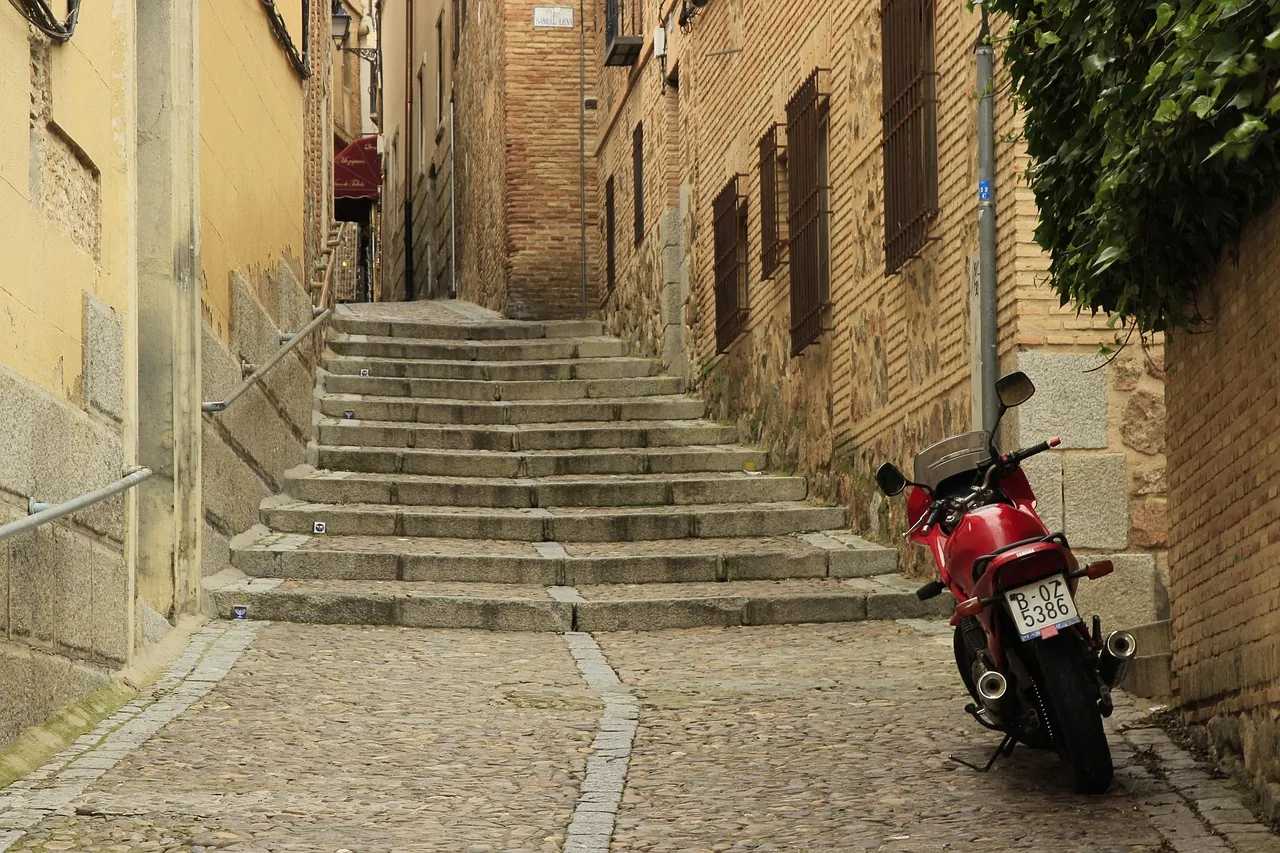
With a motorcycle number plate, size is only the start. If you plan a short-tail conversion, buy a plate holder or look for a smaller plate, you also have to think about angle, visibility and lighting. This article summarises what the German vehicle registration ordinance (FZV) requires for motorcycles and light motorcycles, which special plates exist and which fines apply to offences. Everything refers to German law, as of November 2026.
In short
- Size: The motorcycle plate has two lines, is 180 to 220 mm wide and 200 mm high. Light motorcycles (Leichtkrafträder) may get a reduced plate of at most 255 mm width and 130 mm height.
- Rear only: A motorcycle needs only the rear plate.
- Mounting: The plate must be firmly attached, readable from 20 metres, lit, and neither covered nor dirty.
- Fines: According to the fines catalogue they range from 5 to 65 euros. Deliberate manipulation can be a criminal offence under section 22 of the road traffic act (StVG).
Motorcycle number plate: the dimensions
The dimensions are set out in Annex 4 to the FZV. A motorcycle plate is a two-line plate with its own dimensions. For light motorcycles there is also a smaller version. The reduced two-line plate may only be allocated to light motorcycles.
| Plate type | Width | Height | Lettering |
|---|---|---|---|
| Motorcycle plate (two-line) | at least 180 mm, at most 220 mm | 200 mm | reduced medium lettering 49 mm |
| Reduced two-line plate (light motorcycles only) | at most 255 mm | 130 mm | reduced medium lettering 49 mm |
| Two-line plate for two- and three-wheeled motor vehicles | at most 280 mm | 200 mm | medium or narrow lettering 75 mm |
| For comparison: one-line car plate | at most 520 mm | 110 mm | medium or narrow lettering 75 mm |
A plate may have at most eight characters in total, made up of the area code and the registration number. It must be reflective, comply with the DIN 74069 standard and carry the DIN test mark (section 12 (2) FZV). On a motorcycle plate the inspection sticker (HU) sits in the middle on the left, the registration office's stamp in the middle on the right. What is checked at the periodic inspection is covered in our article on it.
Seasonal, H, exchange and E plates on a motorcycle
Seasonal plate
A seasonal plate shows an operating period. It covers full months, at least two and at most eleven (section 10 (3) FZV). Outside that period you may neither ride the motorcycle nor park it on public roads. Doing so costs 50 euros for riding (item 175a of the fines catalogue) and 40 euros for parking (item 177). When this beats deregistering is covered in our article on the seasonal plate.
H plate
The H plate is issued on application if an expert report under section 23 StVZO exists (section 10 (1) FZV). A vehicle counts as a classic if, at the time of the assessment, it first entered service at least 30 years earlier, is largely in original condition and well preserved (section 2 no. 22 FZV). The "H" is added to the registration number without a space. On a classic motorcycle plate, more than four characters in the registration number (without the H) are not allowed.
Exchange plate
Two vehicles of the same keeper can share an exchange plate (Wechselkennzeichen) if they belong to the same vehicle class (M1, L or O1) and can use plates of the same number and size (section 9 (2) FZV). It cannot be issued as a seasonal plate. According to ADAC, a car and a motorcycle therefore cannot be combined, two motorcycles can. Administrative fees are around 65 euros according to ADAC, plus about 20 to 30 euros for the plates (checked November 2026). Riding without a complete exchange plate costs 50 euros, parking 40 euros.
E plate
Electrically powered vehicles, meaning pure battery vehicles, plug-in hybrids and fuel cell vehicles, get a plate with an "E" after the registration number on application (section 11 FZV, section 2 EmoG). Note that the law is in flux: according to the legal text, section 11 FZV ceases to apply at the end of 31 December 2026. According to a media report, the Bundestag decided on 5 November 2026 to extend the electromobility act until 2035. I could not verify whether and how the FZV will be adjusted. Ask your registration office before applying.
Mounting: holder, angle, visibility, lighting
The rear plate must be firmly attached (section 12 (5) FZV). You do not need a front plate on a motorcycle. For vehicles under EU Regulation 168/2013, which covers nearly all new motorcycles, section 12 (6) FZV refers to Annex XIV of Delegated Regulation (EU) No 44/2014. The manufacturer must then design the place for the rear plate as follows:
| Feature | Requirement |
|---|---|
| Position | fully within the outer edges of the vehicle, not at its outermost point |
| Orientation | perpendicular to the vehicle's longitudinal centre plane |
| Angle | relative to the vertical at least minus 15 degrees, at most 30 degrees |
| Lower edge | at least 0.20 m above the road (or less if the rear wheel radius is smaller) |
| Upper edge | at most 1.50 m above the road |
| Visibility | 30 degrees outwards to each side, 15 degrees upwards, with no components in the visibility space |
In addition, section 12 (8) FZV requires the plate to be readable from at least 20 metres within an angle of 30 degrees on either side of the vehicle's longitudinal axis. A plate holder that is offset or twisted sideways, a low tail conversion or a luggage rack in the line of sight can violate this. Whether an aftermarket holder is allowed without registration depends on the case. I have not evaluated a source on that, so ask a testing organisation if in doubt. The basic logic of ABE and individual approval is explained in the article on exhaust approval.
The rear plate needs lighting under UN/ECE Regulation No 4 that makes the whole plate readable from up to 20 metres (section 12 (7) FZV). The plate must not reflect glare, be covered or dirty, and must have no glass or film cover (section 12 (2) FZV). If luggage or a carrier covers the plate, you must repeat it on the vehicle or the carrier (section 12 (10) FZV). Additional signs that could be mistaken for the plate are prohibited.
Personalised plates
Within limits you can choose the combination of letters and numbers yourself. It must not offend public decency (section 9 (1) FZV). According to ADAC there is no legal right to a specific plate. ADAC states a nationwide surcharge of 10.20 euros for a personalised plate, and online reservation costs 2.60 euros (checked November 2026). The plates themselves cost extra, and I could not verify the amount.
Fines and plate misuse
| Offence | Fine | Item in catalogue |
|---|---|---|
| Plate not designed or mounted as required (e.g. angle, height, lighting) | 10 euros | 179 |
| Plate not easily readable (driver's duty, section 23 StVO) | 5 euros | 107.3 |
| Plate with glass, film or similar cover | 65 euros | 179b |
| Required plate missing | 60 euros | 179a |
| Seasonal or exchange plate: riding outside the period or incomplete | 50 euros | 175a |
| Seasonal or exchange plate: parking | 40 euros | 177 |
The amounts come from the annex to the German fines regulation (BKatV) in the version available today. I have not checked penalty points. It becomes a criminal matter under section 22 StVG, plate misuse. Anyone who, with unlawful intent, gives a vehicle a plate other than the one officially assigned, equips an unregistered vehicle with an official-looking sign, or alters, covers or impairs the legibility of an official plate risks up to one year in prison or a fine. The same applies to drivers who use a manipulated vehicle knowingly. Unlawful intent is what counts. A dirty plate after a ride in the rain is therefore a matter for the fines catalogue, not for criminal law.
More on the paperwork around your bike is in our article on the registration documents, on classes A1, A2 and A in the piece on licence categories and on the overall picture in motorcycle rules in Germany.
Frequently asked questions
How big is a motorcycle number plate?
The motorcycle plate has two lines, is 180 to 220 mm wide and 200 mm high. Light motorcycles may carry a reduced plate of at most 255 mm width and 130 mm height.
Do I need a front number plate on a motorcycle?
No. For a motorcycle, section 12 (5) FZV requires the plate only at the rear.
How much may the plate be tilted?
According to Annex XIV of Regulation (EU) No 44/2014, the angle relative to the vertical lies between minus 15 and 30 degrees. The plate must also stay readable from 20 metres.
What does a covered or dirty plate cost?
If it is not easily readable, the fines catalogue lists 5 euros. Covered with glass or film it is 65 euros, if it is missing altogether, 60 euros.
Can I get an exchange plate for a car and a motorcycle?
According to ADAC, no. The exchange plate is meant for vehicles of the same class, for example two motorcycles.
Sources
- Annex 4 FZV: Design of number plates (Federal Office of Justice, in German)
- § 12 FZV: Design and mounting of number plates (Federal Office of Justice, in German)
- § 10 FZV: Special number plates (Federal Office of Justice, in German)
- Delegated Regulation (EU) No 44/2014, Annex XIV (EUR-Lex, German version)
- Annex to the BKatV: fines catalogue (Federal Office of Justice, in German)
- § 22 StVG: Plate misuse (Federal Office of Justice, in German)
- § 79 FZV: Transitional provisions (Federal Office of Justice, in German)
- Bundestag extends privileges for electric cars until 2035 (elektroauto-news.net, in German)
- Reserving a plate: personalised plates (ADAC, in German)
- Exchange plate: pros, cons and costs (ADAC, in German)
Last checked: November 2026. Rules and fines can change.